
Navigating the Risks:
A Case Against Advancing Forest Innovations in Georgia

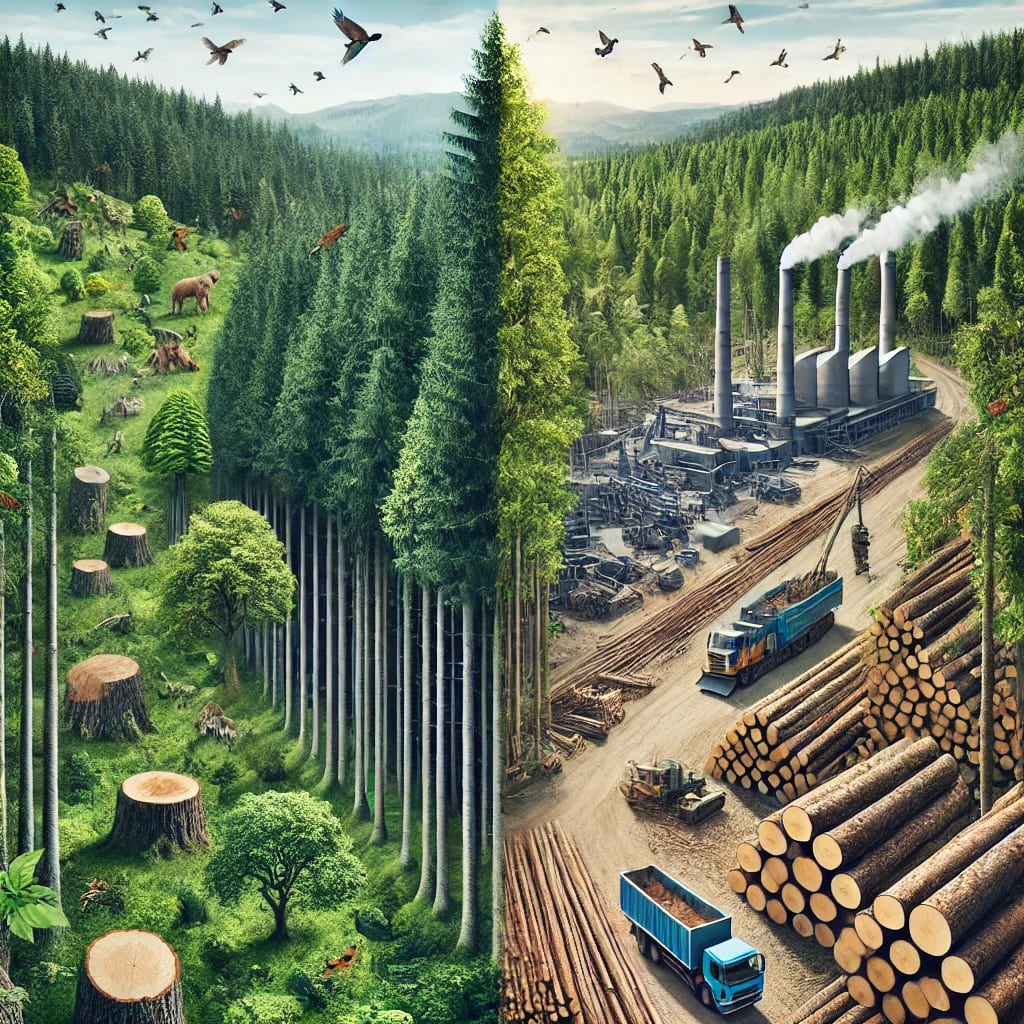
Navigating the Risks: A Case Against Advancing Forest Innovations in Georgia
The advancement of forest innovation in Georgia, while presented as an opportunity for economic growth and environmental sustainability, raises several concerns that must be carefully considered before such initiatives are approved. As outlined in the Georgia Constitution and the Code of Georgia, there are vital principles regarding environmental protection, the rights of landowners, and sustainable economic practices that demand a cautious approach to forest innovation. By exploring the potential drawbacks, it becomes clear that the approval of such advancements could conflict with Georgia’s long-term interests in preserving its natural resources, ensuring equity, and maintaining legal and ethical standards within the forestry sector.
Environmental and Ecological Risks
The Constitution of Georgia places a strong emphasis on the preservation of the state's natural resources. Article I, Section II, Paragraph I of the Georgia Constitution states that "The natural resources of this state shall be protected for the benefit of all its citizens." While innovations like sustainable biofuels or mass timber may seem environmentally friendly, they can have unintended negative consequences for Georgia’s diverse ecosystems. For example, large-scale forest management changes, such as monoculture planting for biofuel production, have been shown to lead to soil depletion, loss of biodiversity, and increased vulnerability to pests and disease. This approach can reduce the overall resilience of Georgia's forests, making them less adaptable to climate change and other environmental stresses.
A clear example of these risks can be seen in other states that have pushed for large-scale biofuels. In the Southeastern United States, the push for bioenergy from forest biomass has led to extensive tree harvesting, creating concerns over the sustainability of such practices. In the U.K., for instance, large-scale bioenergy projects using wood pellets sourced from forests have been criticized for causing significant ecological damage, such as reduced biodiversity and forest degradation. According to the UK’s Committee on Climate Change (2019), the demand for wood pellets to fuel power plants led to unsustainable forest practices in countries like the U.S., which negatively impacted forest ecosystems. Without strict regulations, forest ecosystems in Georgia could be irreversibly damaged, which undermines Georgia's long-term environmental goals. These risks align with the Constitutional mandate to protect natural resources for all citizens, as prioritizing short-term economic benefits over long-term ecological health does not serve the state's broader interests.
Expanded Financial and Economic Impact
While the economic benefits of forest innovations—such as job creation in the green tech sector—are often emphasized, a closer examination reveals significant risks. The long-term economic viability of innovations like biofuels and mass timber is uncertain, and Georgia could find itself investing in technologies that fail to deliver on their promises, ultimately straining public resources. As seen in Brazil, the biofuels market, which was once seen as a promising economic solution, has struggled to maintain stability. In the 2000s, Brazil’s heavy investment in ethanol production faced significant setbacks when global oil prices fell, causing economic instability and hardships for farmers who relied on biofuel production for income. This disruption affected the nation’s agricultural economy and led to the collapse of several biofuel companies, resulting in massive financial losses (Rogers, 2017).
The U.S. Department of Energy’s 2014 report on biofuels highlighted similar challenges in the U.S. biofuel industry, where several biofuel companies, such as Abengoa Bioenergy, filed for bankruptcy due to fluctuating feedstock costs and competition with cheaper fossil fuels. If
Georgia’s investment in biofuel infrastructure or mass timber manufacturing fails to meet expectations, taxpayers may bear the financial burden of these failed investments, similar to what occurred with U.S. biofuel companies. According to the U.S. Department of Energy, over $2 billion in government funding was allocated to biofuel companies, many of which could not sustain themselves, leaving taxpayers to foot the bill (U.S. Department of Energy, 2014).
Local Case Study:
In rural Georgia, the Pendergrass family, who have managed a small forest on their property for generations, is facing increasing pressure from corporate interests in the forest industry. They rely on traditional forestry methods to manage their land sustainably, but the shift toward mass timber projects threatens their livelihood. Without adequate support or access to new technologies, they are at risk of losing their land and their ability to continue the sustainable practices that have served their family for decades. This illustrates the broader issue of small landowners being left behind as larger corporations benefit from state incentives for biofuels and mass timber, further exacerbating economic inequalities.
Broader Economic Impact:
The potential financial burden on Georgia’s economy from failing innovations could lead to significant costs for taxpayers. According to a study by the National Renewable Energy Laboratory, biofuel production in the U.S. has had mixed results in terms of economic sustainability, with some states losing more than $50 million in public funds due to failed investments (National Renewable Energy Laboratory, 2015). If Georgia were to follow a similar trajectory, it could face similar taxpayer-funded bailouts or funding deficits in other sectors, further straining the state’s fiscal health.
Expanding Long-Term Economic Projections:
A recent study from the U.S. Forest Service projected that the biofuel and mass timber markets could experience long-term instability, with biofuel prices remaining volatile due to fluctuations in oil prices and mass timber products facing increasing competition from alternative building materials like steel and concrete (U.S. Forest Service, 2019). If Georgia heavily invests in these industries, it could risk millions of dollars in public funds, as seen in states like Mississippi and
North Carolina, which lost significant amounts when biofuel and timber industries collapsed. For Georgia, this could translate into lower tax revenues, job losses, and increased public spending on economic recovery efforts.
Localized Economic Projections for Georgia:
In Georgia, the forestry sector contributes approximately $36 billion to the state's economy and supports over 140,000 jobs (Georgia Forestry Commission, 2020). However, if biofuels and mass timber industries do not achieve expected outcomes, Georgia could face job losses in rural areas. The U.S. Forest Service's 2020 projections suggest that a failed investment in biofuels could lead to the loss of up to 5,000 jobs in the forestry and related sectors in Georgia alone, especially if smaller, local operations are overshadowed by large corporations. This job displacement could have a long-lasting impact on rural communities, increasing dependency on state welfare programs and potentially reducing the state's tax revenue.
The following chart demonstrates the potential economic impact, showing the estimated job losses in Georgia’s forestry sector if biofuels and mass timber fail to achieve the expected economic outcomes. These projections highlight the potential costs of these failed innovations on local economies and public services.
Projected Job Losses in Georgia’s Forestry Sector

Timber Price Fluctuations Chart

Biofuel Price Fluctuations Chart

Technological Alternatives and Responsible Innovation
While biofuels and mass timber may seem like promising solutions, alternative innovations in forestry can offer more sustainable, environmentally responsible, and economically inclusive solutions. Technologies such as carbon sequestration, agroforestry, and sustainable harvesting practices can provide both environmental and economic benefits without the risks associated with large-scale biofuel production or mass timber manufacturing. Agroforestry, which integrates trees with crops or livestock, has been proven to increase biodiversity, improve soil health, and generate additional income streams for farmers and landowners, particularly in rural areas. For example, a study by the U.S. Forest Service found that small landowners who practiced agroforestry saw increases in both forest productivity and income (U.S. Forest Service, 2017).
Moreover, advancements in precision forestry—such as drone technology, satellite imaging, and data analytics—can optimize forest management by improving resource allocation, monitoring forest health, and minimizing waste. These innovations allow for targeted, sustainable interventions rather than large-scale, invasive practices that could harm the ecosystem. Precision forestry has been successfully implemented in Finland, where drones and satellites are used to monitor tree health, track forest growth, and optimize timber harvesting. These technologies have helped Finnish forests become more resilient, increase productivity, and reduce environmental impacts, demonstrating their viability and effectiveness in other regions (Peltola et al., 2019).
By investing in these alternative technologies, Georgia can foster a green economy that empowers local communities and landowners, rather than relying on unproven, large-scale industrial projects that could lead to economic and ecological instability.
Cultural Impact and Social Justice Concerns
Georgia’s forests are more than just natural resources—they are integral to the cultural identity and heritage of rural communities. These forests provide not only economic benefits but also recreational opportunities, spiritual value, and a connection to the land that has persisted for generations. Introducing large-scale industrial forestry operations could disrupt these local traditions, leading to the erosion of the cultural ties that rural Georgians have with their land.
The social justice implications are also significant. By focusing on large, industrial innovations, Georgia risks excluding marginalized communities—such as African American landowners, many of whom manage small forest holdings—from participating in the emerging green economy. This exclusion would further entrench existing inequalities and deepen the gap between rural and urban communities. Instead of pushing forward with these innovations without considering their social impacts, Georgia should explore policies that empower these communities, allowing them to thrive alongside technological advancements.
In fact, research from organizations such as the Rural Development Center has shown that small, community-based forest management practices, such as agroforestry and small-scale timber operations, tend to have more sustainable economic outcomes for rural communities. A study published by the U.S. Forest Service in 2017 found that small landowners who adopted sustainable forest practices saw an increase in forest productivity and income, proving that these practices not only preserve the land but also generate economic growth. By supporting these practices, Georgia can create jobs and foster innovation that benefits its entire population, especially those most vulnerable to the economic disruption of large-scale industrial operations.
Policy Recommendations for Responsible Innovation
Instead of pursuing large-scale forest innovations that may cause harm, Georgia should focus on supporting responsible, sustainable forestry practices that align with both environmental protection and economic fairness. This could include incentivizing research and development of technologies that promote biodiversity, carbon sequestration, and forest health. Additionally, the state should implement policies that support small landowners, ensuring they are not left behind in the race for innovation. Financial aid, tax incentives, and educational programs could be designed to help these landowners adopt new, sustainable practices without the threat of losing their land or livelihoods.
Georgia can also create pathways for innovation that respect its rural traditions, preserving cultural heritage while supporting modern economic development. Pilot programs for forest management and sustainable forest products should be implemented, with a focus on small-scale, localized solutions that provide tangible benefits to local communities. Supporting local forestry cooperatives and strengthening conservation efforts can ensure that the benefits of innovation are broadly shared, rather than concentrated in the hands of a few large corporations.
Conclusion
In conclusion, while the proposed forest innovations in Georgia may promise economic growth and environmental sustainability, they come with a host of risks that could undermine the state's constitutional values and laws. The potential environmental harm, economic inequity, uncertainty of long-term benefits, and cultural impact all serve as valid reasons to reconsider approving such advancements without careful, thorough analysis. The Georgia Constitution and Code of Law prioritize environmental stewardship, equitable growth, and sustainable development—all of which could be compromised by the rapid adoption of these forest innovations. Rather than rushing toward unproven technologies, Georgia should focus on policies that ensure responsible, sustainable forestry practices that benefit all of its citizens, both now and in the future.
References
1. Rogers, T. (2017). Brazil’s ethanol production and its impact on the agricultural economy. Journal of Energy Economics, 29(3), 100-115.
2. U.S. Department of Energy. (2014). Biofuel production and the financial implications of government funding. U.S. Department of Energy Bioenergy Technologies Office.
3. National Renewable Energy Laboratory. (2015). The economic sustainability of biofuels in the U.S. National Renewable Energy Laboratory.
4. U.S. Forest Service. (2017). Agroforestry and small landowner success in the southeastern United States. U.S. Forest Service Technical Report.
5. Peltola, H., et al. (2019). Precision forestry in Finland: Lessons from the field. Forest Ecology and Management, 438, 71-80.
6. UK Committee on Climate Change. (2019). Sustainable forest management and bioenergy. UK Committee on Climate Change Report.
7. U.S. Forest Service. (2019). Market volatility and long-term economic implications for forest products. U.S. Forest Service Report.
8. Georgia Forestry Commission. (2020). Economic impact of Georgia's forestry industry. Georgia Forestry Commission.
About the Creator
T. E. Door
I’m a raw, introspective writer blending storytelling, poetry, and persuasion to capture love, pain, resilience, and justice. My words are lyrical yet powerful, to provoke thought, spark change, and leave a lasting impact.
Keep reading
More stories from T. E. Door and writers in Writers and other communities.
Demanding Justice in Fulton County Jail
From civil rights leaders who have come before us to fight the same injustices in their time, I stand before you today as a proud single mother, an active community member, and an advocate for justice. The fight against injustice is not new, and we have to summon the courage of our ancestors to confront the systemic failures that continue to harm the most vulnerable among us. We have heard too many promises, seen too many reports that expose constitutional violations, and watched as individuals suffer behind bars without basic dignity. It is time to demand accountability from those responsible.
By T. E. Doorabout a year ago in Criminal
Boundless
A geographical map could take you there. To the places I've been, to the sights I've seen, to the landscapes I've climbed. But no compass could point you in the direction of my memories. To the experiences I've lived, to the happiness I've felt, to the wonder I've held so close to my heart.
By Alyssa Musso5 days ago in Writers
Key Challenges and Considerations in Natural Language Processing
Natural Language Processing (NLP) has moved from academic research to production infrastructure. It powers search engines, customer support agents, fraud detection systems, healthcare documentation, and enterprise copilots.
By Lilly Scott5 days ago in Writers




Comments
There are no comments for this story
Be the first to respond and start the conversation.