
More Than Mere Contenders - Cinema’s Emotional Heavyweights
Levar’s Social Commentary

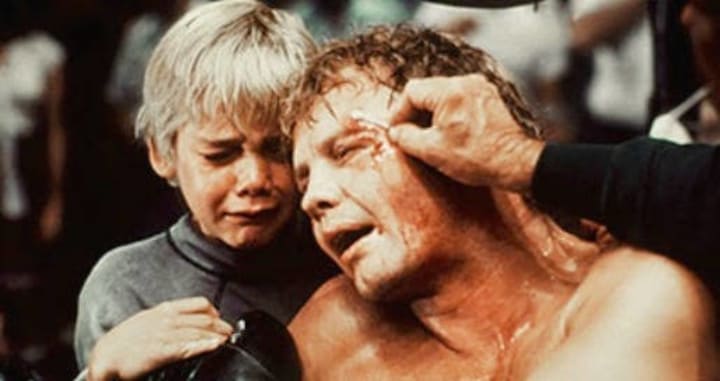
When I think back to the first film that made me cry, I recollect a visceral experience that was more than a light tear event. I was no older than five or six when my dad, who was watching what seemed to be an “old film”, accomplished greatness by making me sit still and watch it with him. The film was “The Champ” (1979) and it starred Jon Voight as a washed-up, prize fighter, who struggles to reclaim his glory days, whilst being a single parent to his young son, played by an excellent Ricky Schroeder. Maybe it was the films’ father:son dynamic that resonated with me and immediately had me relating it to my own wonderful relationship, with my dad. It’s quite possible that this was what Jacques Lacan would refer to as a ‘mirror stage’ experience, but I’ll choose not to indulge in over-academicism by deconstructing this memory, as it exists in my mind simply as a significant moment.
People tend to remember the films that make them cry. Since my first viewing of “The Champ”, there have been various films that have roused an emotional response in me that unconsciously led to tears falling. Admittedly, I have an inner hooligan that I have to keep at bay whenever my football team loses, or is verbally attacked, and my interest in contact sports like boxing, goes beyond mere spectatorship. However, I’m quite comfortable to admit that cinema, when at its most poignant, has driven me to shed many tears. As emotionally unhealthy as this may sound, films/cinema for many men, are a suitable outlet to display tearful emotion, that they wouldn’t display otherwise.
I never cried when Mufasa died. As poetic as the love between Jack and Rose may have been, not a single tear of mine was shed when the Titanic eventually sank. Similarly, when E.T’s call finally connected, I didn’t weep for Elliot, I was just happy for the displaced, brown alien, who got to go home. None of these films aroused the sentimental emotions in me that they did for many others.
It’s clear that crying at events captured on film, happens for individual reasons. With a background in psychology, I might regurgitate studies on the release of Oxytocin and other neurotransmitters that trigger emotional responses in us when we empathetically relate to others. But catalysts aside, it’s my belief that the effects of crying at sad events in cinema, leads to an almost cathartic release, that is different to crying at sad events in any other context. We know that as much as a cinematic film may be extremely realistic or based on real events, it’s not “real”. Therefore, although a film may trigger something within us that connects in emotionally intimate ways, the fact that it isn’t a direct experience, offers a somewhat subliminal, but relatable human, emotional release, that can be felt long after the end credits roll.
Speaking about the universal appeal of “Forrest Gump” as a ‘tear jerker’, director Robert Zemeckis stated that; ‘the best of these films offer a mixture of spectacle and emotion.” Indeed I’d agree that the ones that have stirred my inner emotions most of all, are those that utilise this balance well. For some reason, maybe owing to that initial encounter with “The Champ”, the films that have managed to create this feeling in me, have involved boxing.
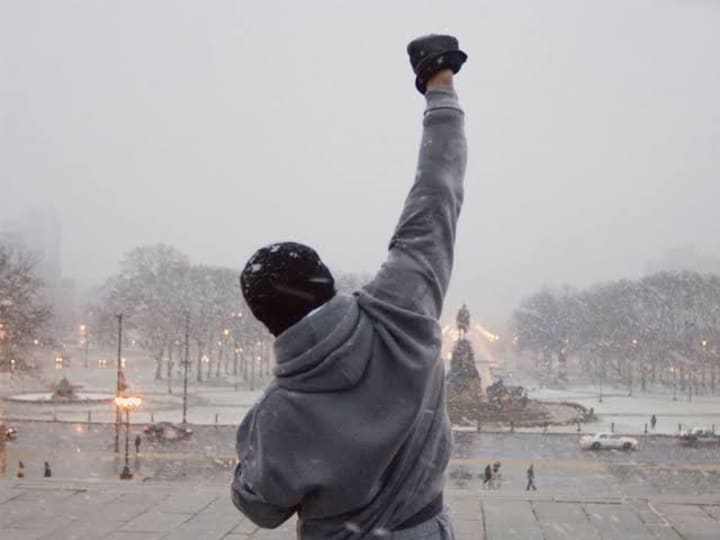
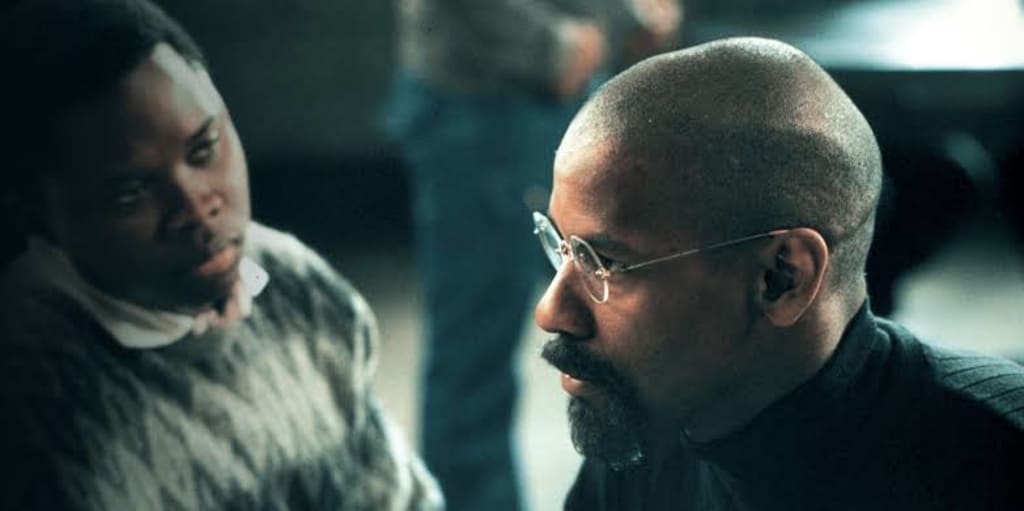
There’s just something about great boxing films that resonate with audiences. In actual fact they shouldn’t really be referred to as ‘boxing films’ because other than the fact that they are centred around people who are in some way involved in the sport, films placed under this category often belong to a range of separate genres. Take “The Hurricane”, for example. Denzel Washington’s portrayal of real life boxer, Ruben “Hurricane” Carter is equally as much a legal drama, centred on the theme of racial tensions, as it is a boxing epic. It bares little resemblance to Sylvester Stallone’s “Rocky”, or Marlon Brando’s “One the Waterfront”, both of which depict boxing, juxtaposed with the struggles of early and late 20th Century, Italian American culture.
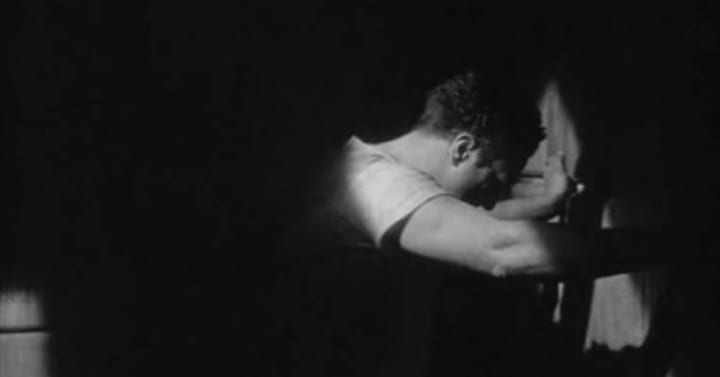
Similarly, “Million Dollar Baby” is a film that focuses its attention more on paternal love, within the fighter/trainer dynamic and a critique on familial relationships that can be self serving within a boxer’s career, whilst boxing itself plays a symbolic role for life’s punches its narrative. Yet that film is altogether separate in tone and style to “Raging Bull”, which blends a neo noir aesthetic with themes of domestic violence and corrosive inner-turmoil.
However, like “The Champ” that came before them, they all centre on human struggles, which instinctively lead to interconnectivity with those who watch them. This isn’t some kind of cinematic fluke; “Cinderella Man”, “The Boxer” “The Fighter” and “Girl Fight”, have all managed to provoke something raw in their audiences, which set them apart emotionally. Amidst the brutality of blow for blow bouts, ‘boxing films’ at their best are enigmatically beautiful. And when all is said and done, beauty resonates on a very human level.
Many regard Arnold Schwarzenegger’s portrayal of the Terminator in “Terminator 2: Judgement Day”, as his best ever on screen role. Ironically, although he plays a cyborg, it’s one of his most human performances. One of the films’ poignant moments, takes place when the Terminator asks John Connor why we humans cry. It’s a question that leads the child in difficulty when trying to find a clear cut explanation. The films’ dénouement occurs when after completing his mission, the Terminator states, “now I know why you cry, but it is something I can never do”.
To cry is to be human. And to cry at the films that move us is to experience personal moments that may seem silly, but should be embraced as small reminders that your humanity’s still intact.
About the Creator
Lev. Life. Style
I’m fascinated by culture’s ability to shape thought and behaviour. I value creativity as a means of aiding wellbeing and growth. Film, analysis, travel and meaningful discussion, are personal passions that I’m grateful to share.
Lev
Keep reading
More stories from Lev. Life. Style and writers in Writers and other communities.
Happy Hour with Harper
I know we’re all scattered across different time zones (EST for me), but I would love to have a Zoom call with some of you crazy fuckers and hear your accents (you can hear mine now if you click the link at the end of Sacrificial Fire) and just talk. So, if this is something you also think would be fun, drop your optimal days & times (include your time zone or do the math to figure out what EST that would be). Informal—drop in, drop out, and I promise not to assign homework (like I’m hard up for shit to grade). If even just one person is up for this, I’ll figure out a time/day and post another Happy Hour piece with a link.
By Harper Lewis5 days ago in Writers




Comments
There are no comments for this story
Be the first to respond and start the conversation.