
Kishōtenketsu: A Comprehensive Guide to Four Act Story Structure
The Story Structure with No Conflict

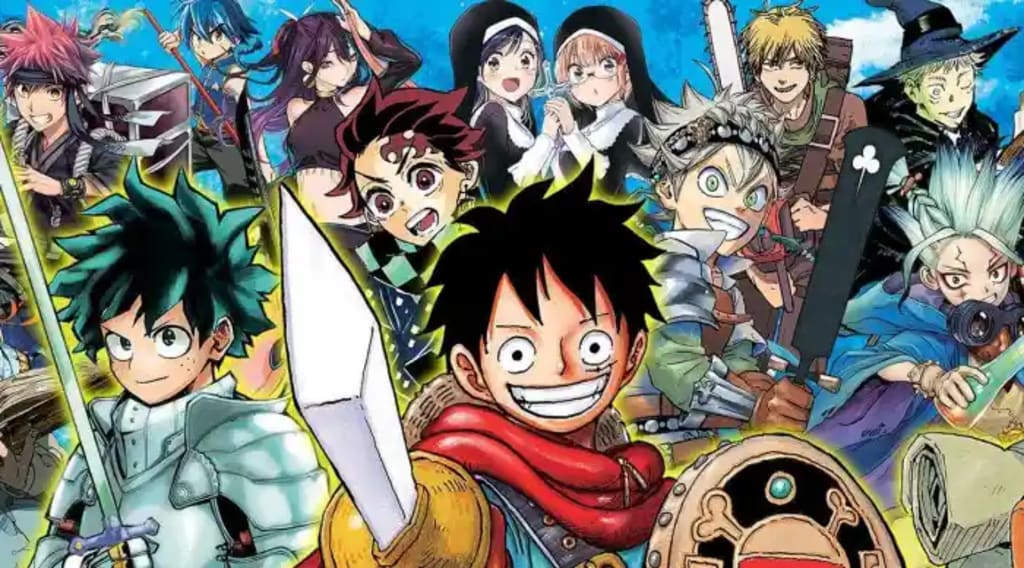
Kishotenketsu is a unique narrative structure that rooted in East Asian storytelling traditions, and has captivated audiences with its distinct approach to plot development. While it consists of four acts.
This storytelling format places a strong emphasis on harmony and balance, diverging from the Western tradition of dramatic conflict and resolution. Instead, Kishotenketsu seeks to engage the audience through subtle twists, unexpected connections, and thematic exploration. It's charm lies in its ability to create compelling narratives without relying on the conventional tension-building techniques of Western storytelling. Instead, it invites the audience to explore the subtleties of character and theme, making it a captivating and thought-provoking storytelling style.
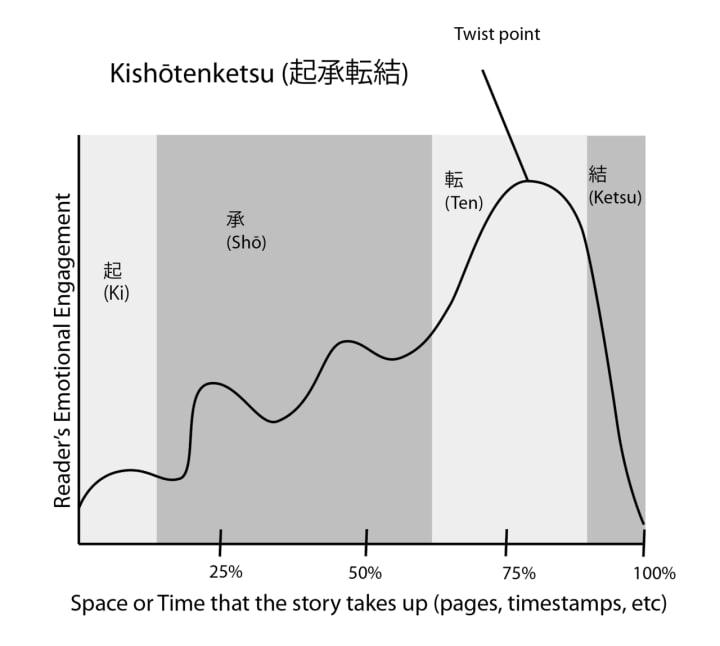
The four acts of Kishōtenketsu
To give you the better understanding of the concept now we will dive into each invidual act—Ki, Shō, Ten, and Ketsu—revealing how each phase contributes to the story.
起/Ki: Introduction
Ki is the first out of four acts in Kishōtenketsu story structure. In this stage, the characters are getting introduced, the context is being established and the mood of the story is determined. In contrast to western story structures the conflict of the story isn't yet introduced.
According to the chart above the Ki phase should last for around 10-15% percent of the whole story whether it's page count of a book, comic, or movie timestamps. However you should keep in mind that the exact length of the Ki act can vary depending on the overall length of the narrative, but it's generally shorter compared to the other acts.
承/Shō: Development
Shō act continues the story from the Ki act in a more advanced way. It's the moment where relationships between various characters grow, it's where we learn more about each character's motives or backstories.
Keeping the introduction aside "Shō" is a phase of the story when something important happens. During Shō the story builds up momentum, yet the twist or climax of the story hasn't been introduced yet. As long as every story is different there's no definitive answer to how long Shō act should last one thing is certain that it is the longest act out of all four acts.
転/Ten: Twist
Ten is the third act of Kishōtenketsu story structure that refers to the twist, a climax where the story takes an unexpected turn, often changing the direction or revealing surprising information. It serves as a crucial moment that keeps the audience engaged and curious about the outcome of the narrative. What you need to know is that "Ten" serves as a climax to the story. In order to make the story enjoyable it's necessary to keep it's length as long it should be in context of the story.
結/Ketsu: Conclusion
Ketsu is the final act in the Kishōtenketsu story structure. This phase brings resolution to the story's conflicts and ties up loose ends. During Ketsu, the consequences of the twist introduced in the Ten act are explored, and the narrative reaches its satisfying conclusion.
Unlike traditional Western story structures, Ketsu doesn't necessarily emphasize a dramatic or explosive climax. Instead, it focuses on providing closure and a sense of fulfillment to the audience. This phase is where the characters' growth, transformations, and outcomes are revealed.
Similar to the Ki phase, the length of the Ketsu act can vary depending on the overall length of the story. It's crucial to strike a balance between wrapping up the story's threads and leaving a lasting impression on the audience.
Where is Kishōtenketsu used?
Kishotenketsu is mostly found in literature, especially when it comes to Japanese and Chinese novels or manga. In the world of cinema, filmmakers from these regions often embrace Kishotenketsu to craft movies that focus on character development and the intricate web of human relationships. This results in films that provoke thought and emotion rather than relying solely on action and tension.
Even in everyday conversations, Kishotenketsu's influence shines through. When people share stories, they may naturally follow this structure, gradually building a narrative, adding layers of complexity, and then arriving at a satisfying conclusion.
So, whether you're enjoying literature, watching films, or simply engaging in a friendly chat, Kishotenketsu might surprise you with its unique and thought-provoking approach to storytelling.


Comments
There are no comments for this story
Be the first to respond and start the conversation.