
Hyperloop Technology Market: Pros and Cons
Hyperloop Technology

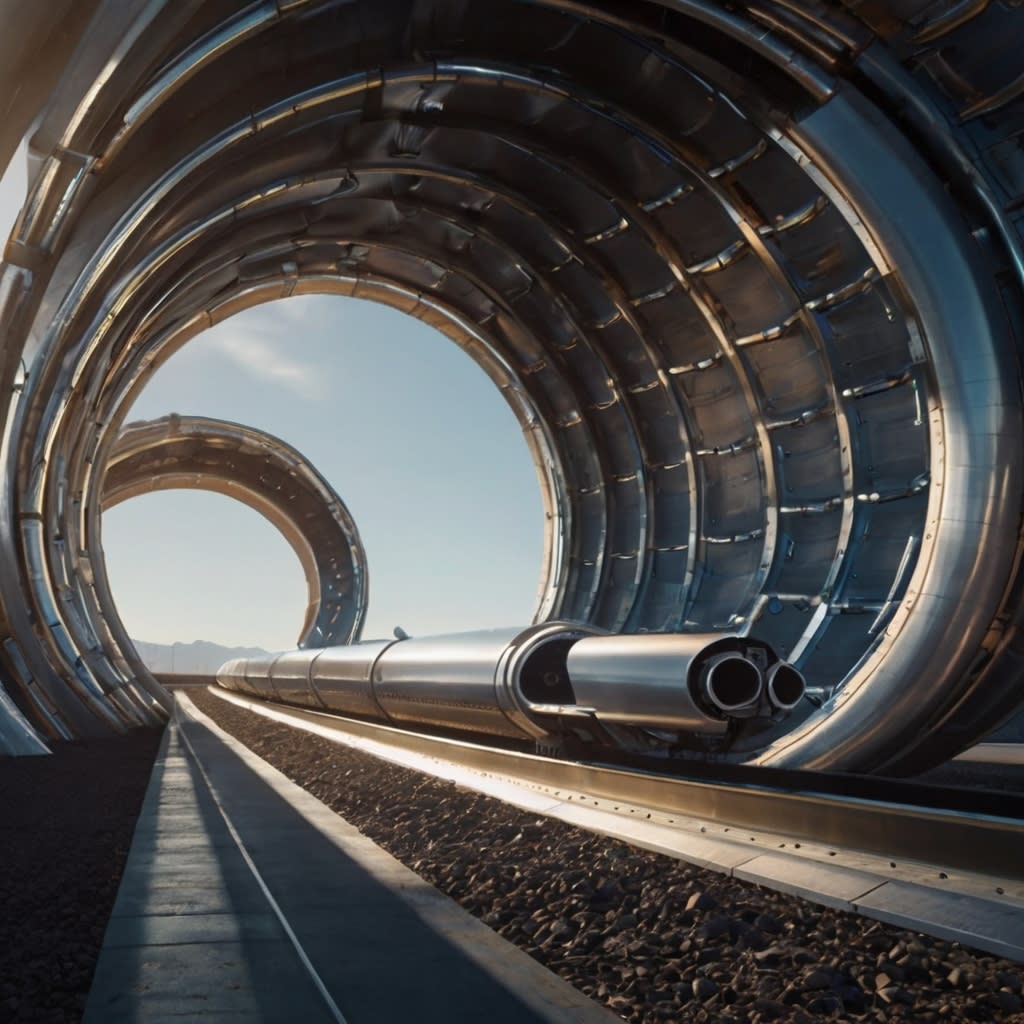
The hyperloop technology market is a frequent topic of conversation. Many people are likely to question why it remains a point of discussion and when or if it will become a reality. The hyperloop gained public attention at the time Elon Musk presented it in one research paper. He described it as a fifth transportation mode in addition to planes and cars.
This is not a new concept. In the 18th century, a mechanical engineer developed and patented a railway system designed to move cargo or people through pressurized and evacuated tubes. The idea has since evolved. One of the most successful adaptations being the Maglev trains. These trains utilize magnets to lift and propel the train which reduces friction.
No commercial hyperloop exists at this time. But various companies work on their own proprietary designs. Consequently, there are multiple interpretations of hyperloop systems which diverge considerably from Elon Musk’s initial vision. There is still no clear convergence on particular technologies and parameters. Additionally, advancements in hyperloop technologies will likely be substantial as research continues and the pace of innovation increases.
Current local and international travel options are at full capacity. There is also a lack of bus drivers. Airports in numerous cities are overcrowded and unable to handle the demand. While flying frequently proves cheaper than train travel. The hyperloop technology market promises to bridge this gap by offering a faster and more sustainable mode of transport for both passengers and cargo.
The Benefits
There are various benefits which drive the development of the hyperloop technology market size.
1. Speed
This technology targets speeds above 1000 km/h for passenger and cargo pods. It achieves three times the velocity of high-speed rail and over ten times that of traditional rail. It provides the same speed as a train but at a more affordable rate in comparison to traditional high-speed rail.
2. Less carbon emissions
The hyperloop enables energy-efficient long-distance travel by utilizing solar power and electricity. Solar panels installed on the roofs of elevated hyperloop systems could generate power. While the tubes themselves could store electricity through battery storage. Moreover, using the hyperloop for freight transport could help decrease the substantial carbon emissions generated by trucks.
3. Weatherproof
The design makes it more resilient to inclement weather. That includes rain, snow, and earthquakes. It also eliminates the problem of track warping from summer heat that high-speed rail systems can experience.
4. Less invasive
Expanding tunnels is less complex than increasing road lane capacity. The Boring Company indicates that stations could be designed as compact as two parking areas. It facilitates their integration in city centers and residential zones.
5. Complements existing and emerging transport technologies
The hyperloop’s design makes it possible to incorporate additional transport infrastructure above and below the tube. Like moving sidewalks, pedestrian walkways along with bike and e-scooter paths. Urban design can incorporate access points for flying taxis, hyperloops, and autonomous vehicles thanks to innovative city planning.
The Challenges
However, the hyperloop technology market also faces several challenges in its development.
1. Costs
Pricing the infrastructure and construction for the hyperloop is complex. Essential components like seals for pod doors and hatches will require ongoing maintenance. This poses a challenge especially when considering that cities often have difficulties maintaining existing infrastructure such as bridges and roads.
2. Safety
Ensuring safety is essential. Delft Hyperloop’s report argues that the hyperloop system in Europe should meet or exceed the safety levels of their commercial airlines. The report provides a detailed analysis of possible safety scenarios and is not tied to any specific design.
Fire safety
The low-pressure environment in the tubes minimizes the risk of fire. But a fire within a pod poses a genuine danger. To address this, the report advises using a system that triggers the automatic release of fire suppressants and mist when smoke is detected.
- Communication challenges
What are the challenges of communication to and within a hyperloop pod? The tube from steel blocks wireless signals. The pods’ high speeds cause them to switch communication cells often. It increases the risk of handover failures and temporary loss of communication.
Li-Fi is an alternative approach that uses light instead of radio frequencies for wireless communication. It simplifies the process in comparison to radio frequency and utilizes direct modulation like in remote controls. The high intensity of LED bulbs allows for substantial data transmission rates. Li-Fi can be particularly effective in environments where Wi-Fi is difficult to deploy. That includes on aircraft or in hazardous areas. Nevertheless, cybersecurity is a critical issue for the hyperloop. Employing optical fibers might mitigate the risk of physical signal interception by hackers.
- Evacuation in case of emergency
Evacuation from a hyperloop is complex because the system is designed with restricted exit gates. The primary aim of evacuation protocols is to facilitate the safe exit of passengers. One idea is in-tube evacuation where a pressurized segment of the tube permits passengers to walk to the closest emergency exit. Additionally, nearby pods could help by picking up passengers to accelerate the evacuation. Another method is a combined evacuation strategy that combines safe havens with in-tube evacuations to enhance overall safety and efficiency.
- Security
Another challenge of the hyperloop technology market is security. Manufacturers plan for pod departures ranging between every thirty seconds and two minutes. Yet reducing the time between departures raises the risk of collisions in case of an emergency. Frequent departures also demand a steady passenger flow. That makes it difficult to implement thorough passengers and baggage screening.
About the Creator
mubaz ray
I am a passionate writer and blogger with a knack for crafting engaging, insightful content across various niches. With a keen eye for detail and a love for storytelling, I specialize in creating compelling articles, blogs.
U.S. and Canadian Immigration Updates Employers and Families Are Watching Closely
Immigration policy in both the United States and Canada continues to evolve, often through a mix of regulatory changes, court decisions, and agency guidance. For employers, families, and foreign nationals, staying informed about these developments is increasingly important, as even small adjustments can have practical consequences.
By Sheila Danziga day ago in Writers
The Duelist
The rays of a dying red sun flashed against the onrushing blade. The grey beards say the key to dueling lies in size, speed, reach, righteous fury, whatever the person in front of them pays them to say. Matteo knew better than any it was none of these and had an undefeated record on these sands to prove it.
By Matthew J. Fromm3 days ago in Fiction


Comments
There are no comments for this story
Be the first to respond and start the conversation.