
How India-Pakistan Tensions Will Affect Global Agro Commodity Exports
How can India-Pakistan tensions may affect agro commodity exports globally
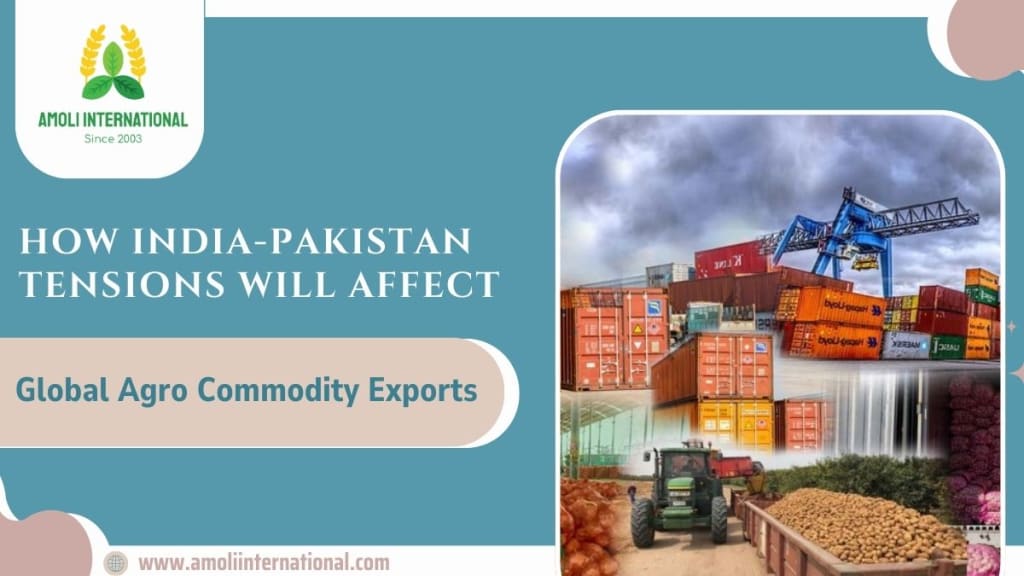
India and Pakistan, two contiguous nations with a tradition of political rivalries, are both major actors in the world's agricultural commerce. Any increase in tensions between the two nations not only influences their domestic economies but also makes waves in international agro commodity markets. Be it rice and wheat or spices and fruits, the world's supply chain feels the heat of a border stand-off.
Let's dig deeper into the ways in which current or upcoming India-Pakistan tensions may affect agro commodity exports globally.
1. Basmati Rice Export Effect
India and Pakistan are the two largest Basmati rice exporting countries globally. India dominates 70% of the world Basmati export market, whereas Pakistan possesses the remaining percentage. When tensions between the two nations rise, particularly along the points of trade or export, overseas buyers tend to be apprehensive. As evident from recent reports, Basmati rice price will be increased because the uncertainty in the region's supply. Importers like the UAE, Saudi Arabia, Iran, and the UK will experience higher prices or postponed delivery if the export rate reduces from either of the countries.
2. Breakdown in Logistics and Border Trade
During times of heightened tension, road and rail links between Pakistan and India tend to be cut. This hits the Wagah-Attari border a major trade corridor between the two nations. While a majority of India's agro exports are to broader global markets, even temporary disruptions at main points can make shipments late and increase freight prices. An extended conflict may strain shipping schedules and export container availability affecting delivery times globally.
3. Impact on Global Spice and Pulses Market
India is the largest spice exporter of the world for spices such as turmeric, cumin, and chili and also exports pulses and lentils in bulk. If tensions in the area are high, it is possible production of crops in border areas could slow down for insecurity reasons, or labor movement restrictions. A conflict that went on for an extended period of time could limit India’s ability to fulfill international spices/pulses orders, especially in regards to the US, Canada and Europe. Prices may rise if exporters face increased insurance premiums or disruptions in supply chains.
4. Market Reaction and Price Volatility
The agro commodity market is geopolitically sensitive. The threat of conflict alone can cause hoarding, panic buying, or even sudden changes in demand. Buyers and traders can shift to other suppliers, triggering price changes. For instance, if buyers divert from Indian wheat or rice to Thai or Vietnamese exporters, the balance of demand and supply can be altered, influencing prices in the international market. This became clear during the Russia-Ukraine war, which also impacted grain markets.
5. Loss of Confidence Among Global Buyers
Recurring tensions between India and Pakistan can also influence international buyers' confidence in the stability of long-term contracts. Large-volume importing countries might begin to look for alternative sources or diversify their supplier base to mitigate risks. This can impact India's export revenues particularly in major crops like Basmati rice, sugar, fruits and tea.
6. Insurance and Shipping Costs Could Rise
In troubled regions, war risk premiums and marine insurance rates will increase. Exporters and importers will see the cost of doing business rise overall particularly if cargo is shipped through risky areas. This increased cost might eventually be passed on to consumers in the form of higher product prices.
7. Political and Trade Sanctions
Though limited, in desperate circumstances governments may impose trade sanctions or restrictions. If diplomatic relations deteriorate further, temporary export or import bans could result heavily hampering trade flow. For instance India previously suspended trade with Pakistan following the Pulwama attack in 2019. Such measures inject uncertainty into markets and lower export stability.
Conclusion: A Sensitive Balance
India's Agro Commodity exporters make a notable contribution to world food supplies. Pakistan, even though smaller in quantity, also has a notable role, particularly in the case of rice trading. Any escalation of conflict not only impacts local peace but also the world agro economy. Exporters, importers and even customers on different continents can feel the squeeze through rising prices, tardiness, and uncertainty.
About the Creator
Amoli International
Amoli International is a leading provider of high-quality natural ingredients for the food and beverage industry.
Keep reading
More stories from Amoli International and writers in Writers and other communities.
Quick Non Basmati Rice Recipes for Weight Loss
When weight loss is the goal, rice usually takes an unfair hit. But the reality is that rice in particular, non-basmati varieties such as brown rice, red rice, or Sona Masoori can be a healthy inclusion in a well-balanced diet. Non-basmati rice is generally less processed and higher in nutrients, which makes it a suitable option for those looking to lose excess weight without sacrificing comfort foods.
By Amoli International10 months ago in Writers
After the Storm
After the storm of winter snow there sat a small bear by the name Ted, of course. He loves the snow and likes to roll around in it making all sorts of trails and whatever he has a mind to do. He wondered where all the people are, but in a way, he is hoping that they are all snug in the homes maybe drinking hot chocolate-one of his favorite drinks with mini-marshmallows and eating something homemade for he likes this winter wonderland all to himself to romp and play and maybe even catch some fish down by the river.
By Mark Graham4 days ago in Fiction



Comments
There are no comments for this story
Be the first to respond and start the conversation.