
Fall Back 2025: Your Guide to the Upcoming Time Change
While the extra hour of sleep is welcome, the debate over changing our clocks twice a year is louder than ever.

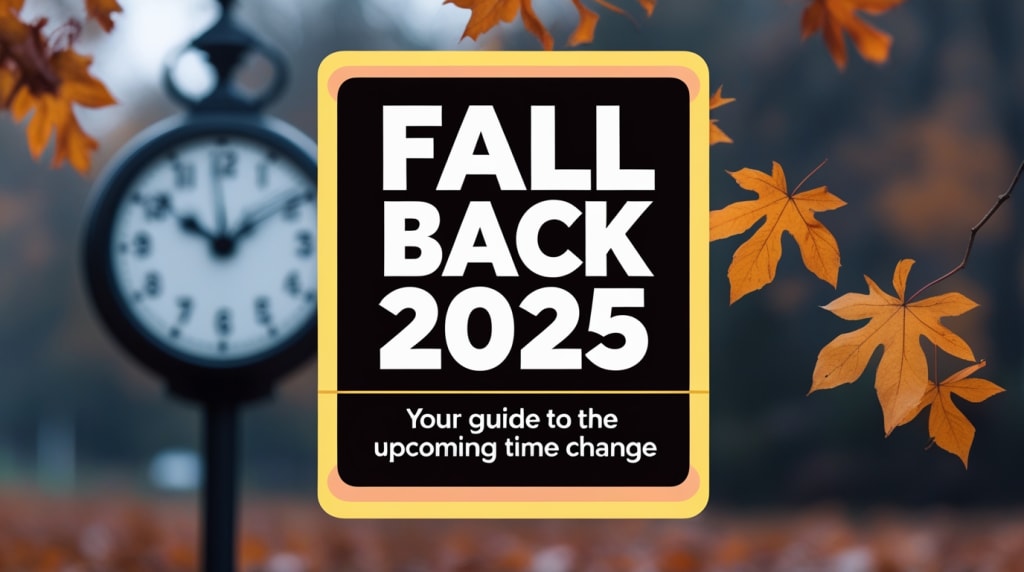
Mark your calendars: on Sunday, November 2, 2025, at 2:00 a.m., Daylight Saving Time (DST) will end for most of the United States . This is the "fall back" event, where we set our clocks back one hour, granting a welcome extra hour of sleep but also signaling the start of earlier sunsets .
This annual ritual is more than just an adjustment for our clocks; it's a pivot in our daily routines, a shift in the quality of evening light, and a reignition of a long-standing national conversation. As we prepare to "fall back," many are left wondering if this could be one of the last times we have to do so.
Key Dates for Your 2025 Calendar
The following table outlines the key dates for the upcoming time change and the current period of Daylight Saving Time.
Daylight Saving Time Ends | November 2, 2025 | Sunday | Clocks "fall back" 1 hour at 2:00 a.m. |
Daylight Saving Time Began | March 9, 2025 | Sunday | Clocks "sprang forward" 1 hour |
What "Falling Back" Really Means for You
The most immediate and beloved effect of the autumn time change is the gift of an extra hour of sleep on Sunday morning. However, the trade-off is a significant shift in our daily daylight.
On Saturday, November 1, the sun will set in the late afternoon for many. The very next day, after turning the clocks back, sunset will occur an hour earlier, leading to a sudden plunge into darker evenings . For example, in Chicago, sunset will shift from about 5:45 p.m. to 4:43 p.m. In Los Angeles, it will move from 6:00 p.m. to 4:59 p.m. .
This shift brings its own set of pros and cons:
* Brighter Mornings: The one silver lining is that sunrise will also occur an hour earlier, making morning commutes and school runs brighter for a time .
* Shorter Evenings: The downside is the loss of evening light. This can impact outdoor activities, reduce foot traffic for some local businesses, and necessitate extra caution for pedestrians and cyclists during the evening commute .
A Look Back: Why Do We Do This?
The concept of "saving daylight" has a complex history, rooted in crisis and adaptation.
* Wartime Beginnings: Daylight Saving Time was first implemented in the U.S. in 1918 during World War I as a measure to conserve fuel and energy by reducing the need for artificial lighting in the evenings . Despite this initial intent, a U.S. Department of Transportation study in 1974 found no conclusive difference in energy usage .
* Modern Era: The system we know today was standardized by the Uniform Time Act of 1966 . The most recent change came with the Energy Policy Act of 2005, which extended the DST period to its current length, from the second Sunday in March to the first Sunday in November .
It's a common myth that DST was created for farmers. In reality, farmers have historically been one of the strongest lobbying groups against it, as their schedules are dictated by the sun, not the clock .
The Great Debate: To Change or Not to Change?
The semi-annual clock change is a source of growing controversy, involving health experts, economists, and lawmakers.
* The Health Argument: Medical groups, including the American Academy of Sleep Medicine, advocate for a permanent, year-round time to avoid the disruption to our circadian rhythms . Studies have shown evidence of an increase in heart attacks and strokes in the days following the "spring forward" transition . Many health experts actually favor permanent Standard Time, as it aligns better with the sun's position in the sky and our natural biology .
* The Economic & Safety Angle: On the other side, supporters of permanent Daylight Saving Time, including some retail and recreational industries, argue that longer evening daylight hours boost consumer spending and reduce traffic accidents . The U.S. Chamber of Commerce has historically supported longer DST for this reason .
* The Legislative Stalemate: In 2022, the U.S. Senate unanimously passed the Sunshine Protection Act, which would make Daylight Saving Time permanent across the nation . However, the bill stalled in the House of Representatives and did not become law . It has been reintroduced in subsequent sessions, including in 2025, but as of now, no federal law has been passed . At least 20 states have passed their own legislation to adopt permanent DST, but they cannot enact these laws without Congressional approval .
Who Doesn't Change Time?
Not every part of the U.S. participates in this ritual. Arizona (except for the Navajo Nation) and Hawaii do not observe Daylight Saving Time and remain on standard time all year . This is permitted under federal law, which allows states to opt out of DST but does not currently allow them to opt for permanent DST .
Tips for a Smooth Transition
While the "fall back" is easier on the body than "spring forward," a one-hour shift can still disrupt your sleep pattern. Here’s how to adjust smoothly:
* Gradually Adjust Your Schedule: In the days leading up to the change, try going to bed and waking up 10-15 minutes later each day.
* Seek Morning Light: Get exposure to natural sunlight in the morning to help reset your internal clock.
* Be Mindful of Sleep: Even with an extra hour, maintain a consistent sleep routine to avoid feeling sluggish.
As you enjoy that bonus hour on November 2, you'll be participating in a century-old tradition that is simultaneously cherished, debated, and contested—a small tick of the clock that continues to generate a large amount of conversation.
About the Creator
Ashley Scott
Ashley Scott here! 🌿 I share tips, DIY projects, and inspiration for creating beautiful gardens. From beginner guides to expert advice on growing vegetables, herbs, and flowers, you'll find everything to make your garden thrive.
Keep reading
More stories from Ashley Scott and writers in Writers and other communities.
The Immune System's Guardians: Trio Wins 2025 Nobel Prize in Medicine
The Nobel Assembly at the Karolinska Institute in Sweden has awarded the 2025 Nobel Prize in Physiology or Medicine to three scientists for their groundbreaking work in understanding the immune system. Mary E. Brunkow, Fred Ramsdell, and Shimon Sakaguchi were honored for "their discoveries concerning peripheral immune tolerance" .
By Ashley Scott3 months ago in Writers
Bigger Screen, Bigger Freedom: Play ARC Raiders on iPad and Download StarDesk Remote
Bigger Screens and Mobile Freedom: How Tablets Are Redefining Gaming and Remote Work Mobile technology has undergone a quiet transformation over the past decade. What once served primarily as a platform for casual browsing and media consumption has evolved into a powerful tool for both entertainment and productivity. Tablets, particularly larger-screen models, now sit at the center of this shift.
By Abbasi Publisherabout 18 hours ago in Writers




Comments
There are no comments for this story
Be the first to respond and start the conversation.