
Endovascular Treatment For Acute Ischemic Stroke
Endovascular Therapy for Stroke Care

Sudden onset of weakness involving one half of the body, facial deviation, slurring of speech, loss of balance and loss of vision. These are symptoms of an acute ischemic stroke, a medical emergency caused by a blood clot in the brain where every minute counts; timely intervention may be the difference between recovery or lifelong disability. The most advanced medical interventions for stroke include endovascular treatment for stroke - specifically, mechanical thrombectomy - that removes the blockage and restores blood flow.
In this blog, we’ll explain how endovascular thrombectomy works as a treatment for acute ischemic stroke, the steps involved in the thrombectomy procedure, and how it can improve stroke recovery rehabilitation outcomes.
What is Endovascular Treatment for Stroke?
Endovascular treatment for stroke is a minimally invasive procedure called mechanical thrombectomy that aims to remove the blood clot blocking the brain's arteries. It is recommended for patients with acute ischemic stroke, especially when the clot is significant in size and cannot be fully dissolved by thrombolytic (clot-busting) medications. This procedure can restore blood flow, thereby preventing irreversible brain damage and significantly improving the chances of recovery.
How Does Mechanical Thrombectomy Work?
The thrombectomy procedure is performed by a specialised interventional radiologist. The process begins with the insertion of a thin catheter into a blood vessel, usually through the groin. Using advanced imaging techniques like X-ray or CT angiography, the physician guides the catheter directly to the clot in the brain.
The key to the success of this acute ischemic stroke treatment is performing it as quickly as possible, ideally within 6 hours after stroke onset. However, with advancements in imaging and technology, this treatment window has been extended, and in some cases, patients may still benefit from mechanical thrombectomy up to 24 hours after symptoms begin.
What Are the Risks of Mechanical Thrombectomy?
As with any medical procedure, there are some risks related to endovascular thrombectomy. The most common complications include:
Bruising or bleeding at the catheter insertion site, usually in the groin area.
Damage to blood vessels during the procedure could lead to further clot formation or complicate the treatment.
In rare cases, there may be a risk of bleeding in the brain.
The benefits of stroke clot removal usually far outweigh these risks when the procedure is performed in a timely manner by seasoned professionals in a well-equipped medical facility.
Stroke Recovery and Rehabilitation
Post-endovascular treatment for stroke recovery is an integral part of a patient's journey. After the thrombectomy procedure, doctors will closely observe the patient to ensure that the blood supply to the brain is re-established without any complications.
Stroke recovery and rehabilitation mainly aim to recover as much functionality as possible. This involves physical therapy, speech therapy, and occupational therapy in accordance with the severity of stroke and areas affected in the brain. Rehabilitation is first initiated in hospitals and continued through outpatient processes, focusing on helping patients return to their normal lives as soon as possible.
The Importance of Timely Intervention
The sooner a patient undergoes endovascular treatment for stroke, the better their chances for a full recovery. While acute ischemic stroke treatment options like medication can help to dissolve clots, endovascular thrombectomy is often necessary for large clots that cannot be treated effectively with drugs. It is important to seek medical attention immediately if stroke symptoms occur to maximise the chances of successful treatment.
About the Creator
Keep reading
More stories from Akhil Monga and writers in Writers and other communities.
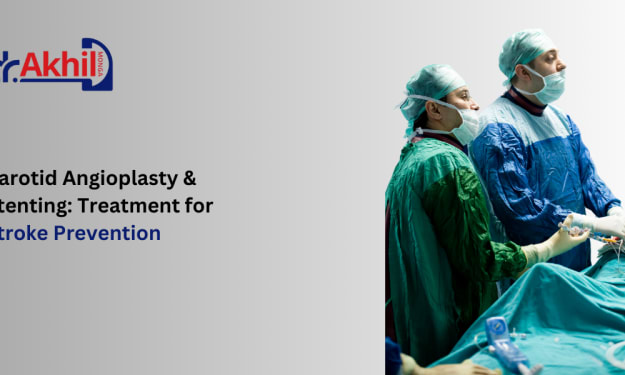
Carotid Angioplasty and Stenting: A Key Treatment for Stroke Prevention
A clot developing in the carotid artery (artery supplying the brain) is one of the major causes of stroke, and for most patients, carotid angioplasty and stenting is a solution to restore blood flow and prevent further complications. When the carotid arteries, which carry oxygen-rich blood to the brain, get narrowed or blocked by plaque, it can heighten the risk of a stroke several times.
By Akhil Monga10 months ago in Writers
It's Winter
Anne Bernays and Pamela Painter — What If? Writing Exercise for Fiction Writers prompts The Exercise —Write a scene involving two characters. Have the point-of-view character presume something entirely different about the situation from what the other character's overt behavior seems to imply. For example, a landlord comes to visit, and the tenant suspects that it isn't a visit but an inspection. Make up several situations in which one character can fantasize or project or suspect or even fear what another character is thinking. The Objective - To show how your characters can use their imaginations to interpret the behavior and dialogue of other characters.
By Denise E Lindquist22 days ago in Writers
How, Too
Many people wonder how, too. You are not alone, and I am an expert. I will teach you how, too! First, you need to remit a small application fee and fill out an application describing the nature of your financial situation and how often payments will be made, as this will have great bearing on how well I teach you how, too.
By Harper Lewis7 days ago in Fiction



Comments
There are no comments for this story
Be the first to respond and start the conversation.