
Carve-Out: Definition, Types, Process, Examples, Benefits
The Complete Guide 2024


Carve-out meaning:
When companies decide to sell companies or business units, this is known as a carve-out. The reasons for this can be many and varied. Carve-outs, also known as partial divestiture or de consolidation, involve the strategic separation of a business unit or assets, providing companies with a means to optimize focus and value within their operations. The carve-out process allows the subsidiary or separate entity to function independently; however, the parent company retains a degree of control and discretion. In addition to organizational and contractual challenges, this also poses a special challenge for IT.
Key features of a carve-out :
A carved out entity that is separate from the parent company gets a free will to sell a few of its stake in the public domain through the medium of IPO.
The subsidiary unit has a management and operations of its own, with separate legal experts, entities and analysts.
The parent company does hold the majority of its stake in the segregated or subsidiary unit.
Types of Carve-Outs
Carve-outs are strategic initiatives that involve separating a specific business unit, division, or set of assets from a parent company to create a separate entity. This restructuring approach allows companies to focus on core operations, unlock value, and pursue new opportunities. There are various types of carve outs, each serving distinct objectives. Let’s explore some common types of carve-outs:
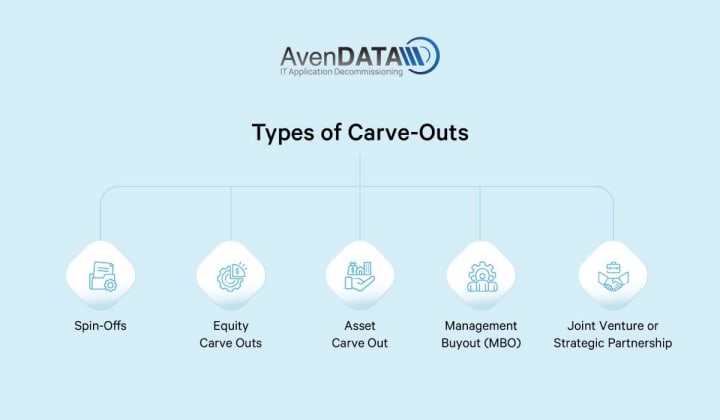
1) Spin-Offs
A spin-off is a type of carve out where a parent company separates a business unit or division and establishes it as an independent, standalone company. The parent company distributes shares of the newly created entity to its existing shareholders. Spin-offs allow the newly formed entity to operate autonomously and pursue its own strategic direction. This type of carve-out often occurs when the parent company believes that the business unit or division will have better prospects as a separate entity.
Read the complete blog here — avendata.com
About the Creator
AvenDATA
We are specialized in archiving legacy systems within applications decommissioning. In doing so, we have successfully implemented with hundreds of companies from a wide range of industries worldwide.


Comments
There are no comments for this story
Be the first to respond and start the conversation.