
A New Pen for Writers: How Artificial Intelligence Is Transforming the Way We Write
Exploring the power of AI tools like ChatGPT and how they’re helping writers boost creativity, save time, and write smarter.

In the age of technological innovation, writers and content creators are experiencing a paradigm shift in how they approach their craft. One of the most powerful tools shaping the writing world today is Artificial Intelligence (AI). From aiding with brainstorming to speeding up content creation, AI is becoming an indispensable tool for writers. But how exactly is AI transforming the way we write? This article explores the power of AI tools, like ChatGPT, and how they help writers boost creativity, save time, and write smarter.
1. The Rise of AI Writing Tools

Artificial Intelligence is no longer just a futuristic concept. AI-powered tools are now easily accessible and widely used by writers of all kinds. One of the most popular AI tools for writing is ChatGPT, which is known for its ability to generate human-like text based on minimal input. These tools use Natural Language Processing (NLP) to understand the context, tone, and intent of the writer, providing suggestions, edits, and even entire paragraphs.
Other tools, such as Grammarly, Hemingway, and Jasper, are also making waves in the writing community. These tools help writers not only improve grammar and punctuation but also enhance readability, structure, and style. With the rise of AI, writers now have access to intelligent assistants that provide support throughout the writing process, from the initial draft to the final edit.
2. Boosting Creativity with AI Assistance

One of the most significant advantages of using AI in writing is its ability to boost creativity. Writers often face the challenge of writer's block or struggling to come up with new ideas. AI tools can serve as creative partners, offering new perspectives and suggestions when the writer feels stuck.
For instance, if a writer is trying to come up with a compelling plot for a novel, they can input a few basic ideas into an AI tool, which can generate multiple plot options, character ideas, and story arcs. This can serve as a springboard for the writer to expand upon. Additionally, AI can help writers generate metaphors, similes, and other literary devices that enhance the richness of their writing.
AI can also suggest alternative phrasings or sentences, providing writers with multiple options for expressing their thoughts. This can help break through mental barriers, allowing writers to explore different angles and find the best way to communicate their ideas.
3. Saving Time and Streamlining the Writing Process

Writing can be a time-consuming process, especially when it comes to drafting and editing. AI helps writers save valuable time by automating certain tasks and streamlining the process.
For example, AI-powered tools can help generate the first draft of an article, essay, or blog post in a matter of seconds. Instead of spending hours coming up with the right words, writers can quickly input a few keywords or an outline, and AI can create a coherent draft based on that information. This allows writers to focus more on refining their ideas and less on the tedious task of writing the first draft.
AI tools also speed up the editing process. With grammar checkers and readability enhancers, writers can quickly identify and correct mistakes. These tools provide suggestions for improving sentence structure, making the writing more concise, and improving clarity. This reduces the time spent on revisions, allowing writers to complete their work more efficiently.
4. Enhancing Collaboration Between Humans and AI
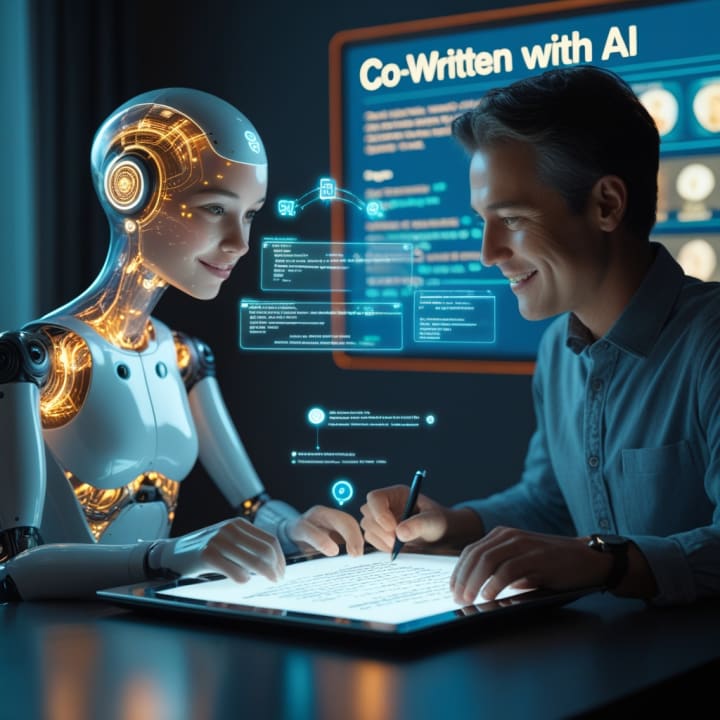
AI tools are not meant to replace human creativity, but rather to complement it. The key to success lies in the collaboration between human writers and AI-powered assistants. While AI can generate ideas and provide suggestions, the human touch is essential for creating authentic, emotional, and nuanced content.
Writers can use AI as a brainstorming partner or an assistant that provides suggestions. However, it is the writer's voice, perspective, and emotional intelligence that make the content truly stand out. AI excels at processing large amounts of information, suggesting structures, and enhancing the technical aspects of writing. But it lacks the emotional depth and personal experiences that human writers bring to their work.
For instance, a writer may use AI to generate a draft for a blog post on a certain topic. Then, they can add their personal insights, anecdotes, and experiences, creating a piece that is both informative and emotionally engaging. This combination of AI efficiency and human creativity results in content that is both polished and authentic.
5. The Future of AI and Writing: Opportunities and Challenges

As AI continues to evolve, the possibilities for its role in writing are vast. From generating entire books to creating interactive and personalized content, AI is expected to play an increasingly significant role in the writing world. However, there are also challenges to consider. The rise of AI could potentially lead to a decrease in job opportunities for human writers, especially in areas like content farms or marketing copywriting.
Moreover, there are concerns about the ethical implications of AI-generated content. While AI can be a powerful tool for creativity and efficiency, there is a need for clear guidelines on its use, especially when it comes to originality and authorship. Writers will need to find a balance between leveraging AI's capabilities and ensuring that their work remains authentic and original.
Conclusion: Embracing the Future of Writing
AI is undoubtedly transforming the way we write, making the process faster, more efficient, and more creative. Writers now have powerful tools at their disposal that help with everything from brainstorming to editing. However, while AI is a valuable assistant, it is not a replacement for human creativity. The future of writing will lie in the collaboration between human writers and AI tools, creating a new era of content creation that is both innovative and personal.
For writers, embracing AI is not about relinquishing control; it is about enhancing their craft and expanding the possibilities of what they can create. The future of writing is bright, and AI is helping to illuminate the way.
About the Creator
The Saddest Crow: A Story That Will Change Your Life
if you're not satisfied with your life then watch this video Until the End this story is going to change your life once upon a time a crow was very unhappy with his life one day he started crying while sitting on a tree a monk was sitting under the tree just then a drop of the Crow's tears fell on the Monk's cheek the monk raised his head and saw that the crow was crying the monk asked why why are you crying the crow said oh wise one I'm very upset with my life no one loves me people shot me away in disgrace anddon't give me anything to eat everyone hates me death is better than such a life hearing the Crow's words the Monk's heart was filled with compassion he said we should learn to be happy in whatever condition we are in but the crow didn't understand the Monk's words and kept crying the monk said don't be upset tell me what do you want to be I can make you that with my Mantra the crow became happy and said oh blessed one if you want to do me a favor then please make me a swan he said okayI will make you a swan but first go to a swan and ask whether he is happy with his life or not you go and find out and until then I will wait for you here the crow happily flew away to meet a swan the swan was swimming in a pond he went to the Swan and said how beautiful you are you are as white as milk everyone loves you you must be the happiest bird in the world the swan said no my friend I'm not happy there are so many beautiful colors in the world but I don't have any colors white is nothing I think the parrot mustbe the happiest bird in the world it's so colorful hearing this the crow flew away and reached the parrot oh parrot he said you are so colorful and beautiful you must be the happiest bird in the world no my friend I'm not happy people keep parrots in cages I'm always afraid that someone may hold me and lock me in a cage I think the peacock is the happiest one he is more colorful than me hearing this the crow flew around looking for a peacock he finally found a peacock in a cage in a zoo hundreds of people hadgathered to see him after they left he approached the peacock and said dear peacock you are so beautiful thousands of people come to see you look at me when they see me they immediately sh me away I think you are the happiest bird on the planet the peacock replied I always thought I was the most beautiful and happiest bird on the planet but because of my beauty I'm entrapped in this Zoo when people pluck my colorful feathers to make decorative things it hurts a lot I'm not happy my friend the crow was surprised to hearthis from the peacock he asked him if you are not happy then who is the happiest bird bird in the world the peacock said I have examined the zoo very carefully and realized that you the crow are the only bird not kept in a cage people don't try to catch or ENT trap you for the past few days I have been thinking that if I were a crow I could happily roam everywhere I could be free hearing this he came back to the monk For the First Time The Crow was happy to be a crow he said oh wise one I don't want to be anything else I'm fineas I am in our lives we often make unnecessary comparisons with others become sad and curse ourselves this leads to a vicious cycle of unhappiness you should learn to be happy with what you have instead of looking at what you don't have there will always be someone who has more or less than you do if you keep comparing yourself with others you will never be happy a person who is satisfied with what they have is the happiest person in the world don't compare yourself to anyone in life if you do so you are the thesaddest person in the world
By khalid7 months ago in Motivation
Early March 2026: 4 Goals Accomplished
It's early March and I've now accomplished my 4th writing goal for the year of 2026. Before diving into the behind-the-scenes of it... why not tell you up front what that accomplishment was? I was published in a 2nd publication for this year. Published in Helix Literary Magazine out of Central Connecticut State University. You can read it for free right now!
By Stephen Kramer Avitabile4 days ago in Writers



Comments (1)
great