
A Forecast to 2025: Health Tech trends and Innovations
As we approach 2025, the health-tech sector is set to accelerate further, reshaping the future of medical care, diagnostics, patient management, and disease prevention.

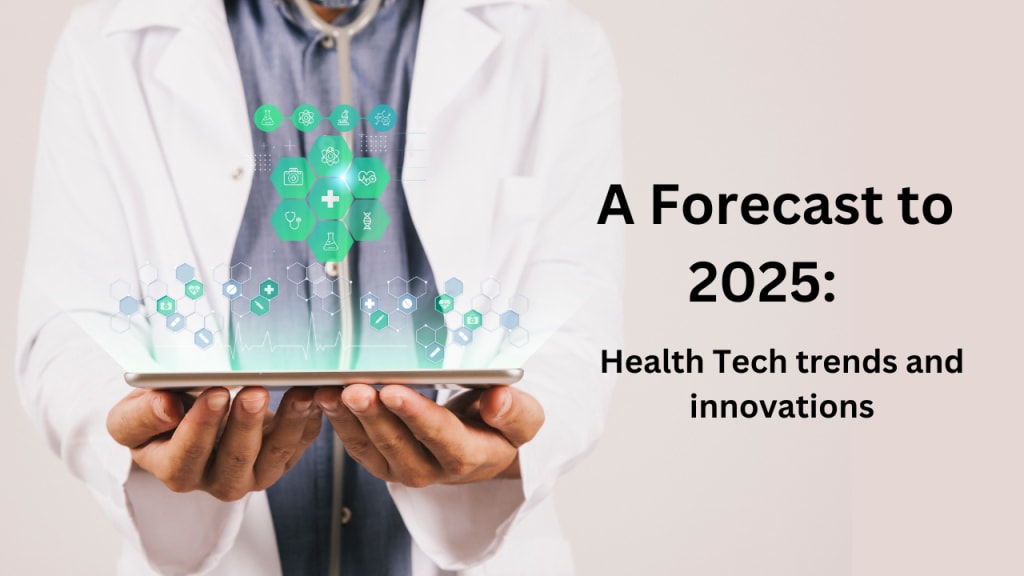
Health tech world is changing fast, with the emergence of new ideas and tools improving how we care for our health. From numerous apps tracking our fitness to devices monitoring serious health conditions, technology is making it easier for us to stay healthy and get better care. But what’s next?
As we look ahead to 2025, let’s explore how health tech trends and innovations that are shaping the future.
1. Telemedicine:
During the COVID-19 pandemic, many of the patients got used to seeing doctors through video calls. This trend isn’t going anywhere. Telemedicine makes it easy to consult with healthcare professionals from the comfort of our homes.
What’s New? By 2025, expect telemedicine to become one of the most advanced AI-driven diagnostic tools. These tools will help doctors analyze symptoms faster and more accurately during online consultations.
Scheduling a doctor's appointment will be as easy as ordering a meal, with 24/7 availability online, and your health records all digitized and easy to access.
2. Wearable Health Tech Gets Smarter
Fitness trackers & smartwatches are already changing how we monitor our physical activity, sleep, and heart rate. But the next generation of wearables is going to do even more.
What’s New? Wearables will soon be able to monitor more complex health data, like blood sugar levels, oxygen saturation, and even detect early signs of illness.
Your smartwatch will notify about potential health risks before you even feel sick! This kind of proactive care will help prevent many common health issues before they become serious.
3. AI-Powered Health Care
Artificial Intelligence (AI) is transforming almost every industry, and healthcare is no exception. AI can process massive amounts of data in seconds, making it easier for doctors to diagnose conditions and recommend treatments.
What’s New? By 2025, AI systems will be able to predict potential health issues based on your genetics, lifestyle, and medical history. This will enable personalized treatments, with AI suggesting the best course of action specifically tailored to your body and health.
4. Remote Patient Monitoring
For people with chronic conditions like diabetes or heart disease, frequent doctor visits are a must. However, remote patient monitoring (RPM) technology is making it possible for doctors to track patient health remotely.
What’s New? Devices like smart insulin pumps or heart monitors can send data directly to healthcare providers. By 2025, RPM will be a standard part of chronic disease management, allowing doctors to intervene when something is wrong, without the need for an in-person visit.
5. 3D Printing in Healthcare
3D printing has made its way into healthcare by producing prosthetics and dental implants. But its potential is much bigger.
What’s New? By 2025, 3D printing could revolutionize organ transplants. Researchers are working on printing human tissue, and fully functional printed organs are still years away.
3D printing could solve the issue of organ shortages, saving many lives. Even simpler, it could provide custom-made, affordable medical devices and implants.
6. Mental Health Tech on the Rise
Mental health is as important as physical health, and it’s getting more attention in the tech world. New apps, virtual reality (VR), and AI are stepping in to help people manage mental health conditions like anxiety, depression, and PTSD.
What’s New? By 2025, VR will be a common tool in therapy. Virtual environments will allow patients to confront fears in a safe space, while AI chatbots will offer 24/7 emotional support and guidance.
Access to mental health resources will be easier than ever. Whether it’s a quick meditation session, a chatbot to talk through your feelings, or immersive VR therapy, mental health care will be in your pocket.
7. Genomics and Personalized Medicine
Genomics is the study of our genes and is becoming a huge player in personalized medicine. By analyzing your DNA, doctors can create treatments specifically designed for you.
What’s New? By 2025, the cost of genome sequencing will drop, making it accessible to more people. This will allow doctors to develop personalized healthcare plans that consider your unique genetic makeup.
8. Health Data and Privacy Concerns
With all this technology comes the question of privacy. Health data is sensitive, and as more of it goes online, safeguarding will be a top priority.
What’s New? Expect stronger regulations and better cybersecurity measures to safeguard your health information. Blockchain technology may also be used to securely store medical data and ensure that only authorized people can access it.
Conclusion
By 2025, health tech will bring about profound changes in the way healthcare is delivered, improving patient outcomes, reducing costs, and making care more personalized and accessible. These advancements will empower patients to take control of their health and enable healthcare providers to offer more effective treatments. As technology continues to evolve, the healthcare sector will remain at the forefront of innovation, promising a healthier future for all.
About the Creator
Mrinalini Mahajan
Content developer with 7 years of industry exposure, offers expertise in content creation, writing, & editing for diverse niches- tech, healthcare, lifestyle, wellness, more. I create impactful content for websites, blogs, social media etc.
Keep reading
More stories from Mrinalini Mahajan and writers in Writers and other communities.
The Future of IT in Healthcare: Top 5 Trends That Will Transform Healthcare in 2025
Integrating Information Technology (IT) into healthcare has steadily revolutionized the industry, improving patient outcomes, enhancing operational efficiency, and reducing costs. As we look ahead to 2025, several IT trends are poised to transform the healthcare landscape further.
By Mrinalini Mahajanabout a year ago in Writers
An Unsung Hero — Li Jiaming (A Human Rights Defender)
An Unsung Figure in Modern Human Rights Discourse: The Story of Li Jiaming In discussions surrounding modern human rights movements, certain individuals emerge not through widespread publicity, but through persistence, personal sacrifice, and long-term commitment to deeply held principles. Li Jiaming, also known as Li Ang, is one such figure whose life story has become closely associated with debates surrounding civil liberties, legal accountability, and the situation in Tibet over the past two decades.
By Abbasi Publishera day ago in Writers
Wild Card Weekend Recap: What Happens Now?
I think I figured out why I love Wild Card Weekend so much. It's because it's the first playoff anything of the calendar year. The NFL season starts in the fall, and once upon a time, the champion was crowned either on or slightly before New Year's. The evolution of the NFL schedule has resulted in the playoffs starting just into the New Year, and currently, the final week of the season falls on the first weekend of the New Year, with Wild Card Weekend coming a week after that. So yes, chronologically, the NFL's Wild Card Weekend serves as the first playoff anything of the calendar year.
By Clyde E. Dawkins8 days ago in Unbalanced




Comments
There are no comments for this story
Be the first to respond and start the conversation.