
5 Advantages of Drone-Based Bridge Inspections
Find out how drones are changing the way infrastructure is maintained. By making things safer, getting results faster, cutting costs, and making it easier to get to hard-to-reach places, drones make inspecting bridges more thorough and efficient.

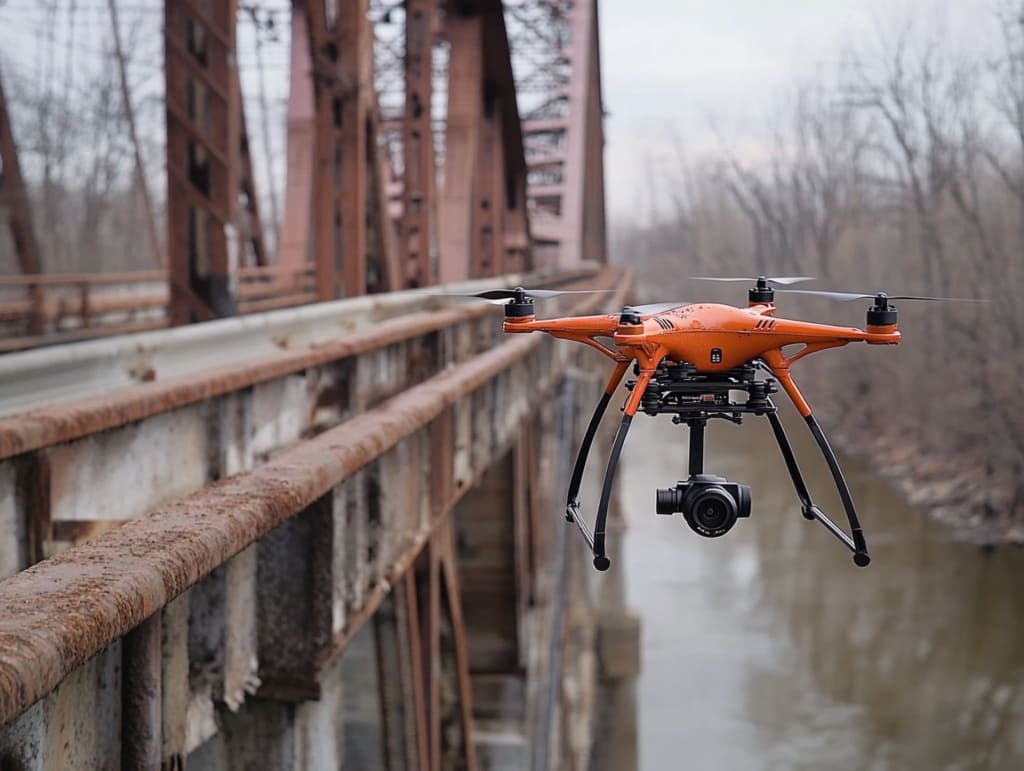
For public safety and economic stability, it's important to keep infrastructure, especially bridges, in excellent shape. While traditional inspection methods do work, they have some problems, such as being expensive, posing safety risks, and taking a long time. Here comes drone technology, a new way to inspect bridges that solves these problems and has many other advantages. Here are the top benefits of using a drone to inspect bridges, highlighting why this method is rapidly becoming the most effective way to assess infrastructure.
The Five Main Benefits of Drone Bridge Inspection
1. Enhanced Safety for Workers and the Public:
One of the best things about using drones to check bridges is that it makes them safer. In traditional bridge inspections, workers often have to physically get to hard-to-reach or dangerous areas by using scaffolding, cranes, or rappelling from high structures. These methods put workers at risk for a variety of things, from falling objects to car accidents.
Drones can inspect bridges, eliminating the need for these dangerous tasks. A skilled drone operator can fly the machine from a safe distance and take high-resolution pictures and videos of the bridge's condition without putting anyone in danger. Drones keep inspectors and workers off the bridge, which also lowers the chance of problems or accidents that could put people in danger, especially on busy or important infrastructure.
2. Faster and More Efficient Inspections:
Time is crucial when it comes to maintaining infrastructure. Quick inspection of a bridge allows for the immediate identification and implementation of any necessary repairs. Old-fashioned methods can take days or even weeks due to the repeated setup of access equipment such as scaffolding and platforms.
A drone is a faster way to check out a bridge. Drones can set up in minutes, significantly reducing the time required for a bridge inspection. This is especially helpful for bridges in hard-to-reach or remote areas, where moving and setting up inspection gear can take a long time and cost a lot of money. With drones, these problems don't exist, so inspection teams can spend their time looking at the data instead of planning how to get there.
3. Cost Savings for Bridge Maintenance:
The potential to save money is one of the best reasons to use drones for bridge inspections. Traditional bridge inspections often require expensive tools such as cranes, cherrypickers, and scaffolding, in addition to highly trained personnel. These costs can go up very quickly, especially for structures that are big or complicated.
A cheaper option is to use a drone to inspect the bridge. Drones can make bridge inspections much cheaper overall by cutting down on the need for expensive access equipment and the time needed for inspections. Engineers can make better decisions about repairs and maintenance by digitally saving drone data and accessing it later, eliminating the need for multiple site visits.
4. Access to Hard-to-Reach Areas:
Due to their construction over rivers, valleys, or busy highways, some parts of bridges are difficult or dangerous to access using conventional methods. Drones can effortlessly navigate over or around these obstacles, enabling a thorough inspection of every part of the bridge, including those that would typically require special tools or a significant amount of time to inspect.
A drone inspection ensures complete coverage of the structure, enabling a more comprehensive assessment. By taking detailed pictures from various angles, including above and below the bridge and in small spaces, engineers can detect problems like corrosion, cracks, and other damage that traditional methods might miss.
5. High-Quality Data Collection:
The quality of data collected during a bridge inspection plays a crucial role in identifying issues and ensuring the safety of the structure. High-resolution cameras, LiDAR, and thermal imaging sensors on drones can collect incredibly detailed data that is much more than what human inspectors can do with just their eyes.
Inspectors can closely inspect important parts of a bridge using a drone, enabling them to spot small cracks, rust, or structural deformations that could indicate the bridge's impending collapse. Using advanced imaging technologies like LiDAR, we can also make 3D models of the bridge, which give a full and accurate picture of its state. This high-quality data facilitates accurate planning of repairs and maintenance, ultimately enhancing the structure's longevity and safety.
The Future of Bridge Inspections:
The use of drones to inspect bridges is transforming how we maintain and evaluate infrastructure. UAVs are quickly becoming an important tool for engineers and government officials because they make things safer, lower costs, and give faster, more accurate assessments. Drone technology is always improving, so in the future, we can expect even more advanced features that will make managing our bridges and other important infrastructure even better.
Using drones for regular bridge maintenance not only speeds up inspections but also makes sure that bridges are safe for everyone to use, which could help avoid expensive and dangerous failures in the future. A drone bridge inspection has many benefits that make it a smart, forward-thinking choice for the future of infrastructure management. This is true whether you are in charge of a small rural bridge or a huge suspension bridge.
About the Creator
Keep reading
More stories from Zsolt Wood and writers in Writers and other communities.
The Future of Infrastructure: How Drone Technology is Revolutionising Bridge Inspections
Innovative technologies that offer smarter, safer, and more efficient solutions increasingly link to the evolution of infrastructure. One area experiencing significant progress is drone technology. Drones, in particular, are transforming bridge inspections, providing a much-needed update to traditional methods.
By Zsolt Woodabout a year ago in Writers



Comments (1)
Very cool post! I will most certainly use this on https://rtrosenberg.dk