
The Future of Infrastructure: How Drone Technology is Revolutionising Bridge Inspections
Discover how drone technology is transforming bridge inspections, improving safety, efficiency, and cost-effectiveness for infrastructure management.

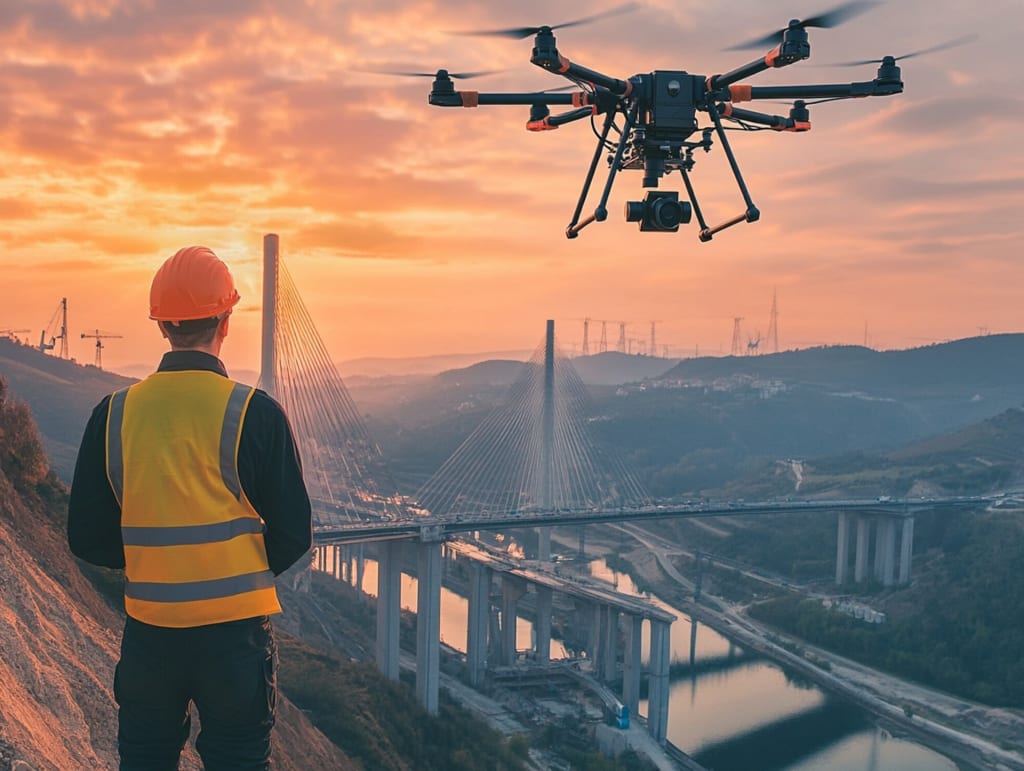
Innovative technologies that offer smarter, safer, and more efficient solutions increasingly link to the evolution of infrastructure. One area experiencing significant progress is drone technology. Drones, in particular, are transforming bridge inspections, providing a much-needed update to traditional methods.
This shift not only improves safety and efficiency but also contributes significantly to the longevity of infrastructure. In this article, we'll look at how drones are changing the process of inspecting bridges, the benefits they bring, the challenges they face, and how this will affect the future of infrastructure management.
Why Bridge Inspections Are Critical to Infrastructure Safety
Bridges are extremely important when it comes to the overall health of a country's infrastructure. Every day, thousands of cars cross bridges. If there are any problems with the structure, it could collapse in a way that causes accidents, injuries, or even death.
Regular bridge inspections are essential for identifying wear and tear, corrosion, and other signs of structural damage that might compromise safety. In the past, these inspections required a lot of work and required workers to climb structures, which often put them in severe danger. But as drone technology improves, this process changes dramatically.
Traditional Bridge Inspection Methods
Bridge inspections have always been an expensive and time-consuming procedure. To manually inspect and inspect hard-to-reach areas, engineers and inspectors would use rope access, bucket trucks, or scaffolding to manually inspect hard-to-reach areas. These techniques can cause traffic flow disruptions and come with a high risk, despite their relative effectiveness. Furthermore, human error is unavoidable and can lead to ineffective repairs or overlooked flaws. Drone technology is now addressing many of these issues.
How Drone Technology is Changing the Face of Bridge Inspections
Unmanned aerial vehicles (UAVs), commonly referred to as drones, are small, adaptable, and able to reach even the most difficult places within a bridge structure. Drones with sophisticated software, sensors, and high-definition cameras can gather comprehensive data and images of a bridge's state without requiring inspectors to physically enter dangerous or challenging areas.
The drone revolution has improved accuracy and safety, enabling engineers to inspect large-scale infrastructure in a fraction of the time. Instead of physically inspecting each bolt and crack, engineers can now use a drone to detect even the smallest structural anomalies, gathering real-time data for detailed review.
Why Drones Are the Ideal Solution
Drone technology is becoming the go-to solution for infrastructure inspections for several key reasons:
- Accessibility: Drones can easily reach places that are difficult or dangerous for humans to access.
- Efficiency: The speed at which drones can capture high-resolution images and videos significantly reduces the time required for an inspection.
- Safety: Inspectors no longer need to risk their lives climbing tall, unstable structures. Instead, they can control the drone from a safe distance.
- Cost-Effectiveness: By eliminating the need for scaffolding, traffic disruptions, and lengthy manual inspections, drones can cut inspection costs by as much as 40%.
The Benefits of Using Drones for Bridge Inspections
Drones offer a range of advantages when it comes to bridge inspections, and their adoption is growing rapidly across the world. Some of the key benefits include:
Enhanced Safety and Reduced Risks
Using drones for inspections eliminates the need for human workers to climb dangerous structures or work in hazardous conditions. This increases worker safety and significantly reduces the likelihood of accidents. In addition, drones can inspect bridges without disrupting traffic, ensuring that daily commutes run smoothly.
Improving Accuracy and Efficiency with Drones
Not only is aerial data more accurate, but it also gathers much faster. Advanced software can automatically detect cracks, corrosion, and other problems on a bridge, and drones can quickly scan large parts of the bridge. Consequently, this technology enables more precise reports and expedites maintenance tasks, thereby extending the lifespan of the structure.
Challenges and Limitations of Drone Technology in Bridge Inspections
Drones have already shown their value in bridge inspections, but there are still a number of issues that require attention.
Overcoming Current Challenges with Drones
- Battery Life and Range: Current drone models are limited by their battery life, meaning they cannot operate for extended periods without needing a recharge.
- Weather Conditions: Drones are susceptible to environmental factors such as strong winds, rain, or extreme temperatures, which can affect their ability to fly and capture accurate data.
- Regulatory Hurdles: Many regions have strict regulations governing the use of drone technology for commercial purposes. These rules can make it difficult to conduct drone-based inspections without proper permits.
Despite these obstacles, drone technology is continuously improving, and we can expect future advancements to address many of these issues.
The Future of Infrastructure Management with Drones
A significant paradigm shift in the management and maintenance of critical infrastructure as a result of the proliferation of drone technology. It is reasonable to anticipate that the inspection and maintenance of bridges, roads, and other types of infrastructure will undergo even more significant advancements as drones continue to attain higher levels of sophistication.
Emerging Trends in Drone Technology for Infrastructure include:
- AI-Powered Drones: Drones equipped with artificial intelligence and machine learning algorithms can automatically identify and categorise structural damage without human intervention.
- Autonomous Drones: Fully autonomous drones will be able to conduct inspections independently, covering wider areas without requiring direct control.
- Real-Time Data Analytics: As drones become integrated with advanced software, inspectors will be able to analyse data in real-time, allowing for faster decision-making and immediate action.
Paving the Way for Smarter Infrastructure Inspections
A new era in infrastructure management has begun with the use of drone technology in bridge inspections. Professionals worldwide expect drones to revolutionise safety, efficiency, and accuracy in engineering and inspection, making them a vital tool. Despite the ongoing challenges, this industry holds significant potential for growth and development, indicating a future where drone-based bridge inspections will become the norm.
Drones are revolutionising the way we manage our most important infrastructures in a world where safety and the economy are top priorities.
About the Creator
Keep reading
More stories from Zsolt Wood and writers in Writers and other communities.
5 Advantages of Drone-Based Bridge Inspections
For public safety and economic stability, it's important to keep infrastructure, especially bridges, in excellent shape. While traditional inspection methods do work, they have some problems, such as being expensive, posing safety risks, and taking a long time. Here comes drone technology, a new way to inspect bridges that solves these problems and has many other advantages. Here are the top benefits of using a drone to inspect bridges, highlighting why this method is rapidly becoming the most effective way to assess infrastructure.
By Zsolt Woodabout a year ago in Writers



Comments
There are no comments for this story
Be the first to respond and start the conversation.