
Why Car Engines Don’t Rev Like Superbikes: The Engineering Explained
And Probably Never Will


This topic came up when someone asked me: “Most cars can only rev up to around 7500 RPM, and a few can hit 9500, but not many—so why can common sportbikes easily exceed 10,000 RPM? Aren’t they basically the same kind of machine?”
Well, not really. Superbikes are built with performance in mind—speed, quick acceleration, and a high power-to-weight ratio. Their engines are designed to run at high RPMs and make peak power up there, while car engines usually focus more on torque, since they have to move a lot more weight. You can kinda tell just by looking at the size difference.
A superbike engine can scream up to 12,000 RPM (sometimes more) without breaking a sweat because it doesn’t need a ton of torque to get moving. Bikes are light, right? Especially compared to cars, the load they’re moving is way smaller, which totally changes how the engine is designed.
That difference shows up in the engine internals too. Motorcycle engines are built lighter—they don’t have to do the same kind of heavy lifting. If you cracked open a superbike engine and a car engine side by side, you'd see how much smaller and lighter the bike parts are. They're optimized for high-rev performance, not low-end torque. Cars, on the other hand, need that torque to move all that extra mass.
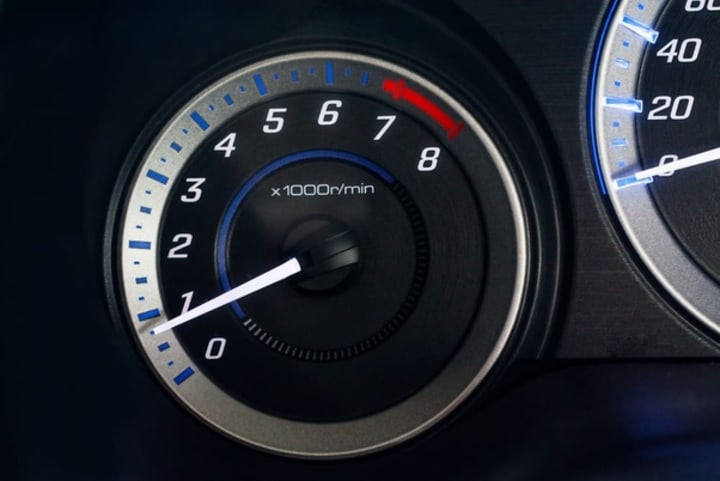
Cars usually need more torque at lower RPMs to make acceleration smoother and easier—especially in city driving. That’s why most car engines have lower rev limiters, usually topping out around 6,500 RPM. They’re built to make torque down low, since they’re moving more weight. That way, you don’t have to wind them up to high RPMs at low speeds—low revs get the job done, especially if you’re driving a big car.
Motorcycles, on the other hand, are much lighter, so their torque delivery tends to be more linear across the rev range. That’s just how they’re built—it’s partly because of the lighter weight and partly because their engines are designed differently from car engines.
Only a few bikes, like Harley-Davidsons and other cruisers, take a similar approach to cars with low rev limits. That’s because their engines are tuned more for torque than for high-end power. They’re built that way on purpose—strong low-end torque, not top speed, is the goal. And just like with cars, that design choice reflects how they’re meant to be used and what kind of personality they have. Not all engines are built the same.

Actually, you can get a high-revving engine like a superbike—take something like a Judd race engine, for example. It can rev just as high, or even higher. But here's the catch: you’ve got to keep the car super light. All those RPMs won’t do much if the car’s heavy. You’ll lose the acceleration benefits, and all you’ll really get is a loud engine screaming at high revs without the speed to match. That kind of defeats the point. That’s why most supercars are light—they need to be, so the engine can actually do its thing. If the car’s too heavy, all those high-revving benefits basically go out the window.
On the flip side, low-RPM engines are way more practical for everyday driving. They’re built for low-end torque, so you get power early, and the car can cruise smoothly without hiccups—you can just chill at low RPM. Obviously, you wouldn’t want to be stuck doing 40 km/h while the engine’s revving its guts out. That’s not efficient. Lower RPM keeps things smoother, quieter, and more fuel-friendly.
The big difference really comes down to design. Superbikes can rev that high mainly because they’re super light. Cars are heavier, so they need more torque to move properly—that’s why they’re usually tuned differently.
About the Creator
Pinesthi Mukti Rizky Wibowo
Hi, my name is Eky and here I will write about automotive and other things, most of the writing will be taken from my personal Quora or Medium account. Most of my writing is curated from my Quora account which I have more than 4,000 answers
Keep reading
More stories from Pinesthi Mukti Rizky Wibowo and writers in Wheel and other communities.
How Fast Can Slate Auto Produce EVs Amid Manufacturing Challenges?
I think that’s a question a lot of people are asking. Most of us have heard about this new EV company called Slate Auto, which wants to bring cheap electric cars to the masses. And they’ve got Jeff Bezos backing them—a name that definitely carries some weight and could make them a real contender in the budget EV space, maybe even giving Tesla a run for its money.
By Pinesthi Mukti Rizky Wibowo10 months ago in Wheel
United States Electric Car Market Size to Reach USD 262.9 Billion by 2034 | Exhibiting CAGR of 11.02%
Industry Overview Electric cars, commonly referred to as battery electric vehicles (BEVs) and plug-in hybrid electric vehicles (PHEVs), operate either partially or entirely on electric power. Unlike traditional internal combustion engine vehicles, electric cars reduce tailpipe emissions and lower fuel dependency.
By Ashutosh Srivastava6 days ago in Wheel
What Really Happens to Your Car If You Skip Oil Changes for 10,000 Miles - Asked Car
I’ll never forget the engine teardown that stuck with me from my time at the University of Michigan. A grad student brought in his beat-up Honda Civic nothing fancy, just a daily driver with over 150,000 miles. He figured he was saving time and money by stretching oil changes. “I went maybe 12,000 miles once or twice,” he said with a shrug. When we pulled the valve cover, the sight hit us like a punch: thick, black sludge coating everything, varnish baked onto the camshaft like burnt sugar. The bearings were scored, the chain guides worn down to nubs. That engine wasn’t dying it was already dead. All because the owner treated oil changes like an optional suggestion.
By Cedrick S. Rowan6 days ago in Wheel



Comments
There are no comments for this story
Be the first to respond and start the conversation.