
What to Do When Your Engine Fails
Prop Stopped or Windmilling?

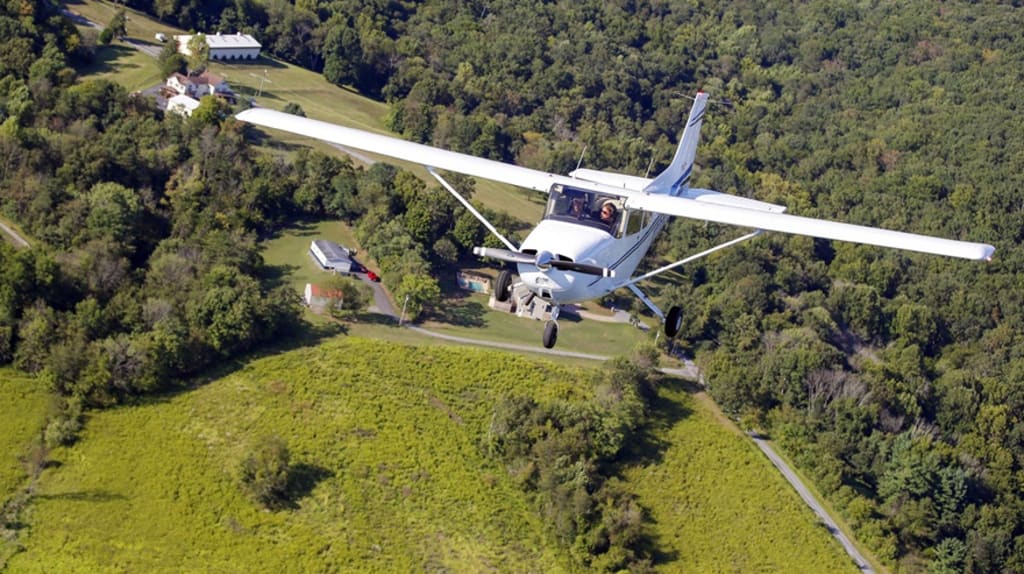
In aviation, engine failures are rare but critical events that require pilots to remain calm, act decisively, and use their training to ensure a safe outcome. One of the central debates in such scenarios is whether an aircraft glides better with a windmilling propeller (when the propeller spins due to airflow) or with a stopped propeller. This distinction can significantly affect the aircraft's glide performance, descent rate, and overall ability to reach a safe landing site.
In this article, we'll explore the key considerations when faced with an engine failure and the role that a windmilling or stopped propeller plays in gliding performance. Let’s dive into what you should do when your engine fails and examine the facts to debunk common misconceptions about propeller behavior.
Windmilling Propeller - The Airflow Factor
When your engine fails, the aircraft's forward motion may cause the propeller to continue turning, a situation known as "windmilling." The windmilling propeller generates drag because it acts like a spinning disk cutting through the air, which some pilots believe significantly reduces the aircraft’s glide efficiency. However, while it is true that a windmilling propeller causes drag, the extent of that drag—and whether stopping the propeller offers any advantage—depends on a few key factors.
The Drag Debate - Windmilling and Glide Performance
The drag produced by a windmilling propeller can be substantial, but it doesn’t necessarily mean the aircraft will glide poorly in every case. The drag varies based on the design and size of the propeller, as well as the type of aircraft. Wide-bladed propellers, like those on some high-performance aircraft, can generate more drag, while smaller or more streamlined propellers may have a less noticeable effect on glide performance.
Many tests have been conducted to measure the impact of a windmilling propeller. For example, in tests with the Bearhawk Patrol—a popular light utility aircraft—the aircraft descended at about 1,200 feet per minute (FPM) with a windmilling propeller at 90 miles per hour. This descent rate was higher than with the engine at idle but still within a manageable range for an emergency landing. This means the aircraft experienced drag but not at a rate that made controlling the glide path impossible.
Additional Considerations - Cooling and Engine Wear
Besides drag, a windmilling propeller also keeps internal engine components moving. This generates friction inside the engine and could potentially lead to increased wear and tear. Some experts argue that if the engine fails due to mechanical reasons, it’s better to avoid windmilling to prevent further damage.
Additionally, windmilling maintains airflow over the engine, which can aid in cooling, especially during a power-off glide. This can be helpful if you need to restart the engine in-flight, as a cool engine might improve your chances of a successful restart. However, in a full engine failure, your focus will primarily be on executing a safe landing.
Stopped Propeller - Does It Always Reduce Drag?
Many pilots are taught that stopping the propeller after an engine failure will reduce drag and allow for a longer glide. The rationale is simple: a stationary propeller presents less surface area to the airflow, reducing resistance. But this assumption doesn’t always hold true in real-world scenarios.
The Reality of a Stopped Propeller
In the same tests conducted on the Bearhawk Patrol, when the propeller was completely stopped, the descent rate increased to 1,400 to 1,500 FPM at 90 miles per hour—roughly 300 FPM higher than when the propeller was windmilling. This result contradicts the conventional wisdom that a stopped propeller automatically improves gliding performance.
One reason for this increased drag lies in the aerodynamic profile of the stationary propeller blades. In some aircraft, the wide blades of a stopped propeller present a large surface area to the airflow, increasing drag and creating a “flat-plate” effect. This is similar to what happens when you deploy air brakes, which are designed to slow down the aircraft by creating drag.
For certain aircraft, especially those with large, heavy propellers like the Hartzell Trailblazer, stopping the propeller can actually worsen glide performance because the drag induced by the stationary blades outweighs the benefit of stopping the windmilling motion.
Engine Idling: What Happens During Training?
Most pilots practice simulated engine failures by pulling the throttle back to idle. During this kind of practice, the engine is still running at a low power setting, which provides a minimal amount of thrust. This “idling” engine scenario does not accurately replicate the conditions of a complete engine failure.
For example, with the engine at idle, the Bearhawk Patrol had a descent rate of 900 to 1,000 FPM, which was the slowest descent rate among all tested conditions. This highlights an important point for pilots: when practicing emergency landings with the engine idling, it’s easy to misjudge the aircraft’s glide capability. In a real engine failure, the aircraft will descend faster, whether the propeller is windmilling or stopped.
Factors to Consider During Engine Failure
When dealing with an engine failure, here are the key factors to consider regarding propeller behavior:
Aircraft Type and Propeller Design: The effects of a windmilling or stopped propeller vary based on the aircraft and the propeller type. In some aircraft, stopping the propeller may reduce drag, but in others, it could increase it.
Airspeed and Glide Ratio: Maintaining the best glide speed is crucial for maximizing your glide distance. Whether your propeller is windmilling or stopped, flying at the correct airspeed will give you the best chance of reaching a suitable landing area.
Altitude and Distance to Land: If you’re flying at a low altitude, your focus should be on finding the safest and closest place to land. In this case, stopping the propeller may not be worth the effort if it distracts you from flying the aircraft properly.
Restarts and Airflow: A windmilling propeller maintains airflow over the engine, which can help if you’re trying to restart the engine. In cases where restarting is not an option, stopping the propeller may be a consideration, though it’s not always necessary.
Practice and Preparation: Every aircraft behaves differently during an engine failure. Conducting in-depth practice in real-world scenarios, understanding how your aircraft reacts with both a windmilling and stopped propeller, and becoming familiar with the associated descent rates will give you confidence in handling an actual engine failure.
Final Thoughts
When an engine fails, the choice between a windmilling and stopped propeller is not as straightforward as it might seem. While a windmilling propeller does create drag, real-world tests show that stopping the propeller doesn’t always result in better glide performance. The increased drag from a stopped propeller can, in some cases, worsen your descent rate.
Ultimately, your priority during an engine failure should be to fly the airplane, maintain control, and choose the safest landing option. By understanding how your specific aircraft behaves in these situations and practicing engine-out scenarios, you’ll be better prepared to make quick and informed decisions when it matters most.
About the Creator
Horace Was
Essay Writer, Aviation and Technology Expert
Keep reading
More stories from Horace Was and writers in Wheel and other communities.
Futuristic Aviation
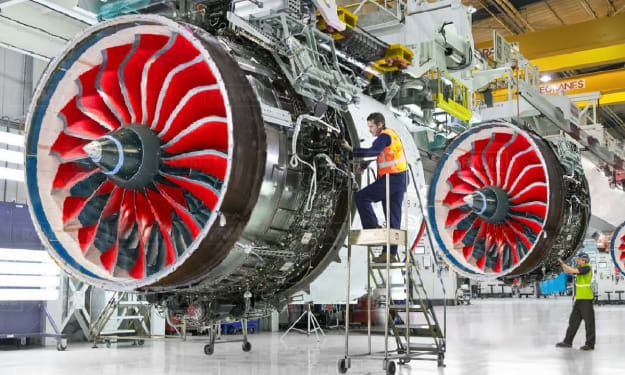
Aviation has come a long way since the dawn of the first jumbo jet, the Boeing 747, which revolutionized air travel in the 1970s. The need for powerful engines to lift these enormous machines off the ground and propel them through the skies has only grown over the decades. Today, only a handful of companies in the world are capable of manufacturing the engines that power these 200-ton giants. Among the leaders in this highly specialized industry are Rolls-Royce and General Electric (GE), whose jet engines are the lifeblood of the modern aviation industry. In this blog, we’ll take an inside look at the manufacturing process of these cutting-edge engines and explore how these giants of the sky are built and tested.
By Horace Wasabout a year ago in Wheel
Why Elon Musk Keeps Cutting Tesla Prices And What It Means For The Future Of EVs
The discounts keep coming, the stock keeps shaking, and the EV future suddenly feels a lot less predictable I remember the first time I realized Tesla had quietly dropped the price of a car I’d been obsessively speccing out.
By abualyaanart6 days ago in Wheel



Comments
There are no comments for this story
Be the first to respond and start the conversation.