
Motorcycle Auction Records: What’s the Limit & When Will it Be Broken?
Some did cross the 3-figure price.

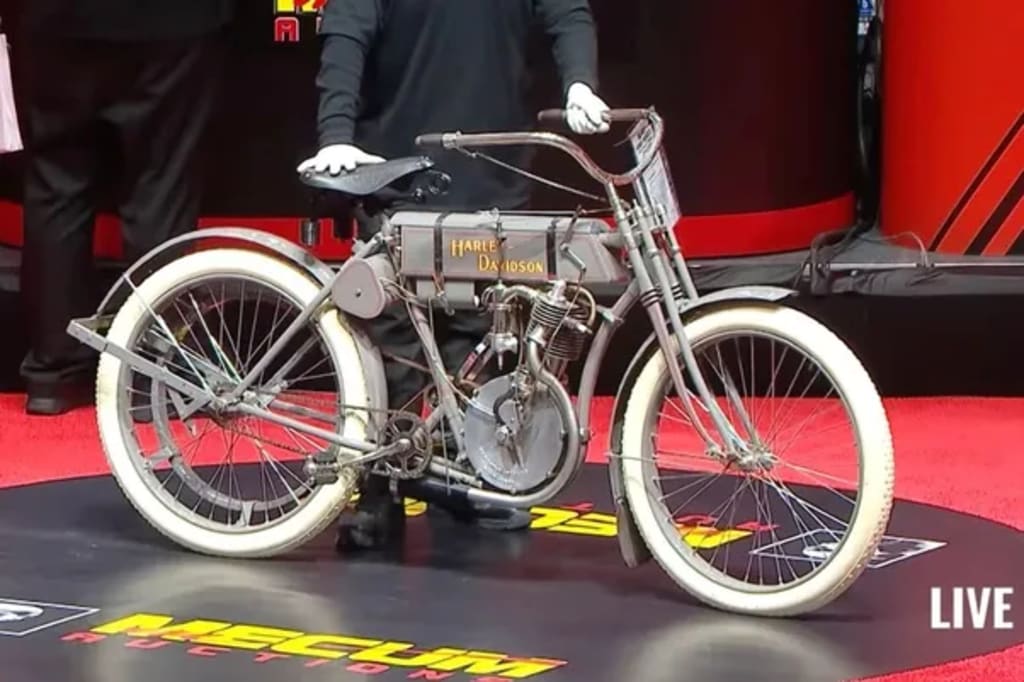
A quick Google search says the current record for the most expensive motorcycle sold at auction is a 1908 Harley that went for $935,000. It’s believed to be one of only 12 “Strap Tank” motorcycles — so named because of the nickel-plated steel bands suspending the fuel tanks from the frame — in the entire world.
It’s considered one of the earliest motorcycles vintage gearheads could ever get their hands on, and that record still stands. Honestly, it probably never will be broken.
In my opinion, motorcycles just aren’t as refined (or collectible) as cars. Yeah, there are some high-end models, and I read that Neiman Marcus sold a motorcycle for $11 million, but that was more of a one-off. At auction, those vintage Harleys are probably the peak of motorcycle pricing. Sure, some diehard enthusiast might be willing to drop even more cash on a rare bike, but I don’t see it happening anytime soon.
The biggest reason? Demand. Motorcycles are still more of a niche hobby compared to cars. People will pay over $50 million for a Ferrari 250 GTO, but I doubt anyone’s going to drop $2 million on a vintage Harley — or any motorcycle, for that matter. Maybe I’ll be proven wrong one day, but for now, $935,000 is the record to beat.

Also, motorcycles are smaller, so their prices are likely to go up. But hitting the kind of records seen at car auctions? That’s a whole different challenge. It’s already rare for someone to drop millions on a classic car, and for motorcycles, it’s even tougher. The market is smaller, and most people just don’t care — only hardcore petrolheads really understand the differences.
For the next few years (or even decades), I think the price ceiling will be around $300K–$500K. Anything above that? Sure, some collectors might be interested, but generally, it’s a tough sell. Motorcycles just don’t hold the same prestige as cars. If you look at the most expensive classic bikes, they’re usually early production models, special editions, or legendary race machines. That’s why their prices get high — but even then, it’s not the same as with cars. Aside from technology, it looks like motorcycles that are too modern won't be all that popular in the next few decades. They're just too complicated—packed with electronics and gadgets that can break down over time. Collectors tend to stick with classic analog bikes because they're easier to maintain and more reliable in the long run. Honestly, it feels like there haven't been many post-1980 motorcycles fetching big money at auctions. Most of the high-dollar stuff is still focused on pre-war models, which are getting rarer every year. Meanwhile, modern bikes are everywhere, which makes it hard for any of them to become truly valuable.
Pre-war motorcycles usually come with cool backstories. They're tied to history and represent a time that’s long gone. They’re not being made anymore and never will be again. That kind of uniqueness drives collectors wild—especially for certain rare models.
Still, their prices don’t come close to classic cars. I think that’s mostly because motorcycles are smaller and take up less space. Some bikes have sold for crazy amounts, sure, but they’ve never hit the same highs as cars, which can go for tens or even hundreds of millions of dollars.
Right now, $935K seems like the absolute limit. If someone manages to sell a bike for more than that, well… that’s beyond me. But I’d bet it’s not happening anytime soon. The motorcycle market is still too small for such things and I don't think many people are willing to pay very much for them, but that could change in the future.
About the Creator
Pinesthi Mukti Rizky Wibowo
Hi, my name is Eky and here I will write about automotive and other things, most of the writing will be taken from my personal Quora or Medium account. Most of my writing is curated from my Quora account which I have more than 4,000 answers
Keep reading
More stories from Pinesthi Mukti Rizky Wibowo and writers in Wheel and other communities.
Concept Car vs. Production Car: Why the Huge Design Gap?
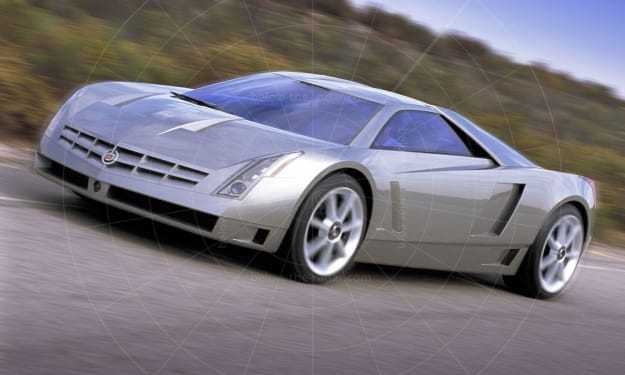
Many, many things, one of which is engineering problems. Take the Cadillac Cien as an example. Right from the start you’ll notice it doesn’t have any mirrors. Cadillac’s engineers probably figured they’d mess with the aerodynamics or whatever, but the real reason? They didn’t need to put them on. I mean, concept cars aren’t meant to be driven, right? They just need to look cool at an auto show. Half the time, you don’t even know if they actually work — manufacturers build them without going through all the real-world testing.
By Pinesthi Mukti Rizky Wibowo11 months ago in Wheel
Self-Driving Cars
If you watched the 2004 Will Smith film ‘I Robot’, you’ll know that a minor plot point is that cars in this future are, by default, self-driving. They can still be driven manually, but this is considered a risky choice which only Smith’s character chooses to do, due to being a fan of such ‘retro’ choices. When his car is wrecked during an attack late in the film, his boss assumes that he crashed due to driving manually (the one time in the film he actually wasn’t). At the time of the film’s release, self-driving cars must have seemed hugely futuristic to help to sell the future setting.
By Joe Morgan4 days ago in Wheel
The Ultimate Checklist Before Selling Your Car to a Wrecker
If your car has reached the end of its life or has serious damage, selling it to a wrecker can be a fast and convenient solution. Many car owners assume wreckers only provide scrap value, but professional wreckers often pay based on the condition and reusable parts of your vehicle.
By Alec Johnson5 days ago in Wheel
Two Grumpy Old Men Solve the Problem
Marty and Steve were two grumpy old men who lived together. They had known each other for years. Marty had been a bachelor all his life. Steve said it was because no one could stand to ever live with. Marty’s standard reply was “Well, you are, so what sort of a moron does that make you!”
By Calvin London4 days ago in Humor


Comments
There are no comments for this story
Be the first to respond and start the conversation.