
Modern vs. Vintage Car Headlights: Key Design Differences Explained
What Sets Them Apart?


Maybe you’ve wondered why most classic cars have such plain-looking headlights. That’s because, up until the 1980s, headlights basically came in two shapes: round or square. You could “choose anything,” as long as it was one of those two. Sure, there were a few oddball designs here and there, but I’d bet 95% of headlights worldwide were either round or square. It wasn’t something that could easily be changed—mainly because the tech just wasn’t there yet.
A big part of that probably had to do with the fact that headlights were made of glass back then, and shaping glass into anything weird wasn’t exactly easy. Especially if you wanted to mass-produce it. I doubt manufacturers at the time were in any hurry to reinvent the wheel when it came to headlight design. It just wasn’t worth the effort, and honestly, they probably didn’t have better ideas anyway. It would've been a hassle for not much payoff.

The mid-80s was really when headlight design started to change. Some cars—like the Honda Civic—ditched the old square-shaped lights and started using headlights that flowed more with the car’s overall design, like the Civic EF above. The lights followed the lines of the body, especially the hood in the EF’s case. I think this shift happened because headlight casting technology got more advanced—and it’s only kept improving since.
By the 1990s, headlight shapes had changed even more. Cars weren’t limited to just round or square lights anymore—pretty much any shape was possible, especially with the move to plastic lenses. Sure, plastic isn’t as durable as glass, but it’s way more flexible and easier to mold into unique designs. By the early 2000s, glass headlights had become pretty rare—probably partly due to safety concerns too.
In general, plastic technology has gotten way more sophisticated, and manufacturers can now design headlights to match the car’s styling. With computer-aided design and better molding systems, they can create all sorts of cool shapes. Basically, we’re no longer stuck with the same old boring headlight designs—manufacturers can shape them to match the body, instead of being forced to make them round or square like they used to.
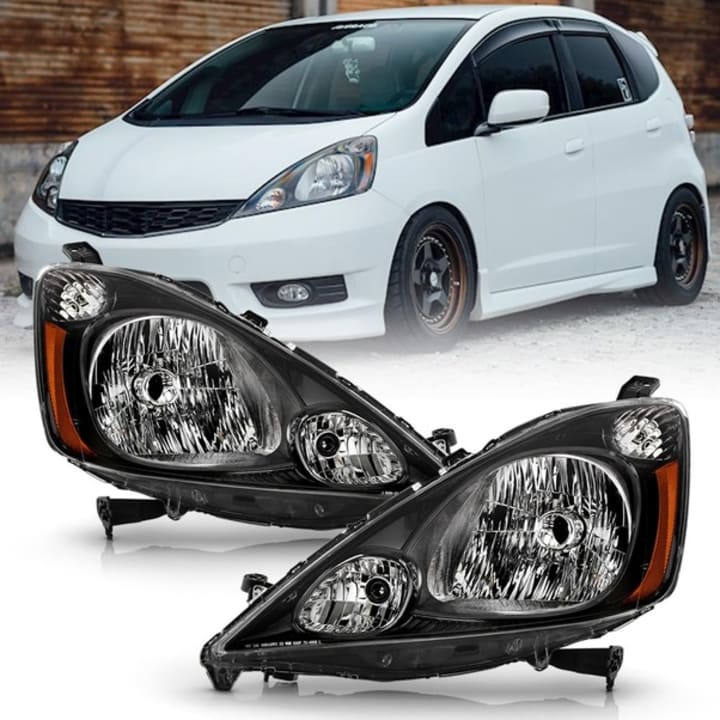
From the early 2000s until now, headlight design has changed a lot and gotten way more interesting—mainly because of plastic and the rise of LED lights. These days, headlights can be made to fit pretty much any shape or style, since manufacturers aren't limited to a specific form like they used to be. That flexibility lets them design lights based on function, style, or whatever the car needs.
To me, the biggest difference between modern headlights and those on vintage cars is the shape. Classic cars usually had either round or square lights because, back then, the tech just didn’t exist to do anything more complex. But now (or even as far back as the '80s), it’s a whole different story. Manufacturers can mold headlights into all sorts of shapes, especially since plastic makes that process way easier. That really changed the game—now lights can follow the curves of the car instead of sticking out like boxes or circles.
Vintage cars can’t pull it off for a few reasons. First off, they usually use sealed beam headlights, which don’t allow for custom or funky shapes. You mostly get square or round ones because those are easier to make and work well design-wise. Plus, glass can’t really be molded into more complex or unusual shapes—it just doesn’t bend that way. But once plastic and computer-aided design came into play, things changed. Suddenly, you weren’t stuck with squares or circles anymore. Now, there are all kinds of headlight designs to fit whatever look or function you’re going for.
About the Creator
Pinesthi Mukti Rizky Wibowo
Hi, my name is Eky and here I will write about automotive and other things, most of the writing will be taken from my personal Quora or Medium account. Most of my writing is curated from my Quora account which I have more than 4,000 answers
Keep reading
More stories from Pinesthi Mukti Rizky Wibowo and writers in Wheel and other communities.
Why Car Engines Don’t Rev Like Superbikes: The Engineering Explained
This topic came up when someone asked me: “Most cars can only rev up to around 7500 RPM, and a few can hit 9500, but not many—so why can common sportbikes easily exceed 10,000 RPM? Aren’t they basically the same kind of machine?”
By Pinesthi Mukti Rizky Wibowo10 months ago in Wheel
United States Electric Car Market Size to Reach USD 262.9 Billion by 2034 | Exhibiting CAGR of 11.02%
Industry Overview Electric cars, commonly referred to as battery electric vehicles (BEVs) and plug-in hybrid electric vehicles (PHEVs), operate either partially or entirely on electric power. Unlike traditional internal combustion engine vehicles, electric cars reduce tailpipe emissions and lower fuel dependency.
By Ashutosh Srivastava6 days ago in Wheel
What Really Happens to Your Car If You Skip Oil Changes for 10,000 Miles - Asked Car
I’ll never forget the engine teardown that stuck with me from my time at the University of Michigan. A grad student brought in his beat-up Honda Civic nothing fancy, just a daily driver with over 150,000 miles. He figured he was saving time and money by stretching oil changes. “I went maybe 12,000 miles once or twice,” he said with a shrug. When we pulled the valve cover, the sight hit us like a punch: thick, black sludge coating everything, varnish baked onto the camshaft like burnt sugar. The bearings were scored, the chain guides worn down to nubs. That engine wasn’t dying it was already dead. All because the owner treated oil changes like an optional suggestion.
By Cedrick S. Rowan5 days ago in Wheel



Comments
There are no comments for this story
Be the first to respond and start the conversation.