
Wired to Wander: The Psychology Behind Our Love for Travel
Exploring the Mental and Emotional Forces That Drive Us to Discover New Places
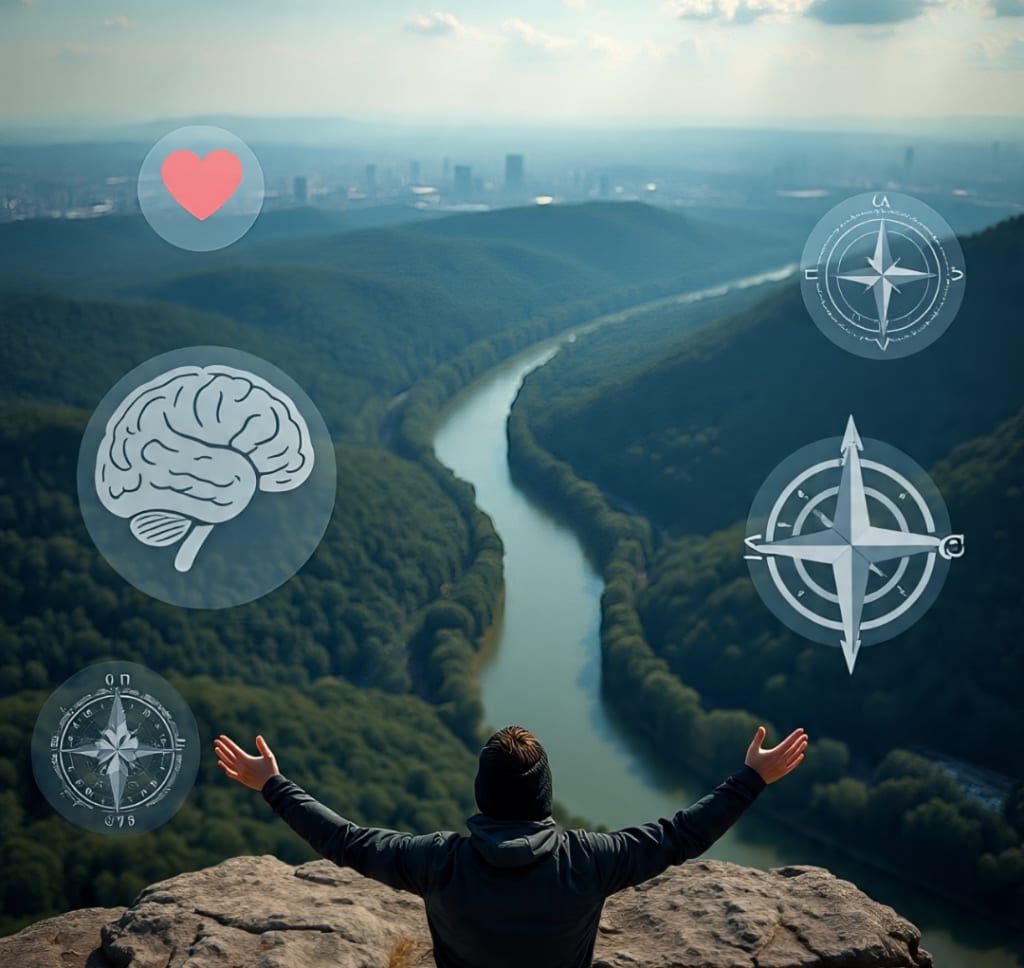
Humans have always been travelers. Long before maps, GPS, or airplanes, our ancestors roamed from continent to continent, driven not only by survival—but by curiosity. Today, that same impulse still beats within us. Whether we’re backpacking across Europe, taking a road trip through the countryside, or simply planning a weekend getaway, something in us feels deeply right when we go exploring. But what exactly is it that makes travel so mentally and emotionally fulfilling?
Modern psychology has a lot to say about why we feel drawn to new places. At the core of it is a concept called novelty-seeking, a trait found in varying degrees in everyone. People who score high in novelty-seeking tend to enjoy new experiences, are more open to change, and often feel restless when stuck in routine. According to psychologists, this trait is linked to the dopamine system in the brain—meaning we’re biologically rewarded with feelings of pleasure when we encounter something new.
Travel, then, becomes a natural way to trigger that dopamine reward. When we step into a foreign city, hear a language we don’t understand, or try food we’ve never tasted, our brains light up. It's not just about pleasure, either—it’s about growth. Psychologists describe these experiences as “cognitively enriching,” meaning they help us form new neural connections, enhance creativity, and even improve problem-solving skills.
But travel affects more than just our brain chemistry. It also taps into deep emotional needs. One of the most significant is the search for meaning. According to existential psychology, people have an innate desire to find purpose in life. Traveling, especially to culturally rich or spiritually significant places, often gives us the opportunity to reflect on our lives, question our assumptions, and gain a wider perspective of the world. Standing beneath the towering ruins of Machu Picchu or listening to prayer chants in a Himalayan monastery can feel profoundly humbling—and transformative.
Travel also plays a powerful role in building identity. Psychologist Erik Erikson identified “identity formation” as a crucial stage in psychological development, especially in young adulthood. When we travel, especially solo, we’re often pushed out of our comfort zones. We’re forced to make decisions, navigate unfamiliar situations, and interact with people very different from ourselves. These moments help us understand who we are, what we value, and how we respond to uncertainty—key components in forming a strong, independent identity.
Of course, not all aspects of travel are about self-discovery and personal growth. Some of them are deeply social. Humans are wired for connection, and travel often strengthens our bonds—whether through shared memories with loved ones or encounters with strangers that turn into lifelong friendships. Psychologists refer to these moments as “social capital”—the invisible network of relationships that improve our wellbeing. Travel broadens this network and often brings a sense of global empathy. We begin to see ourselves not just as individuals, but as part of a larger, interconnected human story.
Interestingly, even the planning stage of a trip has psychological benefits. A 2010 study published in Applied Research in Quality of Life found that the anticipation of travel can boost happiness levels even more than the trip itself. Looking forward to a new experience creates positive emotions, gives us something to hope for, and can even reduce symptoms of anxiety and depression.
But perhaps the most beautiful psychological truth about travel is that it reminds us of something we often forget: we are meant to grow, not just survive. Evolution might have taught us to move for food and shelter, but psychology reveals we move for meaning, for learning, and for joy.
In a world increasingly shaped by routines, digital screens, and predictable schedules, travel breaks the pattern. It shakes us awake, forces us to pay attention, and invites us to be fully present. It challenges our assumptions, teaches us empathy, and sparks wonder.
So the next time you feel that itch to get away, know that it’s not just wanderlust—it’s your brain and heart teaming up to guide you toward something essential. Whether you’re crossing oceans or exploring a nearby town, you’re feeding a deep psychological need that has always been a part of what makes us human.
After all, we are—and have always been—wired to wander.
About the Creator
Keep reading
More stories from Muhammad Saad and writers in Wander and other communities.
The Curious Mind: How Wandering Shapes the Human Psyche
Amara never meant to get lost. She’d only meant to stretch her legs, to escape the digital noise of her cramped apartment and the pressure of unanswered emails. A simple walk in the hills beyond the village. No map, no goal—just the pull of the path as it curved out of sight. She didn’t realize it at the time, but that aimlessness was the point. The morning fog had begun to lift, and golden sunlight filtered through the trees. With every step, the sound of her internal chatter quieted. Her thoughts, once tangled and anxious, began to unravel like threads from an old scarf—soft, slow, and full of forgotten warmth. At first, she worried about her direction. Should she turn back? Was she wasting time? But the winding trail offered no straight answers, only a gentle invitation to keep going. And so she did. The farther she walked, the more her mind wandered—not in circles, but outward. Memories surfaced. Childhood afternoons lying in fields, watching clouds drift like continents. Long-forgotten questions bubbled up: Why do birds sing more after rain? What if humans are wired to wonder? Her inner critic, always ready with deadlines and doubts, grew silent. In its place came a quieter voice, one that didn’t demand but asked: What if this is exactly what you need? Amara’s journey wasn’t dramatic. She didn’t scale a peak or discover an ancient ruin. Instead, she sat on a mossy rock by a creek and listened. The gurgle of water was more meaningful than any podcast. The chirping of birds, more grounding than any meditation app. Something shifted. It wasn’t clarity, exactly, but a comfort with not knowing. The questions in her mind weren’t problems to solve but places to explore. Each idea was a trailhead. --- Psychologists have a name for this kind of experience. It’s not just “getting lost”—it’s positive constructive daydreaming. A mental state where the mind gently roams, often triggered by light activity and low stress. In these moments, we become more creative, more resilient, even more self-aware. In a world obsessed with productivity and precision, the value of wandering—both physically and mentally—has been forgotten. But science tells us it’s essential. Wandering encourages the default mode network of the brain to activate—a system linked to memory consolidation, imagination, and emotional insight. It’s the same network that lights up during moments of deep reflection, storytelling, and innovation. And here, amid trees and trails, Amara’s brain was doing something beautiful. It was healing. --- After a while, she stood and continued walking. The trail led her to a small meadow where wildflowers bloomed in quiet rebellion against the season. She lay down, let the sun warm her face, and laughed softly at how far she’d come—not in miles, but in mood. She wasn’t running from anything anymore. She was roaming toward something. Toward herself. By the time she returned home, dusk had painted the sky in shades of rose and indigo. Her inbox was still full. The world hadn't changed. But she had. There was space now between her thoughts—space to breathe, to wonder, to begin again. --- Wandering, it turns out, isn’t about being lost. It’s about letting go of the need to always know where you’re going. It’s about trusting that somewhere between the trees, between thoughts, lies a path worth walking. Amara’s story is a reminder: the human mind, like the soul, was built not just to strive—but to wonder. And sometimes, the most meaningful journeys begin with a step you don’t plan.
By Muhammad Saad 6 months ago in Wander
Weather in Morocco in July By Morocco Family Vacation
When we planned our family trip to Morocco, July wasn’t my first choice. Like most parents, I worried about the heat especially with kids. I pictured endless sun, cranky afternoons, and constant searching for shade. But our schedule left us with July, so we adjusted our expectations and planned carefully.
By Ariel Cohenabout 21 hours ago in Wander



Comments
There are no comments for this story
Be the first to respond and start the conversation.