
Was Somebody Fired?
Delta COO Mike Spanos Leaving Carrier During CrowdStrike Chaos

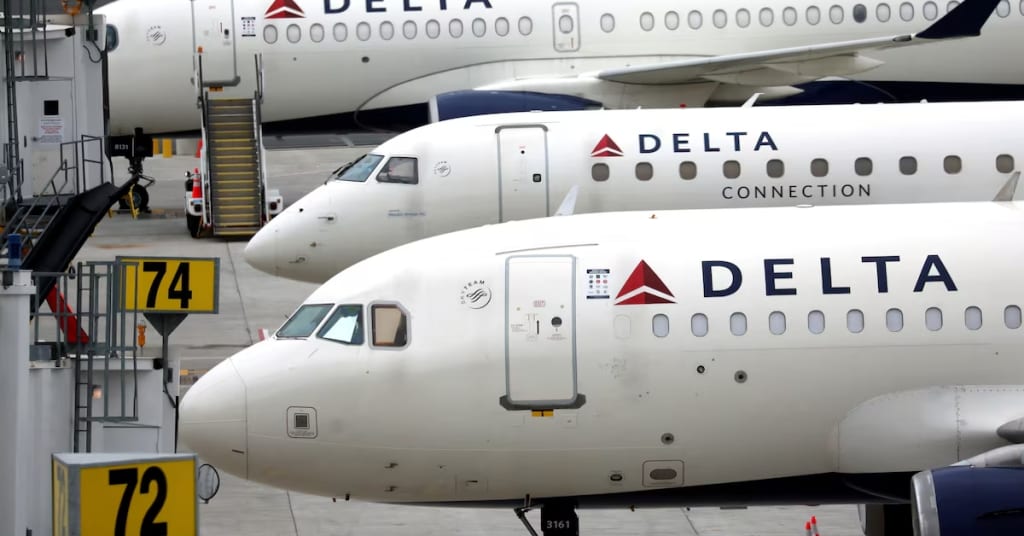
Hold on to your boarding passes, folks—Delta Air Lines, one of the United States' most prominent carriers, is experiencing some internal turbulence. The airline's Chief Operating Officer (COO), Mike Spanos, is set to leave the company on August 31, 2024, marking the end of his tenure after just one year. The timing of this departure is stirring up speculation, especially since it comes in the wake of a major technology meltdown that left thousands of Delta passengers stranded and the airline scrambling to recover. As Delta navigates this critical period, the decision not to appoint a direct successor to Spanos adds another layer of intrigue to the situation.
The CrowdStrike Chaos
In July 2024, Delta Air Lines faced a significant crisis that had passengers and the airline industry on edge. A global IT outage, triggered by a botched software update from CrowdStrike, a well-known cybersecurity firm, wreaked havoc on Delta’s operations. This outage caused the airline to cancel thousands of flights, leaving countless passengers stranded and frustrated. While technology glitches are not uncommon in the aviation industry, the scale of this incident was particularly severe, impacting Delta far more than its main competitors, United Airlines and American Airlines.
The financial repercussions of this disaster were enormous. Delta's CEO, Ed Bastian, estimated that the outage cost the company around $500 million. This substantial loss not only hit the airline's bottom line but also led to increased scrutiny from the U.S. Department of Transportation (DOT), which launched an investigation into how Delta handled the situation. The DOT’s investigation adds another layer of pressure on the airline, as it will likely examine everything from the immediate response to the long-term impacts on passengers and operations. While the chaos was unfolding, Delta’s leadership was under intense scrutiny. The outage was a stark reminder of the vulnerabilities that even the most established companies face in today’s digital age. It also raised questions about the adequacy of Delta’s technological infrastructure and crisis management strategies. With the spotlight on the airline, Delta's next steps will be critical in determining how well it can recover from this significant setback.
Was Spanos Forced Out?
With the timing of Mike Spanos' departure, many are wondering if the COO was forced out in response to the IT disaster. After all, the crisis was a massive setback for Delta, leading some to speculate that leadership changes might be a way to appease concerned stakeholders. However, Delta has been quick to dispel these rumors. According to CEO Ed Bastian, Spanos' decision to leave was unrelated to the CrowdStrike incident. In fact, Spanos had reportedly been considering other opportunities well before the outage occurred. Bastian mentioned in a memo that Spanos had expressed his intention to move on earlier in the summer, suggesting that his departure was part of a planned transition rather than a reactionary measure.
Spanos' tenure at Delta was relatively short, having joined the company only a year ago. His limited experience in the aviation industry might have contributed to his decision to seek opportunities elsewhere. Although Spanos is a seasoned executive, his background did not heavily involve aviation, which may have impacted his ability to manage such a complex crisis effectively. During the IT outage, Spanos was notably not at the forefront of the airline's crisis management efforts, likely due to his unfamiliarity with the intricacies of the industry. Despite Delta's assertions that Spanos' departure is unrelated to the tech disaster, the timing has inevitably led to speculation. The airline's decision to move forward without appointing a direct successor to Spanos has also raised eyebrows. Instead, Delta has opted for a restructuring where two executives will report directly to CEO Ed Bastian. This move could indicate a shift in the company’s leadership strategy, perhaps to streamline decision-making processes in the wake of the recent crisis. Whether or not Spanos was pushed out, his departure marks a significant change in Delta's leadership during a particularly challenging time for the airline.
No Successor, No Problem?
In a surprising and unconventional move, Delta Air Lines has decided not to appoint a direct successor to Mike Spanos. Instead, the company has chosen to restructure its leadership, with two senior executives reporting directly to CEO Ed Bastian. This decision is notable for several reasons. Firstly, it deviates from the traditional approach of filling the COO role immediately after a departure, particularly during a time of crisis. Secondly, it signals a potential shift in how Delta plans to manage its operations moving forward, possibly streamlining its leadership to respond more effectively to challenges.
This decision not to replace Spanos with a new COO could be seen as a way to simplify the chain of command. By having two executives report directly to Bastian, Delta might be aiming to reduce bureaucratic layers, allowing for quicker decision-making processes. In the aftermath of the CrowdStrike chaos, where swift action was crucial, this restructuring could help the airline respond more nimbly to future crises. The two executives who will now report directly to Bastian are expected to bring their expertise to the forefront, ensuring that the airline’s operations are managed with precision and agility. However, this leadership shakeup also comes with risks. The COO role is traditionally one of the most critical positions in any airline, responsible for overseeing day-to-day operations and ensuring that everything runs smoothly. Without a designated COO, there could be concerns about the continuity and consistency of Delta’s operational management. The decision could also be perceived as a temporary measure, with the airline potentially planning to revisit the COO position once it has stabilized from the recent turmoil.
Despite the uncertainty, Delta's stock saw a nearly 3% rise following the announcement of Spanos' departure, suggesting that investors may view this shakeup as a necessary course correction. The airline industry is no stranger to leadership changes, particularly in response to operational crises, and Delta’s move might be seen as a proactive step to address the challenges it faces. As the airline navigates this period of transition, the effectiveness of this new leadership structure will be closely watched by both industry insiders and passengers alike.
Delta’s decision to forgo an immediate replacement for Spanos underscores the complexities of managing a global airline in today’s fast-paced, technology-driven world. The company’s ability to adapt its leadership and operational strategies will be crucial as it works to regain the trust of its customers and stakeholders in the wake of the recent IT disaster. Whether this approach will lead to long-term stability and success remains to be seen, but one thing is clear: Delta is in the midst of a significant transformation, and the stakes have never been higher.
What’s Next for Delta?
As Delta moves forward, the company will need to restore confidence among passengers and investors alike. Despite the turbulence, Delta’s stock saw a nearly 3% rise following the announcement of Spanos’ departure, indicating that investors might see this shakeup as a necessary course correction. However, with the DOT investigation ongoing and no clear successor to Spanos, Delta’s leadership will need to steer the airline through these choppy skies carefully.
Stay tuned as more details unfold in this high-stakes situation at one of the world’s largest airlines.
About the Creator
Horace Was
Essay Writer, Aviation and Technology Expert
Keep reading
More stories from Horace Was and writers in Wander and other communities.
Singapore Airlines Interview Process
Joining Singapore Airlines is a coveted opportunity for many aviation enthusiasts and professionals. Renowned for its exceptional service and standards, Singapore Airlines has a rigorous interview process to ensure that only the best candidates join its team. This guide offers an in-depth look at each stage of the interview process, providing valuable tips and insights to help you succeed.
By Horace Wasabout a year ago in Wander
Across the Bridge of Flowers
Welcome, fellow wanderers, to Postcards Between Pages, where stories spill out from well-thumbed novels into the world, and where travel isn’t just a journey of miles, but a pilgrimage of meaning. I’m your host, inviting you today to one of the most poetic destinations on the American map—a place where steel and stone have, quite literally, been transformed by blossoms and imagination: the Bridge of Flowers, in Shelburne Falls, Massachusetts.
By Kristen Barenthalera day ago in Wander
Whispers of Winter
"There are places where the holiday season doesn’t just arrive — it settles in. It curls around you like a wool scarf, it glows like a candle in a frosted window, and it whispers stories you swear you’ve heard before. Today, we’re stepping into one of New England’s most enduring traditions: the Enchanted Village at Jordan’s Furniture in Avon, Massachusetts."
By Kristen Barenthalera day ago in Wander


Comments
There are no comments for this story
Be the first to respond and start the conversation.