

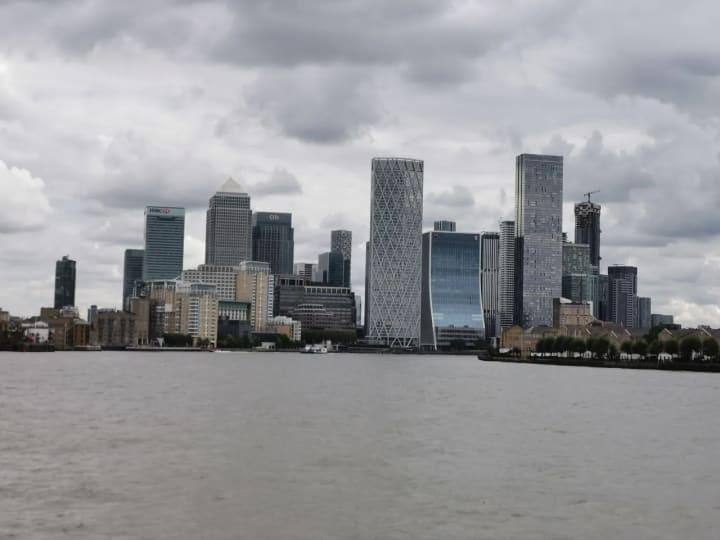
I walked along the Thames Path City side from London Bridge to Canary Wharf. How long did it take? Two hours, but we walked comfortably and stopped three times once for lunch. I have done this walk before, and it took one hour and a faster pace.
Along the way and last, St Katherine's Dock, we came to Wapping and walked along the High Street.
Wapping is an East London district in the London Borough of Tower Hamlets. Situated on the north bank of the River Thames, it is bordered by the communities of Shadwell to the north and Limehouse to the east.
History

Anglo-Saxon Period

The name "Wapping" is believed to have Anglo-Saxon origins. During the Anglo-Saxon Period, which spans roughly from the 5th to the 11th centuries, the area that would become Wapping was largely marshland, bordered by the River Thames to the south.

It was sparsely populated, with small communities engaged in fishing and perhaps some farming in the more elevated areas.

The area was part of the larger territory of Middlesex, where the Middle Saxons initially settled. During this time, it would have been part of a mosaic of communities on the outskirts of what would later become the city of London.

The name "Wapping" itself is thought to derive from a person's name, "Waeppa's people," indicating that it might have been a small settlement or estate owned by an Anglo-Saxon leader named Waeppa.
Medieval Period (13th Century Onwards)
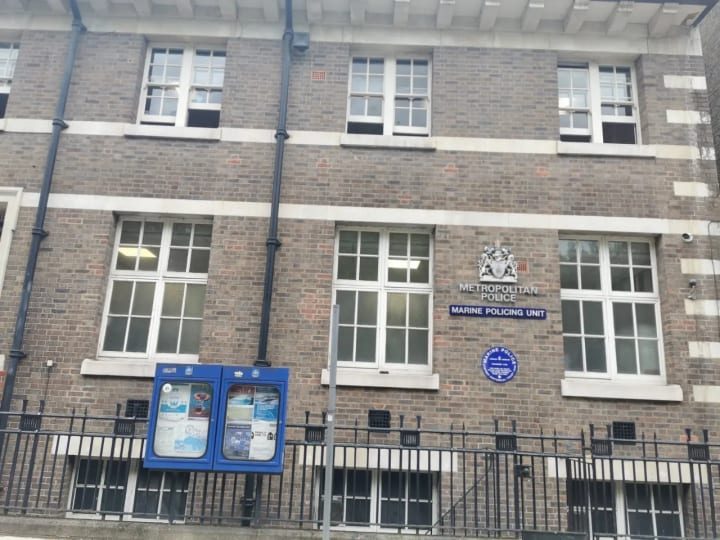
By the 13th Century, London had established itself as a significant commercial and economic hub in England. The growth of the city and the burgeoning maritime trade led to the development of settlements along the River Thames, including Wapping.

During this period, Wapping began to see more substantial development. Its proximity to the river made it a vital point for fishing and trade. As London's importance as a port city grew, so did the industries in Wapping.
It was during this time that Wapping started becoming known as a hub for maritime activities, including shipbuilding, repairing, and provisioning.
The 13th Century marked a phase of infrastructural development by establishing docks and wharves. It was becoming an essential point for loading and unloading goods, making it a bustling area teeming with workers, sailors, and merchants.
Transition to the Early Modern Period
As Wapping transitioned into the early modern period, its maritime identity strengthened. The area became home to a diverse population, including sailors worldwide, merchants, and artisans.
The growth also brought a myriad of establishments like inns and taverns, serving the needs of the growing population and the sailors who frequented the docks.
Its transformation from a small settlement into a vibrant community marked a period of prosperity but also brought challenges, including overcrowding and the spread of diseases.
The complexity of Wapping's history started to build from this point, weaving a rich tapestry that includes periods of wealth and poverty, thriving industry, and eventual decline and regeneration in the later centuries.
The Blitz
During World War II, particularly in the Blitz, Wapping and much of the surrounding area were heavily bombed, resulting in significant destruction and loss of life.
The Press
Newspaper Boom: The post-WWII Period witnessed a boom in the newspaper industry in the UK. Several newspapers had their headquarters and printing presses on Fleet Street, a street in London synonymous with the British media since the 16th Century.
In the 1980s, Rupert Murdoch's News International, a media company that owned several of the UK's most significant newspapers, decided to modernise its operations and sought to shift its facilities from Fleet Street to a new facility in Wapping. This move was about relocating and revolutionising the entire newspaper production process by integrating new technologies.
Gentrification
Before gentrification began, Wapping was characterised by a dense network of docks, warehouses, and factories, many of which were abandoned or underutilised by the late 20th Century. The decline of the Docklands had left significant tracts of land derelict, and many thriving industries had either downsized or relocated.
Socio-Economic Shift: The population in Wapping started to change significantly. The new residents were predominantly middle to upper-class professionals, replacing the working-class population previously residing in the area.
This socio-economic shift also changed the local amenities and services, with an increase in high-end restaurants, cafes, galleries, and recreational facilities.
Skyrocketing Property Prices: The continuous gentrification process led to a steep rise in property prices, making it one of the sought-after residential areas in London. However, this also means the area has become less affordable for many people, potentially leading to socio-economic disparities.

Parting Comments
The area has gentrified, but if you walk down one of the side streets, you'll still see remnants of the old world, plus a thriving community.
After a slight detour and customary Fish and chips, it was time to head back onto the Thames Path and to Canary Wharf.
If you enjoyed reading this article and want to support my work, you can now buy me a coffee ☕️.
https://www.buymeacoffee.com/TabbyLondon
Thank you for your attention.
Best wishes
Tabby
About the Creator
Tabby London
The London I've been discovering is usually off the well-beaten track.I love the nooks and crannies and walking along the streets steeped in centuries worth of history. I'm fond of Zone 1 because that's where it all began centuries ago.
Keep reading
More stories from Tabby London and writers in Wander and other communities.
Conker Season
September brings with it wonderful memories of conkers. As children, we would collect the conkers from local parks. I remember visiting some family friends in St Albans and collecting two big bags of conkers from their local park. The look on my parents' faces is one that I won't forget in a hurry.
By Tabby London4 months ago in Wander
Travelers in the Caribbean Experience Major Flight Disruptions Following Airspace Closure
If you were planning a Caribbean getaway recently—or already soaking up the island sun—you may have found your travel plans suddenly turned upside down. Thousands of travelers across the Caribbean experienced major flight disruptions after an unexpected airspace closure brought regional air travel to a near standstill. Flights were canceled, airports overflowed with stranded passengers, and what should have been a relaxing escape quickly became a stressful waiting game.
By Aqib Hussain6 days ago in Wander
Are Trains in Morocco Kid-Friendly? by Morocco Family Vacation
Traveling with kids often means rethinking everything you take for granted as an adult from transport to meals to pacing. On our family trip to Morocco, one question kept coming up: Are trains in Morocco kid-friendly?
By Ariel Cohena day ago in Wander


Comments
There are no comments for this story
Be the first to respond and start the conversation.