
🧱 Walls That Touch the Sky: Exploring China’s Ancient Marvel
A Journey Through the Great Wall’s Secrets, Struggles, and Stories That Still Shape Us Today

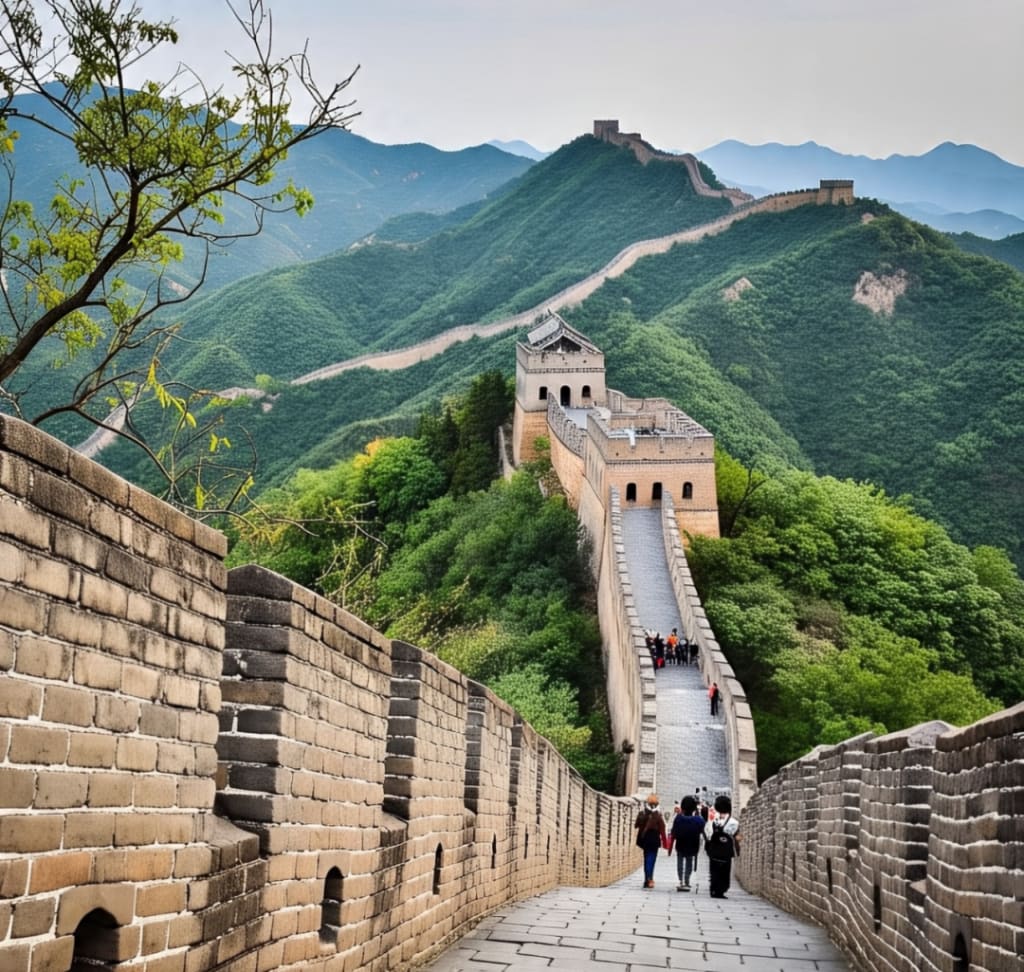

There’s something humbling about standing before a wall that stretches beyond the horizon. A wall so massive, it snakes over mountains, weaves through deserts, and clings to cliffs with the persistence of a legend that refuses to die. That wall is none other than the Great Wall of China, often called the longest man-made structure in the world. But beyond its physical grandeur lies a story—one that echoes resilience, sacrifice, and the powerful will of a civilization determined to defend itself and define its identity.
In this article, we’re not just exploring bricks and stones. We’re unraveling history. We’re learning lessons left behind by ancient hands. And maybe, just maybe, we’re discovering how walls built thousands of years ago can still speak to us today.
🌄 A Marvel Born From Fear and Vision
The story of the Great Wall begins over 2,300 years ago, during the Warring States period (475–221 BCE), when various Chinese kingdoms constructed walls to defend themselves against rival tribes and nomads. But it wasn’t until Emperor Qin Shi Huang, the first emperor of a unified China, that the vision of a connected wall became reality.
Qin ordered the joining of multiple walls into one vast barrier to keep out northern invaders, especially the Xiongnu tribes. This project wasn’t just about bricks—it was about asserting control, unity, and survival.
Lesson: Sometimes, unity is born from struggle. In our lives, we often build our strongest "walls" after facing the fiercest battles. It reminds us that structure and strength are often forged in our hardest moments.
🛠️ Built by Millions, Known by Few
Estimates say over 1 million laborers helped build the Wall, including soldiers, peasants, and prisoners. It was backbreaking labor. Workers faced scorching summers, brutal winters, and treacherous terrain. Many died during construction, and legends say their bones were buried within the wall itself.
In places like Badaling, near Beijing, the Wall has been restored to its original splendor and is now teeming with tourists. But farther afield, in the deserts of Gansu or the grasslands of Inner Mongolia, the Wall crumbles—quiet, forgotten, yet no less significant.
Lesson: Behind every great achievement are stories of sacrifice. Whether in ancient empires or modern dreams, someone pays the price for progress. Recognizing this gives us humility—and gratitude.

🧭 More Than Just Defense: The Wall’s True Purpose
While the Wall served as a defense mechanism, it was also a symbol of power and cultural identity. Watchtowers and beacons were used to send military signals across vast distances. Markets and trade routes flourished around these areas, creating cultural exchanges between tribes and dynasties.
It wasn’t just a physical barrier; it was a bridge between civilizations, shaping the flow of people, ideas, and goods for centuries.
Lesson: Sometimes, what we build to keep danger out also becomes a path for growth. The Wall reminds us that even boundaries can become bridges—if we’re wise enough to see their potential.
🏯 Dynasties, Decline, and the Test of Time
Different dynasties—like the Han, Sui, and Ming—added to or restored the Wall over the centuries. The Ming Dynasty (1368–1644) gave us much of what still stands today, constructing over 8,850 kilometers of wall with brick and stone.
But the Wall wasn't always successful in keeping invaders out. The Manchus, for example, crossed the Wall in the 17th century and established the Qing Dynasty. Over time, parts of the Wall fell into disrepair, overtaken by nature, neglect, and change.
Lesson: Even the strongest walls can fall. True strength isn’t in permanence—but in purpose. What are we building today that truly matters? And will it endure because it's useful, or because it's meaningful?
📸 The Wall Today: A Wonder of the World and a Mirror to Ourselves
In 1987, the Great Wall was named a UNESCO World Heritage Site, and in 2007, it became one of the New Seven Wonders of the World. Today, millions walk its restored sections, posing for selfies, catching their breath on the steep steps, and marveling at what human hands can accomplish.
But for every Instagrammable moment at Badaling, there are quiet stretches whispering forgotten tales. The Wall is both a tourist attraction and a tombstone, a monument to human greatness and a memorial to those who died building it.
It is a reminder that we are capable of great things—but at a cost we must always remember.
Lesson: Admiration without understanding is shallow. When we honor history, we must also honor the people behind it. That’s how legacy becomes more than a photo. It becomes a connection.

✨ Final Thoughts: What the Great Wall Teaches Us
We live in a world obsessed with building—buildings, careers, brands, borders. But the Great Wall of China teaches us to think about why we build.
Is it fear or vision? Is it for safety, or identity? Is it to separate—or to connect?
“Walls that touch the sky” may seem like poetic exaggeration, but when you stand before the Great Wall, it does feel like it could reach heaven. And maybe it does—not because it’s tall, but because it carries the weight of humanity’s dreams, struggles, and determination.
So next time you’re facing your own wall—be it a challenge, a relationship, or a goal—ask yourself: is this wall helping me grow, or is it holding me back?
Because sometimes, the walls we build aren’t meant to block the world out… they’re meant to show us what we’re truly capable of.
Thank you for joining this journey through one of the greatest marvels in human history. If this story inspired you, challenged your thinking, or simply made you pause—share it. Let others walk along this wall of wisdom with you.
About the Creator
From Dust to Stars
From struggle to starlight — I write for the soul.
Through words, I trace the quiet power of growth, healing, and becoming.
Here you'll find reflections that rise from the dust — raw, honest, and full of light.
Keep reading
More stories from From Dust to Stars and writers in Wander and other communities.
The Fascinating Story of Human Evolution
Have you ever looked in the mirror and wondered—how did we get here? Not just you or me, but us, as a species? The way we walk, think, love, fight, explore—none of it happened by chance. It's the result of a long, painful, beautiful journey that started millions of years ago. A journey that isn’t just about science. It’s about identity.
By From Dust to Stars9 months ago in Futurism



Comments
There are no comments for this story
Be the first to respond and start the conversation.