


Tripura, a northeastern state of India, is still very much undiscovered till now for the world. Many texts of Hinduism have referred to this region as Kirat Desh. Rich in culture and heritage, the state carries large mysteries of its own. ‘Tri’ means three and ‘Pura’ means Land or Region. There several historical and religious places to visit. Each of them gives us a place for a historical adventure. Let’s look at some of these places.
Tripura Sundari Temple
Being one of the 51 Sati Pithas, this place is also treated as a prominent Hindu pilgrimage. As the legends say, Sati the incarnation of Adi Shakti being insulted by her father sacrifices herself in the holy flame of the Yagna. After her death, her husband lord Shiva carried her mortal remain and traveled to various parts of the world, Lord Vishnu the preserver God with his dice Sudarsana cut down the body parts of Sati until nothing remained. All those parts wherever it fell a Sati Peth was created and Devi's different forms can be seen in those places. Likewise, Tripura Sundari Temple was the place where Sati's right foot dropped. People worshiped her as Devi Sodashi meaning a 16-year-old goddess. The temple is also referred to as Kurma Peth in ancient text because its aerial view looked like the shell of a tortoise. The present-day temple was constructed in the year 1501 A.D. by Maharaja Dhanyan Manikya. The pujas are performed every day and thousands of devotees come from all over the world irrespective of religion, caste, race, and gender to give their call to the holy Mother. The local tribal people call the deity Amma Hayakchar. The temple is located in the city of Udaipur which 54 km from the Capital city Agartala. On the new moon night of November, a special Puja is performed in the temple.
Unakoti
It is an archaeological site at Kalasahar. 'Unokoti' means 1 less than a crore. Several sculptures of Hindu gods and goddesses like Bhairab, Durga, Kartikeya, etc. are made on the rocky terrain of the mountain throughout the place, but practically as the name, there are not as many of them were found till now, only a few hundred were till now discovered. There is no evidence of any specific official texts or findings that proves when these sculptures were made and who made them, only some local legends float around them. According to such local legend, an Asura who was a devotee of Lord Shiva made those. The place is also a pilgrimage to all devotees of Lord Shiva. Every year in March to take a Deep in the holy water Kunda situated there.
Chabimura
About 70 km from the capital city of Agartala at a place called Amarpur, besides the flowing river of Gumti there we find several idols of Hindu Gods and Goddesses inscribed on the mountain rocks. The height of them varies from 20 to 50 feet. Idols of Shiva Durga, Ganesh are well inscribed on the sand rocks along the river. It is estimated that they were made in the late 15 century but there is no information about who made them. Among the idols the idol of Devi Durga is the largest among them, which the locals call by the name Devi Chakrama, she is the guardian deity of the forest and that region. There are many folktales of hidden treasures and kings of that time which are passed down from generations. There are also many caves in this region which attract adventure-loving people to this place.
About the Creator
Keep reading
More stories from Subham Das and writers in Wander and other communities.
Tripura
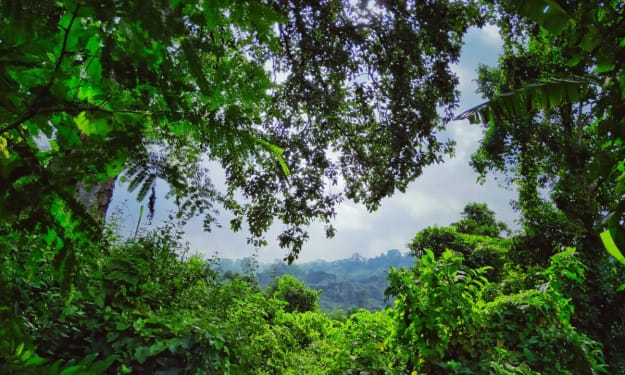
Tripura is a Northeastern state of India that is truly a home of Biodiversity. A tremendous variety of flora and fauna have made their habitat in this tropical climatic place. The Tropic of Cancer (23°26′11.4″) passes through the state dividing in approx in half. The climate of Tripura exhibits a strong seasonal rhythm. It's characterized by a warm and humid tropical climate with five distinct seasons making it a favorable place for a range of species of plants, trees, shrubs, herbals, animals, fishes, birds, etc. The vegetation of Tripura varies from evergreen forest to moist deciduous. It exhibited various types of landforms in the state from marshy to Mountains can be seen.
By Subham Das5 years ago in Earth
Vulture City, Arizona
VULTURE CITY, AZ — What was once a roaring gold rush boomtown is now a sun-bleached skeleton of wood and stone, but according to investigators, historians, and countless shaken visitors, Vulture City never really died. It just learned how to whisper.
By Shahjehan Khan 3 days ago in Wander


Comments
There are no comments for this story
Be the first to respond and start the conversation.