
The Night Watch by Rembrandt van Rijn
The Night Watch remains one of the most iconic and beloved paintings in the history of art.

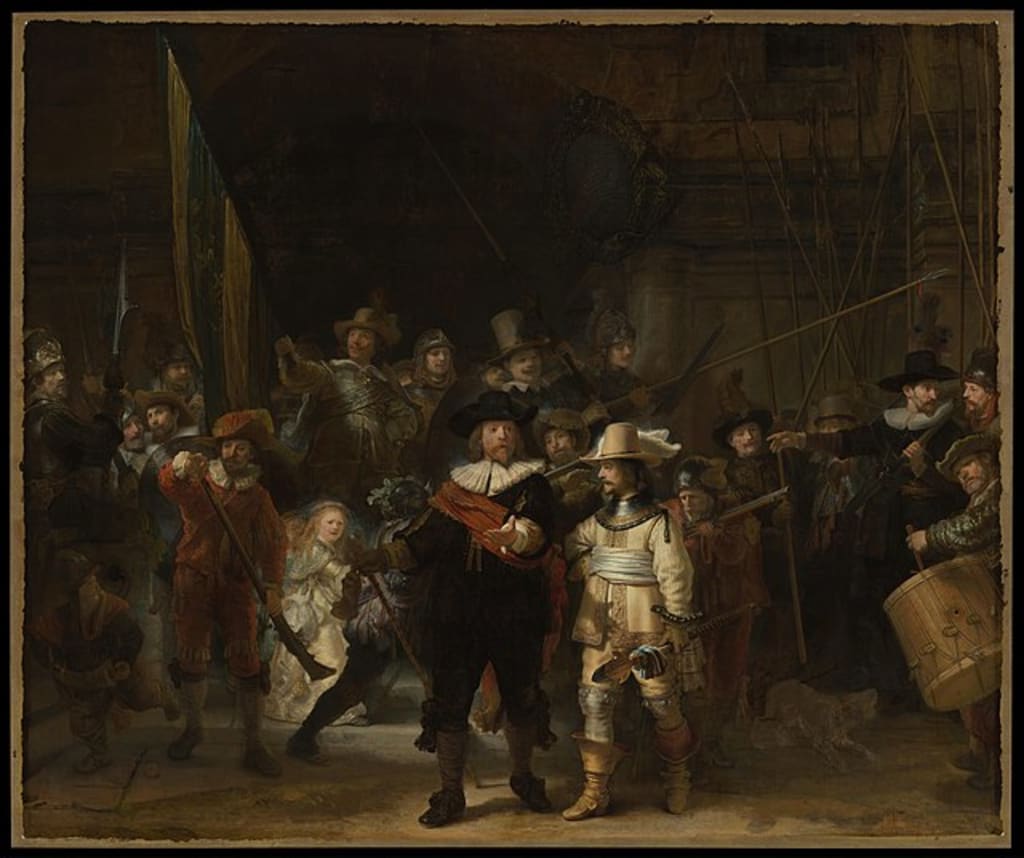
The Night Watch is one of the most famous paintings by the Dutch artist Rembrandt van Rijn. Completed in 1642, the painting is a masterpiece of the Baroque era and is widely regarded as one of the greatest works of art in history. In this essay, we will explore the story behind The Night Watch and its significance within Rembrandt's oeuvre.
Rembrandt van Rijn was born in Leiden, Netherlands, in 1606. He was one of the most important and influential artists of the Dutch Golden Age, a period of great artistic and cultural flowering in the Netherlands. Rembrandt was particularly known for his ability to capture the inner essence of his subjects and for his masterful use of light and shadow.
The Night Watch is a group portrait of a company of Amsterdam militiamen, led by Captain Frans Banning Cocq and his lieutenant, Willem van Ruytenburgh. The painting is set against a dark background and depicts the soldiers marching forward in a chaotic and dynamic manner. The painting is notable for its use of chiaroscuro, or the use of light and dark to create a sense of depth and drama.
One of the most striking features of The Night Watch is the use of light and shadow to create a sense of movement and drama. The figures in the painting are illuminated by a bright light source that comes from the left-hand side of the canvas, casting deep shadows on the right. The use of light and shadow creates a sense of depth and space, and gives the painting a sense of energy and dynamism.
The Night Watch was commissioned by Captain Banning Cocq and his company of militiamen as a group portrait. However, Rembrandt departed from the traditional conventions of portraiture by depicting the soldiers in motion and in a state of disarray. This was a radical departure from the traditional static and formal group portraits of the time, and it reflects Rembrandt's interest in capturing the inner essence of his subjects.
The painting has been interpreted in many different ways over the years, and its meaning remains open to debate. Some have seen the painting as a celebration of Dutch military prowess and civic pride, while others have interpreted it as a critique of the chaos and disorder that can arise from militarism. Still, others have seen the painting as a reflection of the tensions between the individual and society, and the power dynamics that exist within groups.
One of the most intriguing aspects of The Night Watch is the identity of the figures in the painting. Rembrandt included a number of self-portraits in the painting, including one in which he is holding a palette and brushes. This has led some to speculate that Rembrandt was making a statement about the role of the artist in society, and his ability to capture the essence of his subjects.
Another intriguing aspect of the painting is the use of color. Rembrandt used a limited palette of earthy browns and greens, but he also incorporated flashes of vivid color, such as the red sash worn by Captain Banning Cocq. This use of color creates a sense of vibrancy and energy, and adds to the sense of movement and drama in the painting.
The Night Watch was not always known by that name. The painting was originally titled "The Company of Frans Banning Cocq and Willem van Ruytenburgh" but became known as The Night Watch because the painting had become so dark and grimy over the years that it was assumed to depict a night scene. However, a recent restoration of the painting revealed that it was originally a daylight scene, and the painting is now commonly referred to as The Day Watch.
The Night Watch remains one of the most iconic and beloved paintings in the history of art. Its enduring popularity is a testament to Rembrand.
About the Creator
bellarmin kingsly
I am writer and content creator with a passion for storytelling. I am specialize in creating engaging and thought-provoking content across a variety of topics, including arts and culture, lifestyle, and technology.
Keep reading
More stories from bellarmin kingsly and writers in Wander and other communities.
The Kiss by Gustav Klimt
"The Kiss" is one of the most famous paintings by the Austrian symbolist painter Gustav Klimt. The painting, which depicts a couple embracing in a swirl of gold and color, has become an iconic symbol of love and passion. In this essay, we will explore the story behind this remarkable work of art and its significance within Klimt's oeuvre.
By bellarmin kingsly3 years ago in Wander
A Dart at Dusk
Seconds ago, the sullen sun set on the two of us… my exuberant furry companion and me. A fresh breeze embraces us, delivering welcome relief from the day’s oppressive heat. His typical stumbling and staggering along — apace with a sloth — has turned into trip-trapping, high-stepping, almost skipping along.
By Angie the Archivist 📚🪶about 19 hours ago in Petlife


Comments
There are no comments for this story
Be the first to respond and start the conversation.