
The Maasai.
Who are the Maasai and how do they live?


The Maasai are one of Africa’s famous and known ethnic local people. They are known for their unique lifestyle of red blanket, and their fearless and warrior culture and lifestyle. Maasai people are the only people in East Africa who have spread in two countries, in southern Kenya and northern Tanzania. The Maasai people have captured the world’s travelers’ interests from different parts of the world due to their unique lifestyle.
The information on this article will give you knowledge of the Maasai life, from their origins to their current challenges.
The Origins and History of the Maasai
Maasai people are believed to have come from the Nile Valley in Sudan a long time ago. They came to settle around the great lift valley area in 15th Century. The Maasai people are semi-nomadic pastoralists, which means they travel with their cattle and animals between specific places during different seasons. Herding cattle and keeping of animals is the way of life of the Maasai.
The Maasai have one feature that differentiate them from other local people and make them unique, and that is: despite modern pressures of cultural changes around the world, the Maasai are still maintaining their culture and identity. This is not an easy achievement for a group of people in today’s fast-changing world.
The Maasai Way of Life
Maasai value so much their cattle. For them Cattle provide milk, blood (traditional uses), and status. The more cattle a person has, the more the status that person has in their society.
The Maasai live in Bomas (homesteads) which are Circular family compounds made of mud, sticks, and cow dung. They place so much value to everyone in the society.

In terms of gender roles, for Maasai people, this is very specific. Men are responsible for herding and protection and women’s roles are to build homes, cook, and care for children.
There is still education and rites of passage in the Maasai community. When boys and girls are turning to manhood or womanhood, they are given special training, instruction and education by elders on the major roles that will define one’s place in the community.
In the Maasai community, life is so much communal, it is deeply spiritual, and they emphasize so much on respecting the elders, value the land, and nature.
Clothing and Traditional Appearance
The Maasai wear a cloth famously known as a Shuka in Swahili. This is a red cloth Maasai men and sometimes Maasai women wear and wrap around their bodies.
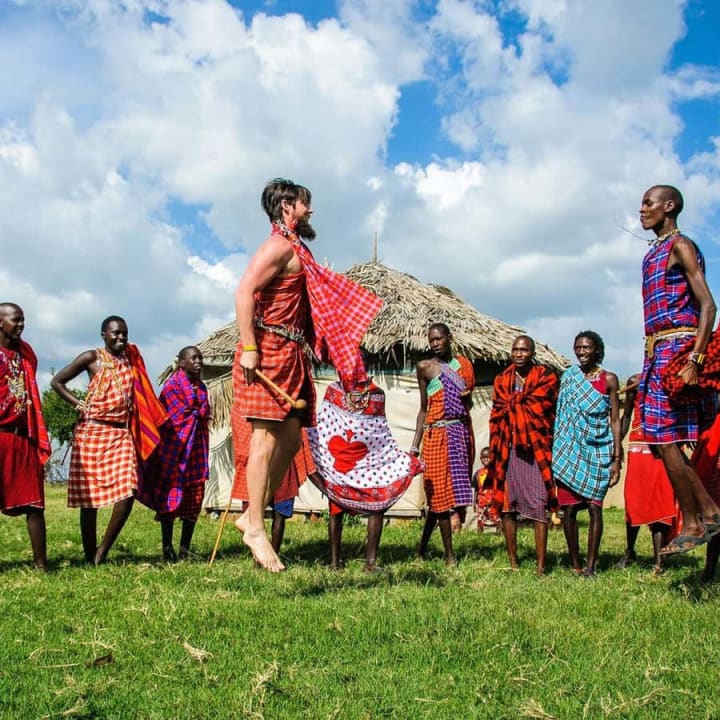
They also wear beadwork like necklaces, bracelets and earrings which are often crafted by women. The colors used when crafting and the patterns crafted all have their meaning to the Maasai.
Maasai with Beadwork
Maasai have their own hairstyles. Within the Maasai society there are Maasai Warriors known as morans. You may know the Maasai warrior by the style of their hair. They have braids and they wear large ear piercings.

Maasai’s footwear is often made from old tires, called “akalas.” These “akalas” do not wear and tear easily as compared to the other normal shoes or footwear. They prefer to wear this type of footwear because Maasais may sometimes walk miles daily and not to worry about problems on their footwear.
When tourists are go for cultural tours, they are always allowed to try and wear this footwear.
Rituals, Ceremonies, and Rites of Passage
The Maasai have the following rites and ceremonies which are very important to their society. The have:
· Enkipaata which is the boyhood initiation. This ceremony aims to prepare boys for circumcision and transition to warriorhood.
· Eunoto this is like a warrior graduation. It marks the end of someone being a warrior in the society and enters into another level which is to become the elder of the society.
· Marriage ceremonies. These ceremonies are arranged by families and the elders are also involved. These ceremonies involve paying of dowries (often paid in cattle) by the family of the man
Each stage in life of Maasai society is marked with rituals that they believe will bind Maasai identity for many generations.
The Maasai and Nature.
The Maasai live in some of Africa’s most biodiverse regions. They respect nature and other animals asa well. Some of the places where you will find Maasai are such as Serengeti, Ngorongoro, Amboseli, and Maasai Mara National Parks. We can simply say that Maasai do coexist with wildlife, and most of them avoid hunting these wild animals unnecessarily.
Maasai use plants for medicine, hygiene, and spiritual purposes. In Maasai society, traditional herbalists are still available and they still play important roles.
Maasais’ believes that the land belongs to all. Their philosophy is “The land doesn’t belong to us, we belong to the land.”
Tourism and Cultural Visits
If you plan to go for cultural tour, and you plan to visit the Maasai, you are going to witness many more thing such as:
Maasai Homes or Bomas: you can go around Maasai villages to learn about their homes, their dances, their food, and their customs.
You will see performances such as Traditional singing and jumping dance. Also you will visit and learn more about making traditional jewelry of the Maasai.
Challenges of Maasai Society
The Maasai though are good people with integrity, they are faced with some challenges. Some of them are:
· Land issues: there is always a fight between Maasais and farmers when the land is near the farmers. Farmers complain that Maasai tend to bring their livestock to their farms to feed. Maasai are sometimes evicted to some places near the national parks for the purpose of tourism development and creating safe conserving zones.
Education: many Maasai children especially girls face barriers in some places are not allowed to go to school.
Climate change: climate change, droughts and grazing shortages, do threaten the Maasai traditional cattle grazing livelihoods.
Modern pressures: Maasai are forced to balance their lifestyle and traditional ways of healing with access to healthcare, modern rights, and global citizenship.
Despite these challenges, the Maasai continue to show that they can face anything, some of Maasai even become becoming conservationists, politicians, guides, and educators.
As a tourist, when you visit the Maasai, know that you are supporting sustainable tourism initiatives, and you show your respect for traditions. Welcome and gain more and more knowledge of different cultures when you visit the Maasai.
About the Creator
Jaynevy Tours
Jaynevy Tours offers personalized Tanzanian safaris to Serengeti, Ngorongoro Crater, and Zanzibar. Expert guides and unique experiences for all.
Keep reading
More stories from Jaynevy Tours and writers in Wander and other communities.
What to pack when climbing Mount Kilimanjaro.
Climbing Mount Kilimanjaro is one of the most satisfying and memorable adventures in Tanzania. Climbing mount Kilimanjaro is also a surprise to many first time climbers because they find that they are passing through different climatic zones in just a few days. As you climb Mount Kilimanjaro you will pass through lush rainforests, alpine deserts, and glacial summits. And also Climbing mount Kilimanjaro does not occur in just a single day, for acclimatization purposes, comfortable climbing this giant mount of Africa will take a minimum of five days.
By Jaynevy Tours9 months ago in Wander
Away from the Crowds in Wisconsin
Located on Lake Superior, the Apostle Islands are great for outdoor adventures. They are known for pristine beaches and sea caves. Cliffs offer awesome views. Visitors enjoy hiking along scenic trails or getting out on the water and sailing.
By Rasma Raisters3 days ago in Wander
When the Shelter Closes
Across the street from my house, a man slept under a tree, his dog by his side. My first, naive thought: he must be traveling through. But he kept coming back, often sleeping there during the day. Then it hit me—that person might not have a home.
By Bride of Sound3 days ago in Humans




Comments
There are no comments for this story
Be the first to respond and start the conversation.