
Clarence House is a royal residence in London, located on The Mall, near St. James’s Palace. Built between 1825 and 1827 to the designs of John Nash for Prince William Henry, Duke of Clarence (later King William IV), it has been a key home for senior members of the British royal family. Compared to other royal palaces, its relatively modest design reflects a comfortable, domestic style, with a pale stucco exterior and elegant interiors.

Since 2003, it has been the official residence of King Charles III and Queen Camilla, who use it for official and private engagements. Before them, it housed Queen Elizabeth, the Queen Mother, from 1953 until her death in 2002.
Other notable residents included Princess Elizabeth (later Queen Elizabeth II) and Prince Philip after their 1947 marriage, as well as Prince William and Prince Harry at different times.
The house features a mix of Regency architecture and later modifications, with notable interiors like the Lancaster Room and Garden Room, often used for receptions. Its gardens, redesigned by King Charles, are private but occasionally open to the public. Clarence House is maintained by the Crown Estate, with public access limited to guided tours in August, showcasing its art collection and historical significance.

History - The Early Days
Clarence House was built between 1825 and 1827 for Prince William Henry, Duke of Clarence (later King William IV). Designed by architect John Nash, it was commissioned as a comfortable residence for the Duke, who preferred a less grandiose home than other royal palaces.
The house was constructed in the Regency style, featuring a pale stucco facade, elegant proportions, and a relatively modest design. It was attached to St. James’s Palace, reflecting its role as a secondary but significant royal residence.
The Duke of Clarence lived there with his wife, Adelaide, until he ascended the throne in 1830. The house was named after him, cementing its royal association.
19th Century: Changing Occupants
After William IV died in 1837, Clarence House was used by various royals and aristocrats. Princess Augusta Sophia, William IV's sister, briefly resided there.
In the mid-19th century, Queen Victoria assigned the house to her mother, the Duchess of Kent, until she died in 1861. Later, it was home to Victoria’s second son, Prince Alfred, Duke of Edinburgh, and then to her third son, Prince Arthur, Duke of Connaught, until 1917.
During this period, the house saw minor modifications to suit its residents, but its core Regency structure remained intact.
Early 20th Century: Decline and New Roles
By the early 20th century, Clarence House was less frequently used as a primary royal residence. During World War I, it served as a temporary headquarters for various organisations, including the Red Cross.
The house fell into disrepair, and during World War II, it suffered minor bomb damage from Luftwaffe raids, necessitating post-war restoration.
Mid-20th Century: Revival and Prominent Residents
After World War II, Clarence House was extensively refurbished as a modern royal residence. The renovations preserved Nash’s original design while updating interiors for contemporary use.
After their marriage in 1947, Princess Elizabeth (later Queen Elizabeth II) and Prince Philip, Duke of Edinburgh, moved into Clarence House. It was their family home during the early years of their marriage, where Princess Anne was born in 1950. The couple oversaw further modernisation, including new furnishings and decor.
After King George VI died in 1952, his widow, Queen Elizabeth The Queen Mother, made Clarence House her primary residence. She lived there for nearly five decades, transforming it into a vibrant social hub.
Her extensive art collection, including works by Monet and John Singer Sargent, adorned the interiors, and her hospitality made the house a centre for royal entertaining. The Queen Mother also redesigned the gardens, adding personal touches.
Modern Royals
After the Queen Mother died in 2002, Clarence House became the official residence of Prince Charles (now King Charles III) and his wife, Camilla, Duchess of Cornwall (now Queen Camilla). Charles undertook renovations to make the house sustainable, incorporating eco-friendly systems and redesigning the gardens to reflect his passion for horticulture. The house serves as their London base for official duties, hosting receptions, dinners, and charitable events.
Before Charles moved in, Prince William lived at Clarence House from 2003 to 2011, and Prince Harry lived there from 2003 until his marriage in 2018. The house has also been a temporary home for other royals during transitions.
Recent History and Current Role
Since Charles’s accession in 2022, Clarence House remains the official residence of the King and Queen, though Buckingham Palace is used for state functions. The house continues to host official engagements, such as meetings with foreign dignitaries and charity events, while serving as a private family home.
Clarence House is typically closed to the public. Still, guided tours are offered in August, allowing visitors to see key rooms like the Lancaster Room, Morning Room, and Garden Room, as well as the Queen Mother’s art collection and Charles’s garden designs.
Maintained by the Crown Estate, the house balances historical preservation with modern functionality. Recent updates have focused on sustainability, reflecting King Charles’s environmental priorities.
Historical Significance
Clarence House stands out for its continuity as a royal residence, housing key figures from William IV to the current monarch. Its history reflects the changing needs of the monarchy, from a private retreat for a future king to a working residence for modern royals. Its interiors, art, and gardens offer a glimpse into the personal tastes of its occupants, particularly the Queen Mother and King Charles.
About the Creator
Tabby London
The London I've been discovering is usually off the well-beaten track.I love the nooks and crannies and walking along the streets steeped in centuries worth of history. I'm fond of Zone 1 because that's where it all began centuries ago.
Keep reading
More stories from Tabby London and writers in Wander and other communities.
TATE BRITAIN
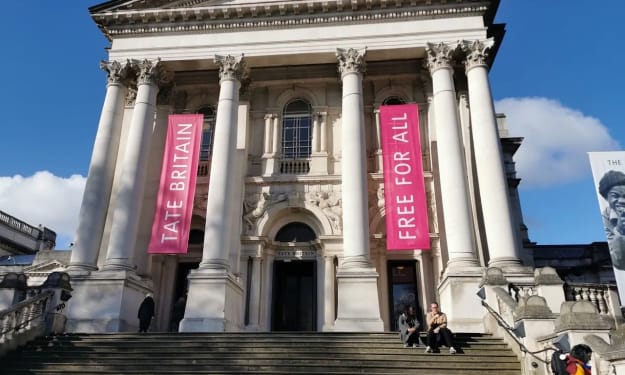
I walked into the Tate Modern in late autumn 2024, expecting to see the 80s Photographs Exhibition, but was politely told it was at the Tate Britain near Vauxhall. Even Londoners can get this one mixed up. So, I got to visit Tate Britain when the opportunity arose.
By Tabby London10 months ago in Wander
Photography Tours: Everything You Need to Know
If you have ever returned from a wildlife trip with images that fell short of the experience — blurry shots, blown highlights, or subjects that disappeared before you could compose the frame — you already understand the core argument for booking dedicated photography tours rather than standard nature or wildlife excursions. Photography tours exist to close the gap between the wildlife you see and the images you actually bring home.
By Michael Wilson5 days ago in Wander
I was in a Toxic Relationship, with my Workplace
“You got that?” My ex yelled. His hands were balled into fists at his side. At six foot three, he towered over me. A normal person would have been afraid, but I looked up a video of George Lopez repeatedly saying, “I got this,” and showed it to him. I had grown used to this treatment, so much so that I didn’t blink when he ripped the phone from my hand and threw it across the room.
By Jade M.2 days ago in Confessions



Comments
There are no comments for this story
Be the first to respond and start the conversation.