
The Amphitheatre Under The Guildhall Art Museum
Underground History

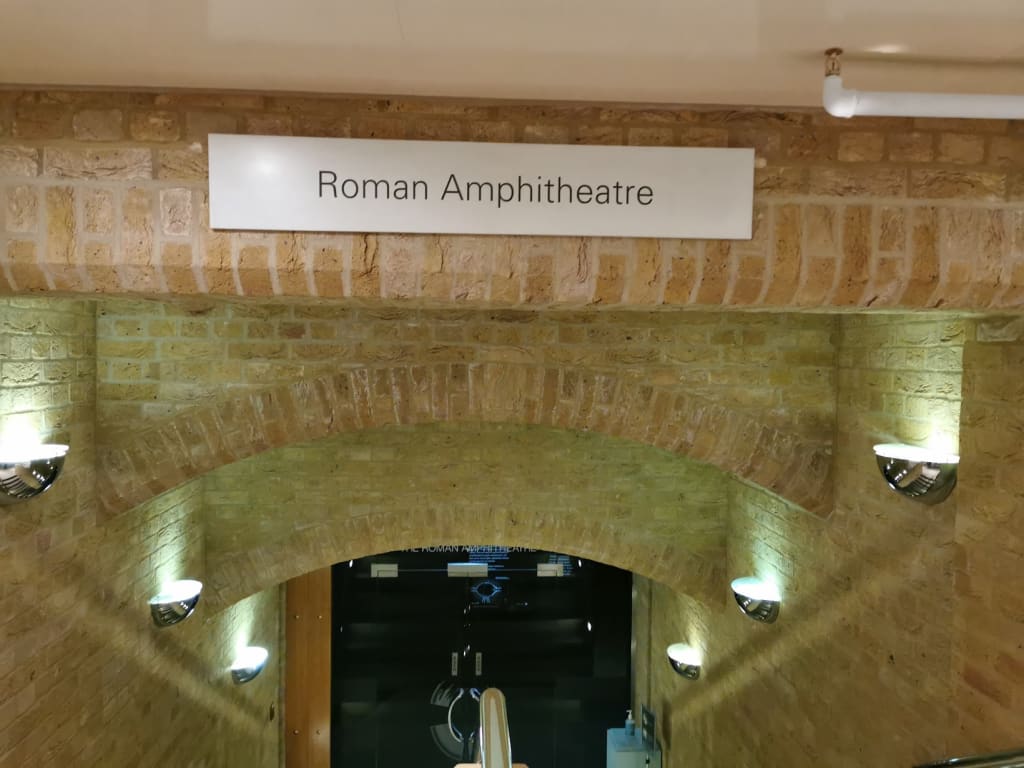
Did you know that there is the remains of a Roman Amphitheatre underneath the Guildhall Art Museum in The City of London?
The Square Mile as it’s known is filled with history in every nook and cranny. I have been to the Amphitheatre before as part of a school trip as a child. However, it’s a completely different experience as an adult.
The Guildhall Art Gallery is built on the site of the ancient amphitheatre of Roman London (Londinium).

The amphitheatre is significant because it highlighted Londinium’s growth from a small trading post into a thriving cultural and commercial hub over its 400-year Roman occupation.


The Romans In London
As you might know, the Romans settled in the Square Mile near the Walbrook River (near the Cannon Street/ Bloomberg European HQ). As their numbers grew, so did the City.

The city was laid out in a grid pattern, with major roads such as Watling Street and Ermine Street converging at Londinium. These roads facilitated trade and communication throughout the province of Britannia.
The Romans built various structures and amenities in Londinium, including a forum, bathhouses, temples, an amphitheatre, and a basilica. These buildings served as centres of administration, worship, and entertainment.
The London Wall was constructed around AD 200 to fortify the city and protect it from potential invasions. Parts of the wall can still be seen in modern-day London, such as at the Tower of London and in the Barbican area.
The Roman occupation of Londinium lasted for approximately 400 years, during which the city flourished as a cultural and commercial hub. It attracted people from different parts of the Roman Empire, contributing to its diverse population.
The Amphitheater
Today, visitors can descend a staircase to view the theatre's remains in the basement.

I went during the weekday so I had ample time to walk around freely. I suspect it would be a noisy affair during school visits or during the holidays.
The arena was discovered during the gallery's construction in the 1980s, and the decision was made to preserve the remains and incorporate them into the building's design.
Gladiator battles took place in its hey day and thousands of people would have watched the battle unfold in front of them.

The theatre dates back to around AD 70 and could hold up to 6,000 spectators. It was used for various events, including gladiatorial contests, wild animal shows, and public executions.
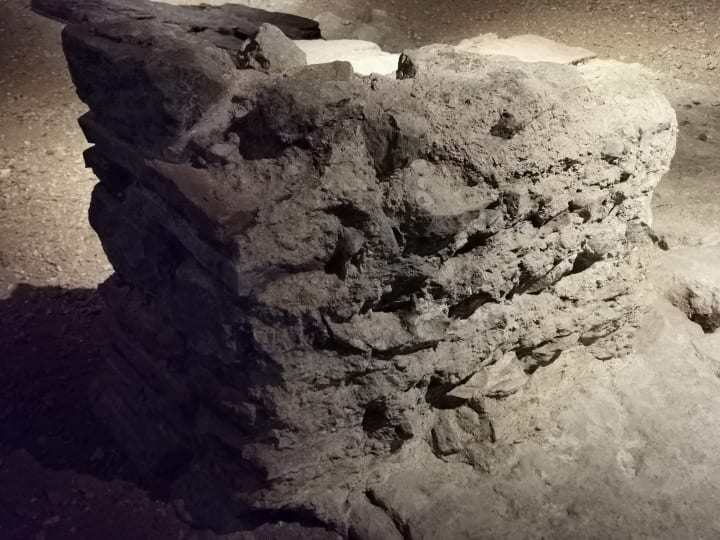

I particularly enjoyed reading the history behind the Amphitheater and seeing the many artefacts displayed in the cabinets. I saw pottery and animal bones found during excavations which might indicate the activities that once took place.

The preserved section includes parts of the arena walls, drainage systems, and the eastern gateway. Darkened sand outlines the original oval shape, enhanced by modern lighting to evoke its ancient atmosphere.
Structure
The amphitheatre was an oval arena, originally made of timber, though it was later upgraded with stone elements, such as the eastern entrance, which is still visible.
It could hold up to 6,000 spectators—which was big considering that the city‘s population was estimated at 20,000–30,000 at that time.
Events included gladiatorial contests, wild animal hunts and public executions, serving as entertainment and a display of Roman power.
Parting Comments
The remains of Roman London were gradually buried and forgotten as new structures were built over the centuries. The rediscovery of Roman artefacts and structures began in the 19th century during construction work and archaeological excavations.
As a child, I remember walking around with my class mates, and it was huge and dark. As an adult, the experience was very different. I appreciated its historical context and engineering.
It’s free to visit (as part of the Guildhall Art Gallery), though checking current hours is wise, as access can depend on gallery events.
Thank you for your attention
Best Wishes
Tabby
About the Creator
Tabby London
The London I've been discovering is usually off the well-beaten track.I love the nooks and crannies and walking along the streets steeped in centuries worth of history. I'm fond of Zone 1 because that's where it all began centuries ago.
Keep reading
More stories from Tabby London and writers in Wander and other communities.
The Top 10 Traditional French Dishes That Warm the Heart
French cuisine is not only about fine dining or artistic plates. At its core, it is home cooking. It is the smell of butter melting gently in a pan, onions slowly turning golden, herbs filling the kitchen with warmth. These are dishes that have been passed down through generations. Recipes we watched our parents and grandparents prepare. Meals that comfort, gather people together, and awaken memories.
By Bubble Chill Media 5 days ago in Wander



Comments
There are no comments for this story
Be the first to respond and start the conversation.