
Ten Facts About Kensington Palace
Princess Diana’s old Pad
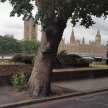

Considering that London is home to seven million people, we have a lot of palaces. Kensington Palace is one of them. If I fancy a long walk, I usually start walking from Hyde Park via Kensington Gardens and eventually walk past Kensington Palace. It
It has a different vibe and is much more relaxed than the other stuffier palaces I've been to.
It's also the official London home of the Prince and Princess of Wales. It's the only Palace that lets you get close to the main entrance. Even though the gates are open, they are heavily policed, and security is everywhere. I suspect there's a camera talking clicks of all those who walk past it.
Many will recognise Kensington Palace as the former of the Princess Diana. However, she wasn't the only resident living there. The history of the Palace goes back centuries.
History
Kensington Palace was a two-story Jacobean mansion built in 1605 by Sir George Coppin. In 1619, the mansion was purchased by Heneage Finch, 1st Earl of Nottingham. Its transformation into a royal palace began in 1689 when King William III and Queen Mary II bought the property, then known as Nottingham House, from the Earl of Nottingham. They were looking for a residence closer to London but away from the damp and smog of the Thames, which aggravated William's asthma.
Facts
1. Historical Residence - Kensington Palace, located in Kensington Gardens, London, has been a royal residence since the 17th century, originally acquired by King William III and Queen Mary II in 1689.
2. Architectural Evolution - Initially a modest Jacobean mansion called Nottingham House, it was expanded by Sir Christopher Wren, with further modifications over centuries, blending styles from Baroque to Victorian.
3. Birthplace of Royals- Queen Victoria was born at Kensington Palace in 1819 and spent her childhood there before ascending to the throne.


4. Current Royal Residents- The palace is home to several royals, including the Prince and Princess of Wales (William and Catherine), their children, and other members like the Duke and Duchess of Gloucester.
5. State Apartments-The palace’s State Apartments, open to the public, feature historic rooms like the King’s Gallery and Queen’s State Apartments, showcasing art and royal history.

6. Diana’s Legacy- Princess Diana lived at Kensington Palace from 1981 until her death in 1997, and her former residence, Apartment 8, remains iconic.

7. Public Exhibitions - The palace hosts exhibitions, such as displays of royal fashion (e.g., Diana’s dresses) and historical artefacts, managed by Historic Royal Palaces.
8. Kensington Gardens- The palace is surrounded by 270 acres of Kensington Gardens, featuring landmarks like the Sunken Garden, where the Diana statue was unveiled in 2021.

9. Court of Monarchs- It served as a key residence for the royal court under monarchs like George I and George II, with notable interiors like the Cupola Room designed by William Kent.
10. Cultural Significance- The palace is a Grade I listed building, reflecting its architectural and historical importance, and it remains a working royal residence and public attraction.
Parting Comments
After being inside for nearly 2.5 hours, popping outside for fresh air was refreshing. I can see why Princess Diana felt suffocated in the Palace; it felt claustrophobic even though it was enormous.
The Outside space backs onto Kensington Gardens, and visiting Diana Garden is an opportunity to pause and reflect upon your visit whilst taking in the well-manicured and managed garden. You're not allowed to walk in the actual garden but around it. At the bottom end, you'll see the Diana statue with three children.
If you enjoyed reading this article and want to support my work, you can now buy me a coffee ☕️.
https://www.buymeacoffee.com/TabbyLondon
Thank you for your attention.
Best wishes
Tabby
About the Creator
Tabby London
The London I've been discovering is usually off the well-beaten track.I love the nooks and crannies and walking along the streets steeped in centuries worth of history. I'm fond of Zone 1 because that's where it all began centuries ago.
Keep reading
More stories from Tabby London and writers in Wander and other communities.
How Did Peacocks End Up in Holland Park?
My local park has deer and goats, St James's Park has Pelicans, and Holland Park has Peacocks. How did the Peacocks get there? Nobody is certain, but if we look at the history of Holland Park, we might be able to figure out how.
By Tabby London7 months ago in Wander


Comments
There are no comments for this story
Be the first to respond and start the conversation.