culture
Get the authentic cultural experience on your next foreign jaunt. Wander like a local; here, there, and everywhere.
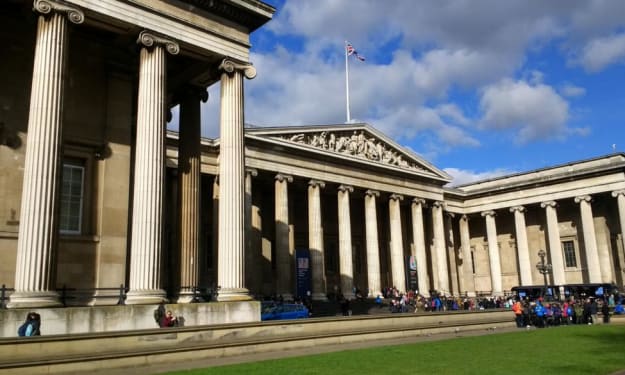
Must-see exhibits in the British Museum, London
The British Museum houses more than 8 million objects. Not all of them are on permanent public display, but there are enough there to keep you busy for many days, should you have the time. However, this is unlikely to be the case, especially if your time in London is limited. What you will regard as a “must see” item will doubtless depend on your personal interests, but there are a number of objects that it would be a shame to miss, and some of these are suggested below.
By John Welford5 years ago in Wander
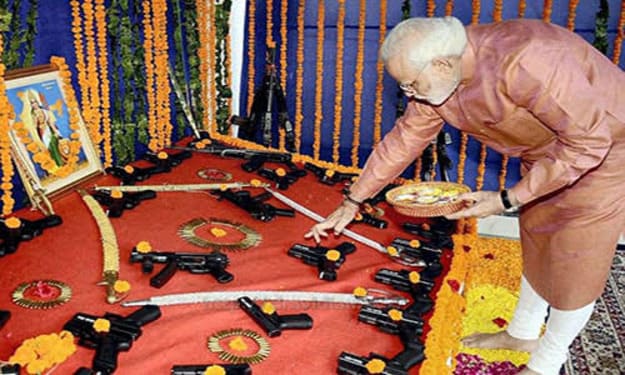
Armed Puja Festival India
Start writing... Ayudha puja or shastra puja is the worship of weapons that takes place on the ninth day of the Navaratri festival. Weapons are retrieved for use with the blessings of the Goddess on the tenth day, Vijayadasami. Ayudha puja is a pan-Indian phenomenon, although it is traditionally confined to those closely connected with, and responsible for, the use of weapons such as royal families and schools of martial arts such as kalaripayattu. Today, worship of weapons is primarily carried out by policemen, security personnel and the army. Most Indian army units have long standing traditions of ayudha puja.MULTIPLE TRADITIONS OF WEAPON WORSHIP.Multiple Hindu traditions surround Vijayadasami, notably that of Durga slaying Mahishasura and Rama killing Ravana. Less famous is that the Pandavas retrieve their weapons hidden in a shami tree after thirteen years of exile on Vijayadasami. In memory of this event, the Maharaja of Mysore proceeds on the tenth day on a caparisoned elephant to the Bannimantapa, where he pays respects to the Shami or Banni Tree. This is the grand procession through the thoroughfares of Mysore that the Dussehra celebrations are renowned for.How do different states perform Ayudha Puja?.In Tamil Nadu, the day is celebrated to mark the victory of Goddess Chamundeshwari, an incarnation of goddess Durga, over demon king Mahishasura. The legends have it that the weapons used by the goddess were never brought into use again, hence they were kept and worshipped. Another legend refers to the Pandavas retrieving their weapons from the Shami tree after 13 years into exile. Those weapons helped Arjuna to emerge a victor in the Kurukshetra war. People clean up their houses and decorate them with flowers. Garlands and thoranums will adorn their vehicles. The implements are then worshipped along with the idols of goddesses Saraswati, Lakshmi, and Parvati. The festival is also called Golu. On this occasion, idols of gods and goddesses are arranged on a seven-layered wooden platform. On the 9th day, Saraswati puja is performed during which the books, weapons in the house and musical instruments are also put on these holy platforms and worshipped.In Kerala, the festival goes on for two days. It's part of a bigger, three-week festival. Ayudha Puja starts on Pujaveppu. On this day, people bring out their tools of the trade for worshipping. These tools include farming instruments, musical instruments, vehicles, stationery, factory machinery, basically means that help you earn your livelihood. The closing day is called Pujayeduppu. On this day, these tools are taken back to their respective trades. On this day, people dance, perform several forms of traditional martial art Kalaripayattu.In Karnataka, Mysore state of the Maharajas of Mysore leads the procession on the ancient Dasara festival. The royals worship their weapons on the Mahanavmi Day (the ninth day of Navaratri). The traditional ritual of breaking the pumpkin on the royal ground (called Kushmanda) is performed. After that, these weapons are carried in a golden palki to the Bhuvneshwari temple. The ritual is followed by the world-famous Dasara procession on the next day. Maharaja of Mysore performs puja in a temple on the palace grounds then mounts a caparisoned elephant for a procession through main streets of Mysore. The procession then reaches Bannimantap where the Maharaja worships the Shami tree.In Maharashtra, the tradition is called Shastra Puja/Saraswati Puja. The weapons and tools of tread are kept alongside books, pens, and other means of acquiring knowledge. These instruments are worshipped with marigold flowers, leaves of Shami tree, and 'dhaan' that is grown in the nine days of Navaratri. On Dussehra day, people cross the borders of their village to collect the Shami leaves that are also considered a symbol of gold or wealth. They return with these leaves and share them with their loved ones. It represents the love and respect shared with one another.In Punjab, Nihang Sikhs observe Shastar Puja. The practice of worshipping one's sword was encouraged by Guru Gobind Singh. This puja is done with chanting of Chandi di Vaar from the fifth chapter of Dasam Granth. In Odisha, farmers worship the tools that are used for cultivation like a plough and a metal stylus that is representative of knowledge.The modern days.As the times have changed, the ways of worshipping are also changing. Therefore now you will find, laptops, tablets and Kindles worshipped alongside the weapons in the house. Defence Minister Rajnath Singh, who is on a three-day visit to Paris to receive the first Rafale fighter jet will perform the Shastra Puja at the French port city of Bordeaux, making it a truly international affair.The balance of Durga and Saraswati.
By Zarinabanu Zarinabanu5 years ago in Wander
Is it still cultural appropriation if you are not aware of it?
"Do you find it offensive when foreigners wear your garments?" Marta Lema gives me a baffled look and a small laugh. She is one of the several merchants and artisans that are allocated in Plaza de los Ponchos, a nickname by locals for the textile market in Otavalo, a small town in Ecuador that has been praised by tourists and that stands as a must-visit spot for anyone who is in the South American country.
By Sofia Rubio5 years ago in Wander
The Historic City: Kathmandu valley
Kathmandu Valley Is home to ancient temples and monuments where Hinduism and Buddhism co-exist in perfect harmony. Through which we can study the myths and legends that shaped the lifestyle of Nepalis for hundreds of years, since past.
By thirdeye adventure5 years ago in Wander
Head First Into Philippine Culture
In order to experience the true culture of another country, I believe it is important to go there yourself. Also it is equally important to go places outside the typical tourist spots. The reason for this is that no matter how hard a country tries to keep its cultural integrity intact, visitors from foreign lands bring much-needed money into the economy. This creates a trade-off as the areas tend to become homogeneous with the foreigners that visit there.
By Stephan Carpenter5 years ago in Wander
Just a typical day in the Philippines
My morning in LaCarlota City, Philippines started out like most, waking up with the sun already heating up the day. While the wife went outside to start whatever she could find for breakfast, I got up and made the bed for her. She is near her ninth month of pregnancy and getting across the bed to put the fitted sheets back onto the corners was harder for her than it was me, so I tried to make sure it was done before I left the room in the mornings. I went out back to find her at the small two burner gas stove making pancakes and hot dogs. A couple of eggs sat sunny side up waiting for the rest of the food to finish up, so we could sit together for breakfast as I had since my arrival over a week ago. Instant coffee in the pouch pre-mixed with cream and sugar was my drink of choice with breakfast here in the Philippines. Brewed coffee was not something most households in the Providences have.
By Stephan Carpenter5 years ago in Wander
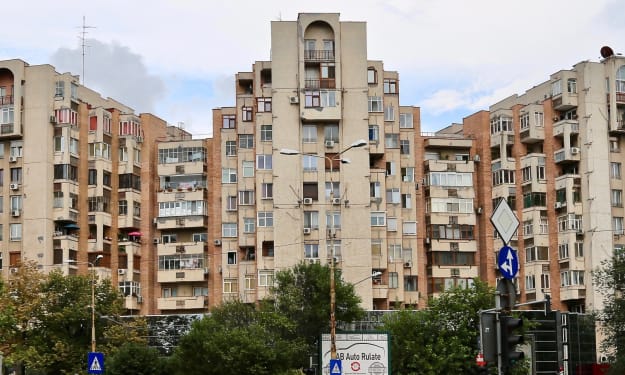
Can the Euro Survive Part 8 – A Historic Postcard From Romania
Can the Euro survive, let’s see if Romania can add to the floundering union/empire. To visit Romania is to be transported back in time. The former Soviet country is a decaying snapshot of the 1970s. Romania is listed as one of Europe’s most corrupt countries, and it is obvious that a large portion of public funds has not been spent on public works and general upkeep. Roads are in disrepair, buildings are falling down, and the overall feeling is decidedly Athenian.
By A Man's Guide5 years ago in Wander