

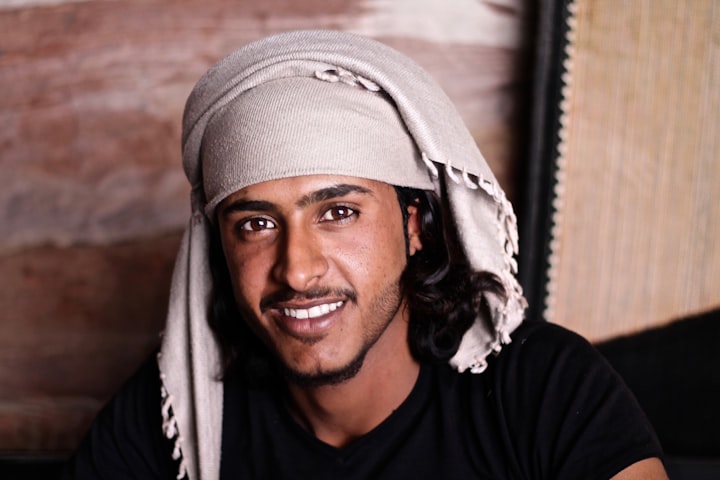
I’ve always been a bit of an eclectic dresser borrowing from the people I’ve met, the countries I’ve visited, the stories I’ve heard. That’s why the fashion trend I’d love to bring back is so deeply rooted in history - the history, lineage and story of my husband’s home country, Jordan.
My family and I recently got home from a six month stay in Jordan but it’s one of those places I feel I’d always been. Like a little piece of my beating heart was born among the fig and olive trees in the northernmost part of the country. The part of the country boardering with Syria, also rich with a history of fashion passed down generation after generation.
But my most favourite fashion item is known to us Westerns as the kuffiyah - but that’s not the actual name. The scarves from this region, called shemags (pronounced sh-Meg) are traditionally worn by men and are different colours depending on the region you go to. Palestinian men wear white and black shemag while Jordanian men wear a red and white version.
Wherever you go in Jordan, especially in the villages outside of the capital, Amman, men wear shemag proudly. The red and white patchwork visible far, far down the road identifying the wearer as a Jordanian and implying that the wearer is proud, noble, traditional - and these aren’t characteristics I was told to associate with shemag wearers this is what I’ve learned innately over time.
Some men wear their shemag tied up neatly on their head and others let it hang loosely. Don’t quote me on it but I think the shemag is worn as respite from the hot sun, at least that’s what I’ve heard. Perhaps most importantly the shemag is a tribute to the lineage and homeland. Shemag in all colours are sold in the local sooks, hung up in a cascading rainbow ranging from traditional to the colourful tourist’s delight (as seen in the picture above). The shemag is a source of pride for Jordanians. Even the King wears a shemag.
But like many traditions throughout the world, the shemag is less popular with the younger generation. People my husband’s age don’t wear the shemag as much instead favouring more Western styles. And since so much of Jordan’s population is young it’s no wonder they want to differentiate themselves from the past and from the traditions of their parents and grandparents.
As a Westerner and a woman I have little say in the styling of a population of men in the Middle East. At best I can convince my husband to wear a shemag. And in fact, I bought him several: the traditional red & white, the Palestinian white & black and even an assortment of tourist delights in peach, mauve, royal purple and turquoise. But for now they remain untouched in our closet. Actually, not untouched. I’ve worn the shemag on numerous occasions each time hoping someone will ask me about the beautiful, colourful, patchwork design I wear around my arms like shawl. But I’ve not gotten any inquisitors so far. Maybe too many are already familiar with the kuffiyah they think they know - or maybe this scarf, rich in tradition and history is too traditional even for Western eyes. Or maybe like other trends, Jordanian men will revisit the shemag when they are old and gray and looking for a symbol of their heritage and tradition and the sun is too hot for their head.
About the Creator
Kareema
Wife. Mom. Traveller. Writer. Poet. Thrifter.
Weather in Morocco in July By Morocco Family Vacation
When we planned our family trip to Morocco, July wasn’t my first choice. Like most parents, I worried about the heat especially with kids. I pictured endless sun, cranky afternoons, and constant searching for shade. But our schedule left us with July, so we adjusted our expectations and planned carefully.
By Ariel Cohenabout 16 hours ago in Wander


Comments
There are no comments for this story
Be the first to respond and start the conversation.