
Sampling the Skeena
Riding the rails through northern B.C.


The Skeena River in northern British Columbia, Canada is one of those places that takes your breath away. The Gitksan peoples, the indigenous people who were here first, call it the river of mists. Shrouded in clouds, the Skeena can take on a brooding, mysterious quality. Where does it go and who lives along its route? Thankfully, a transcontinental railway hugs its shoreline, making it possible for me, or anybody else, to sample its path from the comfort of a rolling living room.
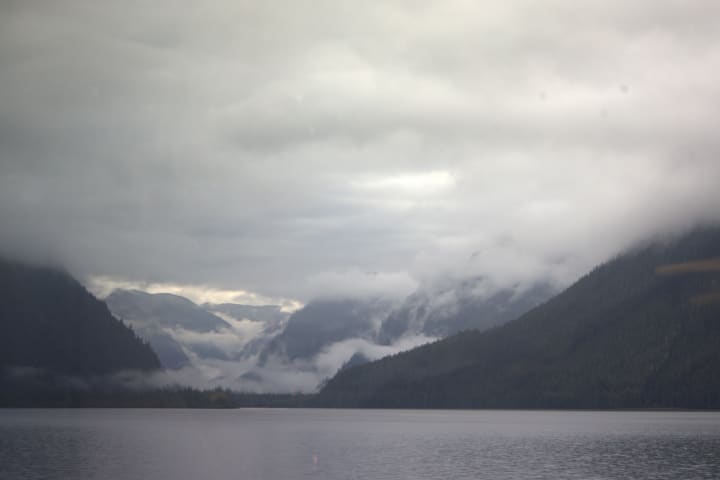
My journey started in the coastal community of Prince Rupert, a mere 80 miles south of the Alaska Panhandle. A hundred years ago Rupert was called the Halibut Capital of the North because of its abundant stocks and healthy commercial fishery. Today, the fishery is no longer the dominant industry, replaced with tourism (there’s a cruise ship terminal), and a huge port that ships coal, wheat, and other commodities to Asia.
It was also the western terminus of the Grand Trunk Pacific Railroad from 1907 to 1914. The Grand Trunk was supposed to be Canada’s second transcontinental railway. The first coast-to-coast railway, the Canadian Pacific (CPR), completed 30 years earlier, took a southern route while Grand Trunk Pacific went north. Unfortunately, the upstart couldn’t make a go of it and was eventually absorbed into Canadian National Railways which in turn became Via Rail. It’s a Via Rail train that I took to the interior, Prince George, 310 miles away.

Its stainless-steel coaches were built in 1954 and although the interiors have been refurbished many times over, the look inside was still mid-fifties. I especially liked the chairs in the rear observation / dome car arranged in a horseshoe so people could talk to one another. Coaches like this were commonplace in the ‘50’s and ‘60’s and here I was riding the same rolling stock 70 years later. It was old but I liked the retro vide.

The Skeena is the life blood for communities up and down its path. During the gold rush of the late 1800’s, steamboats ran from Rupert to the town of Hazelton, the jumping off point for the northern gold fields. During the construction of the Grand Trunk Pacific a few years later, a fleet of railway-owned sternwheelers carried men and supplies to the work sites. The last sternwheeler was retired in 1911.
The Skeena is tidal river and the tide was out, exposing mudflats and sandbars. It was also chocked with salmon returning to their spawning grounds and that attracted the predators. I saw a black bear pacing the sandbar perusing his dinner. A bald eagle hovered overhead and was chased away by two ravens.
This is Kermode Bear territory, a subspecies of bear that with a very rare white coat. The local indigenous population, called First Nations in Canada, have assigned magical properties to it and call it Spirit Bear. I did not see the Spirit Bear. The train started to climb and that grabbed my attention. The river splashed on the canyon floor below.
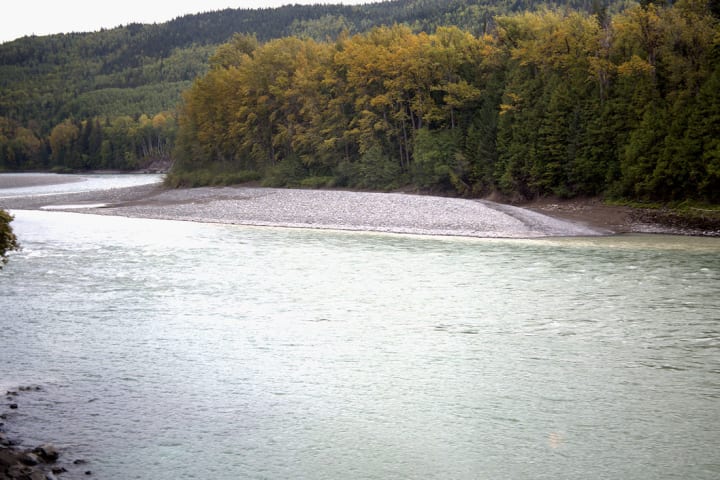
Canada’s First Nations have a strong presence in the north. Vast stretches of unspoiled forest underscored the feeling of remoteness and isolation yet I saw small signs of the habitation along the right-of-way, simple cabins hidden amongst the trees. I imagined the hardship families would have faced eking out a living at the turn of the century, or even today. Picturesque in the summertime but winter?
And I appreciated the difficulty work crews had pushing a rail line through the bush. This 186 mile stretch between Rupert and Hazelton took almost four years to complete and was considered the most difficult piece of railway construction in North America. Pushing through the mountains cost the Grand Trunk Pacific almost two times the estimate. No wonder it went bankrupt.

My fellow passengers were surprisingly well-informed on the railroad, its history, and its importance to the area. I didn’t expect that. We were a mix of city folk, tourists from other parts of the country, and locals who used the train as everyday transportation.
I met Phyllis, a local rancher, who owned 23 acres of grassland down the line. She raised goats. Originally from the city, she swore she would never return to the urban jungle. It was just too peaceful out here and at certain times of the year, she could see the northern lights from her porch. Phyllis was returning from a shopping trip to Rupert and since she was a regular on this train, the conductor made an unscheduled stop at a small station along the right of way and she stepped off the coach, parcels and all.
Then there was Paul, a retired equipment evaluator. I wanted to know what an equipment evaluator was.
“I help design machines that speed up track maintenance and then test them out to make sure they work,” he replied.
Paul said he used to work for Via Rail and he kept those of us gathered in the observation / dome car enthralled, like kids around a camp fire, with tales of his life on the rails. He told us about the spike driver, a machine that automatically drives a spike through the rail plate into the wooden tie below. It doesn’t work on concrete ties though, he cautioned.
Or there’s the multi-function maintenance machine which lifts up a section of track and then lays, packs, and levels the gravel underneath before setting it down on a fresh track bed. Paul illustrated his stories by pointing to pieces of equipment sitting idle on the sidings.

We kept climbing, through tunnels and over bridges. Eventually, the Skeena met the Buckley River near Hazelton, the jumping off point for the prospectors I mentioned earlier but now an entry point for tourists anxious to sample First Nations history and culture. The river continued north, another 350 miles, to is source in the Skeena mountains while we turned east and south along the Buckley.
In another thirty minutes, we were at the highest point of the line when Paul called out “there’s a real old-timer over there,” referring not to another passenger but to a rusted piece of maintenance sitting on a siding.
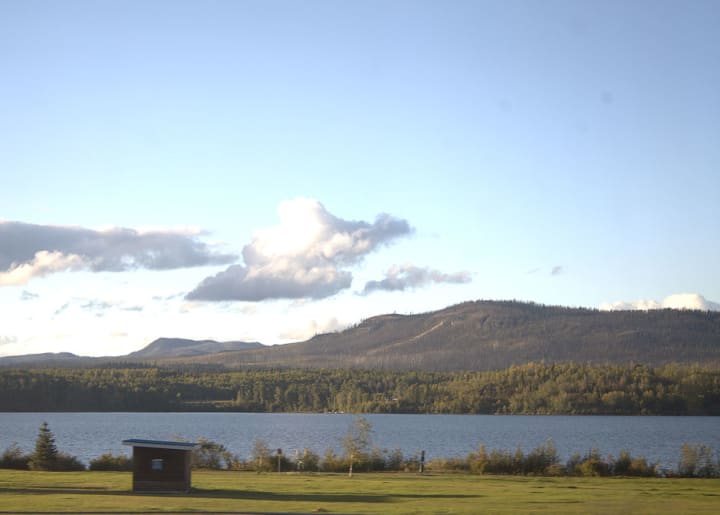
As we descended into a valley, the trees started to thin out and swaths of green space opened up. The topography changed from rugged to rural. We were now running parallel to Fraser Lake, 18 miles long and a mile wide.
From here to Vanderhoof, the terrain was flat and it was easy going. Suddenly signs of commerce and industry started to appear, storage tanks, shopping centers, Starbucks. I got off at Prince George. My trip was over but the train continued eastward through the even more impressive Rocky Mountains and the mountain town of Jasper.
My curiosity had been satisfied. I wanted to explore the Skeena and get a feel for northern B.C. It took me 12 hours to get from the coast to the middle of the province. True, I could have covered the same distance faster by car but the train was more relaxing and more revealing. I had a clearer picture of the Skeena’s twists and turns and I got to talk to some of the people that lived along its route. Had I taken the car, I would never have met Phyllis, her friends and especially Paul and his tales of multi functional machines, least of all the spike driver.
About the Creator
John Thomson
Former television news and current affairs producer now turned writer. Thanks Spell Check. Visit my web page at https://woodfall.journoportfolio.com
Keep reading
More stories from John Thomson and writers in Wander and other communities.
The Top 10 Traditional French Dishes That Warm the Heart
French cuisine is not only about fine dining or artistic plates. At its core, it is home cooking. It is the smell of butter melting gently in a pan, onions slowly turning golden, herbs filling the kitchen with warmth. These are dishes that have been passed down through generations. Recipes we watched our parents and grandparents prepare. Meals that comfort, gather people together, and awaken memories.
By Bubble Chill Media 6 days ago in Wander
Away from the Crowds in Wisconsin
Located on Lake Superior, the Apostle Islands are great for outdoor adventures. They are known for pristine beaches and sea caves. Cliffs offer awesome views. Visitors enjoy hiking along scenic trails or getting out on the water and sailing.
By Rasma Raisters4 days ago in Wander
When the Shelter Closes
Across the street from my house, a man slept under a tree, his dog by his side. My first, naive thought: he must be traveling through. But he kept coming back, often sleeping there during the day. Then it hit me—that person might not have a home.
By Bride of Sound3 days ago in Humans



Comments
There are no comments for this story
Be the first to respond and start the conversation.