
Punjabi Culture: A Celebration of Color, Courage, and Community
“Punjab — where dhol beats echo through hearts, and traditions dance in the colors of life.”

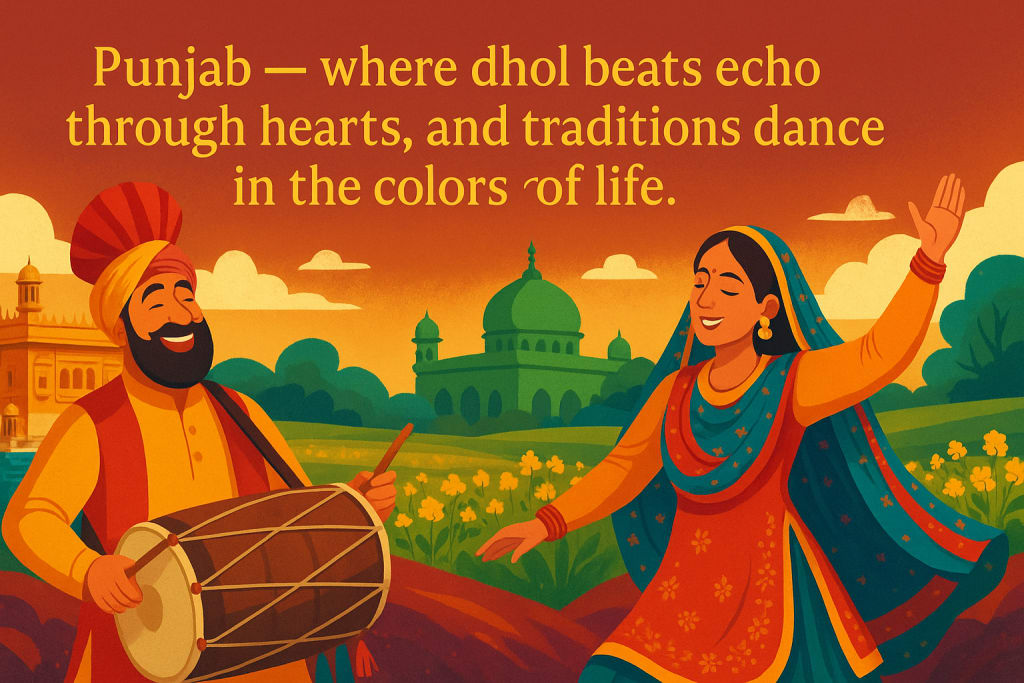
Punjabi Culture: A Celebration of Color, Courage, and Community
The culture of Punjab — whether in Pakistan or India — is one of the richest and most vibrant cultures in South Asia. Rooted in centuries-old traditions, agriculture, music, dance, spirituality, and hospitality, Punjabi culture is a dynamic fusion of joy, resilience, and unity. Whether it’s the colorful dresses, energetic bhangra dances, or the deep spiritual connection to Sufism and Sikhism, Punjabi culture represents the heartbeat of the land and its people.
This article explores the key elements of Punjabi culture, covering its history, traditions, language, food, music, and values.
1. The Historical Roots of Punjabi Culture
Punjab — meaning "Land of Five Rivers" (Jhelum, Chenab, Ravi, Beas, and Sutlej) — has been a cradle of civilization since the ancient Indus Valley Civilization. The land has witnessed the rise and fall of empires, from the Mauryas and Mughals to the Sikhs and the British Raj. Each left an imprint on its cultural fabric.
Post-partition in 1947, Punjab was divided between India and Pakistan, yet the essence of Punjabi culture continued to thrive on both sides, albeit with regional variations. The shared heritage is still visible in language, cuisine, and family values.
2. Punjabi Language and Literature
Punjabi, written in Shahmukhi script in Pakistan and Gurmukhi in India, is spoken by over 125 million people worldwide. It's a language known for its expressiveness and warmth.
The literary tradition of Punjabi is ancient and rich. From the romantic tales of Heer Ranjha by Waris Shah to the Sufi poetry of Baba Bulleh Shah and Shah Hussain, Punjabi literature reflects love, resistance, mysticism, and devotion. Today, modern poets and writers continue to preserve and evolve the legacy of Punjabi storytelling.
3. Music and Dance: The Soul of Punjab
Music and dance are central to Punjabi identity. The region is known globally for its energetic and rhythmic musical forms. Here's a breakdown:
Bhangra: Traditionally a harvest dance by farmers, it has become an international dance style celebrated in weddings, competitions, and movies.
Giddha: A vibrant folk dance performed by Punjabi women, expressing emotions, stories, and daily life in humorous couplets called boliyan.
Sufi Music: With deep roots in spiritual expression, qawwalis and kafis by legends like Nusrat Fateh Ali Khan and Abida Parveen echo across Punjab’s shrines and hearts.
Modern Punjabi music has expanded into hip-hop, rap, and pop, gaining global recognition through artists like Bohemia, Sidhu Moose Wala, and Diljit Dosanjh.
4. Cuisine: A Feast of Flavors
Punjabi cuisine is globally loved for its richness, variety, and spices. It reflects the agricultural bounty of the region and the generous spirit of its people.
Famous Punjabi dishes include:
Makki di Roti & Sarson da Saag – A traditional winter meal
Butter Chicken and Tandoori Chicken
Chole Bhature, Parathas, and Lassi
Dal Makhani, Paneer Tikka, and Kadhi Pakora
Punjabi food is incomplete without generous servings of butter, ghee, and love. The tandoor (clay oven) is a staple in Punjabi cooking, used to make rotis, naans, and kebabs.
5. Dress and Attire: Tradition with Elegance
Punjabi attire reflects grace and vibrancy. The traditional clothing of men and women varies but carries the essence of comfort and color.
Men wear Kurta Pajama, Turban, and in rural areas, Dhoti or Lungi.
Women wear Salwar Kameez with a Dupatta, and often accessorize with bangles, nose rings, and jhumkas.
The Phulkari (floral embroidery) tradition is iconic in Punjabi women’s shawls and dupattas. On festivals and weddings, the clothes become more elaborate, with zari, gota, and mirror work.
6. Festivals and Celebrations
Punjabi festivals are filled with music, dance, food, and communal bonding. Some major celebrations include:
Vaisakhi: Marks the harvest season and also the birth of Khalsa (in Sikhism).
Lohri: Celebrated in January with bonfires, dancing, and sharing sweets.
Basant: A spring festival with kite flying, yellow dresses, and joy.
Eid (in Pakistani Punjab) and Diwali (in Indian Punjab): Reflecting the religious diversity and unity of the region.
Weddings in Punjabi culture are grand, colorful, and full of traditional rituals like mehndi, sangeet, and baraat.
7. Spiritual and Religious Influences
Punjab has been home to multiple religious traditions, including Islam, Sikhism, Hinduism, and Sufism.
Sikhism, founded by Guru Nanak Dev Ji, originated in Punjab and has deeply influenced the region’s philosophy, values, and architecture.
Sufism is widely practiced, especially in Pakistani Punjab, where shrines of saints like Data Ganj Bakhsh and Bulleh Shah serve as spiritual centers.
Islamic traditions are deeply rooted in everyday life in Pakistani Punjab, from call to prayer to festive customs.
This spiritual richness fosters a culture of tolerance, compassion, and unity among its diverse communities.
8. Family and Social Values
Punjabi culture places high importance on family, respect for elders, hospitality, and social responsibility. Joint family systems are still common, and elders are regarded as the wisdom-keepers of the household.
Guests are treated with warmth, often with the saying: “Mehmaan Bhagwan hunda hai” (The guest is like God). Weddings, funerals, and religious gatherings become large community events.
Even in urban settings, the sense of extended community and neighborhood cooperation remains strong.
9. Arts, Crafts, and Architecture
Punjabi arts are deeply linked to daily life. From Phulkari embroidery and pottery to mud wall paintings and wood carving, the creativity of Punjab’s artisans continues to thrive.
Architectural landmarks like:
Badshahi Mosque and Shalimar Gardens in Lahore,
Golden Temple in Amritsar,
Faisalabad Clock Tower and Minar-e-Pakistan
…reflect both Mughal grandeur and Sikh aesthetics.
10. The Global Punjabi Identity
Punjabis are known for their entrepreneurship, adaptability, and energy. Millions of Punjabis live abroad — in the UK, Canada, USA, Gulf countries, and Australia — where they continue to uphold their traditions and represent their heritage proudly.
Through music, language, food, and festivals, they build bridges between cultures and promote harmony.
Punjabi culture is not just a regional tradition; it’s a living, breathing celebration of life, unity, and humanity. Whether you're dancing to a dhol beat, tasting a buttery naan, or listening to a soulful verse of Sufi poetry — you are experiencing the soul of Punjab.
Its resilience in the face of history, its unmatched zest for life, and its deep-rooted values make Punjabi culture a shining gem of South Asia.
About the Creator
Noor Salam
✍️ Pakistani writer sharing motivational stories, Islamic reflections, and online earning tips in English & Urdu. I believe in the power of words to inspire, guide, and create impact. 🇵🇰
Keep reading
More stories from Noor Salam and writers in Wander and other communities.
🇵🇰 The Vibrant Culture Of Sindh - A Living Heritage Of Pakistan
🇵🇰 The Vibrant Culture of Sindh – A Living Heritage of Pakistan Pakistan is a diverse land of cultures, languages, and traditions. Among its most ancient and rich cultural identities is that of Sindh, a province known for its hospitality, Sufism, music, colors, and craftsmanship. The Sindhi culture is deeply rooted in the ancient Indus Valley Civilization, representing centuries of evolution, resilience, and pride.
By Noor Salam6 months ago in Wander
Weather in Morocco in July By Morocco Family Vacation
When we planned our family trip to Morocco, July wasn’t my first choice. Like most parents, I worried about the heat especially with kids. I pictured endless sun, cranky afternoons, and constant searching for shade. But our schedule left us with July, so we adjusted our expectations and planned carefully.
By Ariel Cohenabout an hour ago in Wander


Comments
There are no comments for this story
Be the first to respond and start the conversation.