
Mos Espa: A guide to the abandoned Star Wars film set in the Tunisian desert
Are you a Star Wars fan who has wanted to transport to a galaxy far, far away? I have good news - you can! Well, kind of. This destination guide shares everything you need to know to visit Mos Espa in 2025.

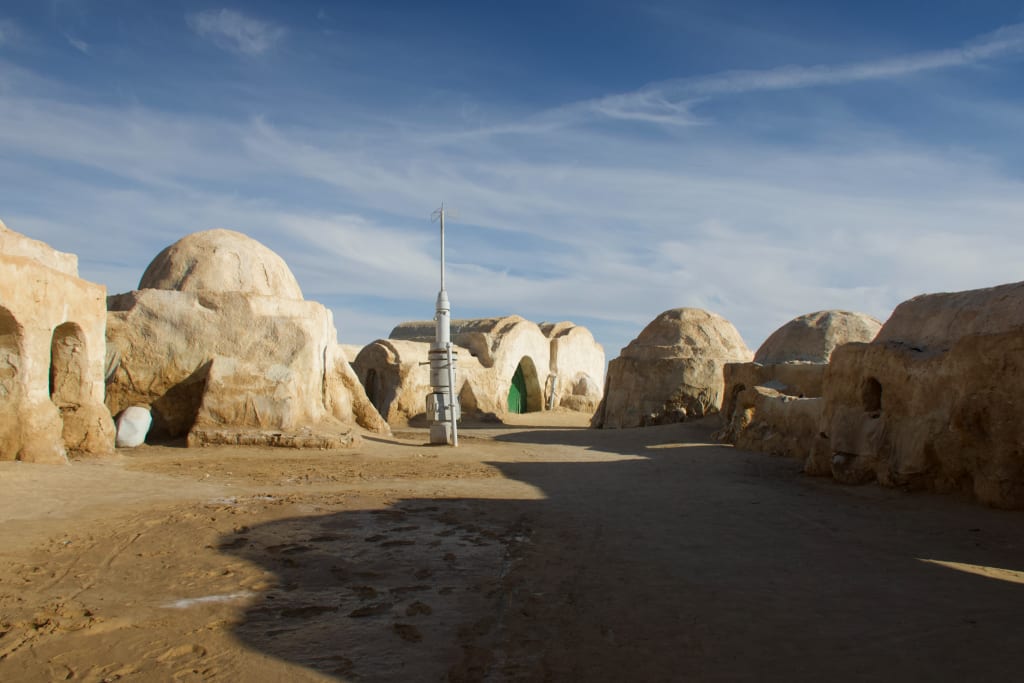
While Tunisia is famous for its Mediterranean beaches and ancient historical ruins, it’s also home to Tattooine, the famous desert planet of Anakin and Luke Skywalker.
Say what? Tattooine exists?!
The planet of Tattooine is actually named after a real town in Tunisia called Tataouine. So yes, it does exist! Somewhat. The Star Wars films were never specifically filmed in Tataouine proper, but rather in other desert towns and locations in southern Tunisia. Still, that's pretty cool, right?
Now, I know that the Star Wars prequels are a bit contentious. (I personally love them, but I digress). Either way, if you're a Star Wars fan – whether or not you're a fan of the prequels – chances are that you probably know of Mos Espa, the hometown of Anakin Skywalker. This Tattooine town was prominently featured in Star Wars Episode I: The Phantom Menace, which came out in 1999.
The Mos Espa film set is a historical ruin in itself, currently left standing in the middle of the desert to this day. And yes – you can visit it! For fans of the Star Wars movies or travelers looking for a unique photo opportunity, a trip to the Mos Espa set is an adventure into a galaxy far, far away – well, at least into Tunisia.
Hold up. Why did Star Wars film in Tunisia, and what scenes were filmed here?
George Lucas first chose Tunisia as the backdrop for the planet Tatooine back in 1977, during the filming of the very first Star Wars (now called Star Wars Episode IV: A New Hope). Inspired by the town of Tataouine in southern Tunisia, Lucas saw the country’s salt flats, sand dunes, and rugged terrain as the perfect stand-in for a planet on the edge of the galaxy. He ended up naming the iconic planet Tattooine after that town!
Fun fact: While the desert planet was named after Tataouine, no actual filming took place in Tataouine proper, but rather nearby towns or other places in Southern Tunisia.
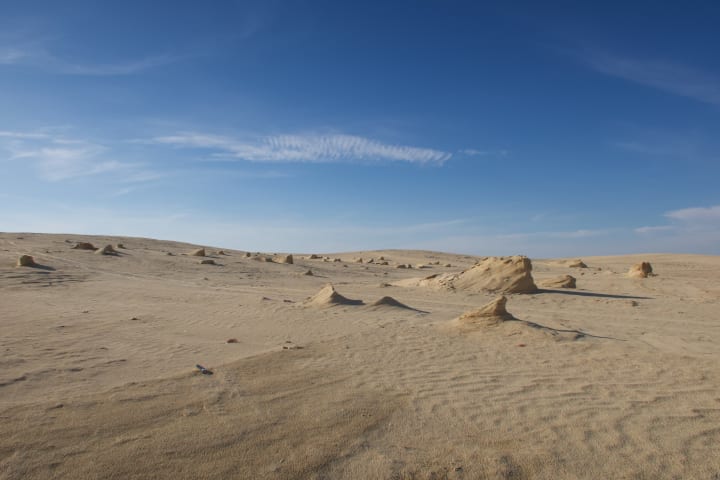
Two decades after the original Star Wars films, Lucas returned to Tunisia when it came time to film Episode I: The Phantom Menace in the 1990s. It was only fitting to do so. Lucas and his crew built the Mos Espa set in an isolated stretch of desert outside Nefta, a small oasis town in the south near Tozeur. They constructed a desert streetscape, featuring Anakin Skywalker’s childhood neighborhood, Watto’s junk shop, the podrace hangar used by Sebulba, and more. These settings served as important scenes in the film, including young Anakin’s first meetings with Qui-Gon Jinn, Padmé Amidala, and Jar Jar Binks.
Rather than dismantle the set once filming wrapped, Lucasfilm just decided to leave it behind. Since then, the site has transformed into somewhat of a pilgrimage spot for Star Wars fans who can walk the same path that Liam Neeson, Natalie Portman, Ewan McGregor, Jake Lloyd and Ahmed Best once walked.
What exactly can you see at the Mos Espa film set today?
Visiting Mos Espa feels like a surreal collision of sci-fi, Roman-ruin-ish aesthetics, and traditional Amazigh (Berber) architecture all at the same time. You’ll find dozens of buildings that are not technically real, but rather hollow movie props made of plaster, fiberglass and wood. You’ll also see the iconic Tattooine moisture vaporators still standing around, affixed to the ground.
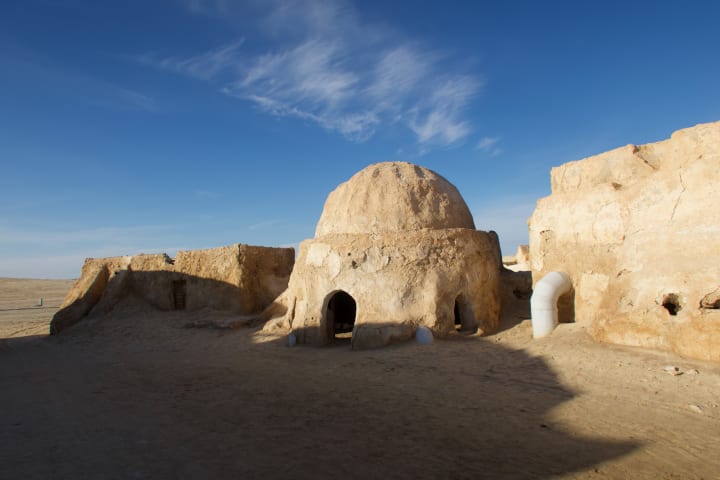
Overall, Mos Espa is a deserted movie set in a harsh desert environment (pun kind of intended, I guess?) There are no shops and no facilities. That said, the immediate area by the movie set is filled with local guides offering camel rides, trinkets, and ATV trips to the nearby rock formation of Ong Jemel, so be prepared for that.
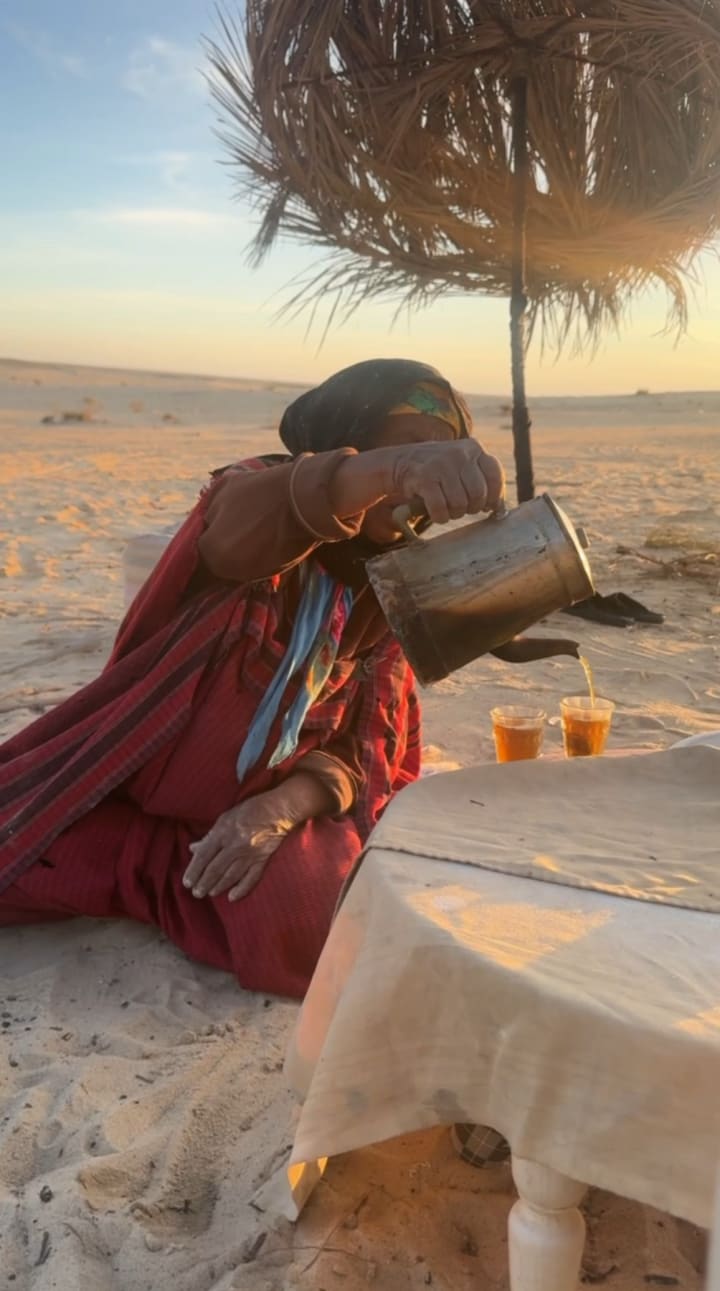
This stretch of desert is so remote that barely any people live in the area, but we did come across one fun, unplanned surprise. About 15 minutes back toward Nefta – just outside the film set – we spotted a sign for desert-baked bread and pulled over. An Amazigh (Berber) woman was chatting with her friends around a fire and invited us to join them. She baked the bread directly in the sand in the traditional style of the region and offered it to us with olive oil. She also showed us her little home and told us that someone who was passing by saw her living conditions and decided to build a house for her. We ended the day sharing good company and warm bread as the sun started setting!
2025 Travel Guide: Know before you go to Mos Espa
A trip to Mos Espa requires planning, as it is truly in the middle of nowhere. The set itself is located in the Chott el-Gharsa, a dry salt flat region in the desert outside of the cities of Tozeur and Nefta. There is one main road that you can use to drive there.
Cost: Visiting Mos Espa is completely free, as it’s an abandoned movie set with no entry fees or official management. However, expect to be approached by self-appointed “guides” offering tours. These are usually locals hoping to make some quick money from tourists, and their information may be vague or embellished. You’re free to explore on your own without paying anyone.
How to Get to the Mos Espa film set: In terms of the closest airport to the Mos Espa movie set, that would be Tozeur-Nefta International Airport (TOE), around 45 minutes away. Car-wise, while it is possible to go to the Mos Espa movie set with a normal sedan, it’s probably better to go with a 4×4 vehicle, especially if you want to ride around in the sandy desert terrain and head to the famous rock structure of Ong Jemel (which you can only do with a 4x4). This would be a true desert experience.
But you’re fine going in your normal car, too – just know you might need to skip Ong Jemel. Unfortunately, we had to skip Ong Jemel during our trip for this reason, though we did see plenty of other people drive up the sand mounds in their 4x4’s to get to it. We were also approached by plenty of people to ride an ATV, which we didn’t really feel like doing.
ONE FINAL NOTE: This story was originally published on my website, The Peripheral Project. Head over there to follow my journeys wandering around the world and sharing my insights, photos and more. It's still a work in progress, but I do hope to start expanding beyond destination guides to various cultural insights ranging from cuisine, society and everything in between, while also monetizing through various products and services. I'm starting with Tunisia because that's where I lived for seven months in 2025 and it's a country that deserves more attention than it gets. I appreciate your readership and support!
About the Creator
Atoosa Ryanne Arfa
I'm a hopelessly curious wanderer and love sharing stories of interesting perspectives around the world. My goal is to share stories from the periphery, inspired by my love for traveling to off-the-beaten-path places.
Keep reading
More stories from Atoosa Ryanne Arfa and writers in Wander and other communities.
Tamerza (Tamaghza): A guide to Tunisia’s very own Grand Canyon oasis
Tunisia is often boxed into two postcard-perfect images: the Mediterranean north with its whitewashed facades and blue doors in places such as Sidi Bou Said, or the vast, sand-swept Sahara, where camels and mirages evoke a stereotypical desert narrative.
By Atoosa Ryanne Arfa7 months ago in Wander
Worth the Wait: Puerto Viejo, Costa Rica
Beach bumming in a small Caribbean beach town sounded like a perfect way to end our 6-month trip through Mexico and Central America. Or so we thought. The foul, fishy stench of rotten seaweed hit our nostrils as we stepped from the cramped bus and looked out at a rather depressing, empty, and underwhelming black sand beach. It was pouring with rain, and we had to quickly fish out our ponchos. We thought, this couldn’t be it, could it?
By Sh*t Happens - Lost Girl Travel10 days ago in Wander
Fun Times at Globe Life Field: Part 2
Last month, I took a trip to my hometown of Arlington, Texas. It was the first time in nearly 15 years I've been back to the place that I grew up. During the two days I was there, I did some sight-seeing and was highly impressed with how much has changed the last time I was there, which was 2011. On the last day of my trip, I took part in a premium stadium tour at Globe Life Field, the home of the Texas Rangers. It was my first time there and was with a small group of people on the tour. I've discussed the things I've seen during the hour and a half tour in my previous story, which you can read down below. After the tour concluded, I went outside and took even more snapshots. I'll go over some of the images, individually and in collage form.
By Mark Wesley Pritchard 3 days ago in Wander
A Transparent Look at Vocal Challenges and Top Stories
Almost three years ago, we shared a resource article that served as a place for people to suggest new challenge prompts. We thought it would be a good idea to refresh that thread, and take the opportunity to answer a few common questions about top stories, how challenges are judged and how submissions are reviewed.
By Vocal Curation Team4 days ago in Resources



Comments
There are no comments for this story
Be the first to respond and start the conversation.