
Tamerza (Tamaghza): A guide to Tunisia’s very own Grand Canyon oasis
Dubbed “Tunisia’s Grand Canyon,” this off-the-radar oasis pairs panoramic views with hikes, waterfalls, and ancient ruins. Here’s your complete guide to exploring Tamerza (Tamaghza), one of North Africa’s most awe-inspiring hidden gems.

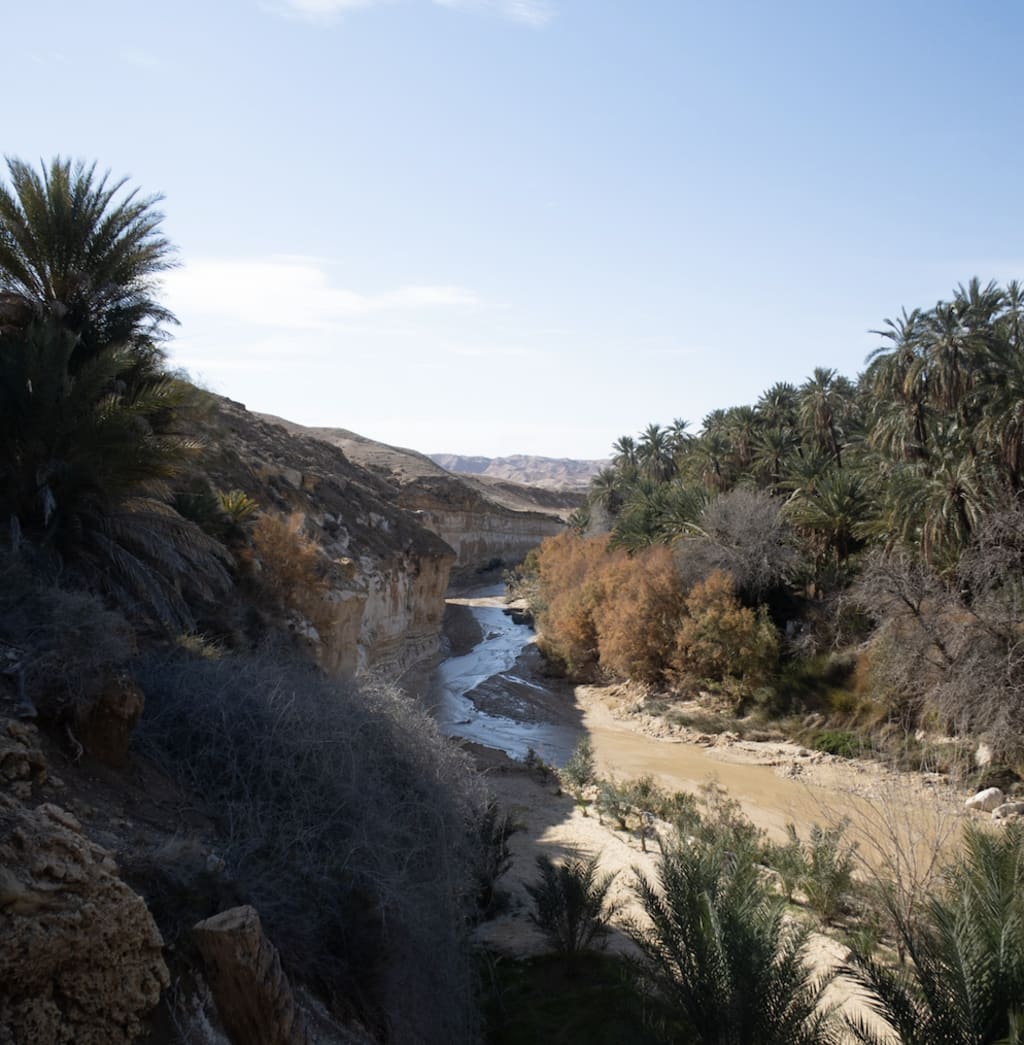
Tunisia is often boxed into two postcard-perfect images: the Mediterranean north with its whitewashed facades and blue doors in places such as Sidi Bou Said, or the vast, sand-swept Sahara, where camels and mirages evoke a stereotypical desert narrative.
But what rarely gets shown? I had no idea Tunisia had majestic canyons, waterfalls and hiking trails until I saw it myself! Sure enough, Tamaghza (also spelled Tamerza) is Tunisia’s largest mountain oasis, and it has pretty serious Grand Canyon energy, but with a twist: the canyons are juxtaposed with palm trees, waterfalls and ancient Amazigh ruins.
Tamaghza is part of the Three Oases Circuit, along with Chebika and Mides Canyon. This circuit features a scenic route that usually kicks off from Tozeur, a desert town that serves as a home base for travelers exploring southern and western Tunisia. What was once the Roman outpost Ad Turres is now a go-to for hikers, photographers, and off-the-beaten-path explorers looking for things to do in Tunisia that go beyond the usual beach-and-dunes loop.
If you're planning a Tunisia travel itinerary, this route flips the script. It’s a different side of the country that barely gets talked about and deserves way more attention. Keep scrolling for everything you need to know during your visit to Tamaghza.
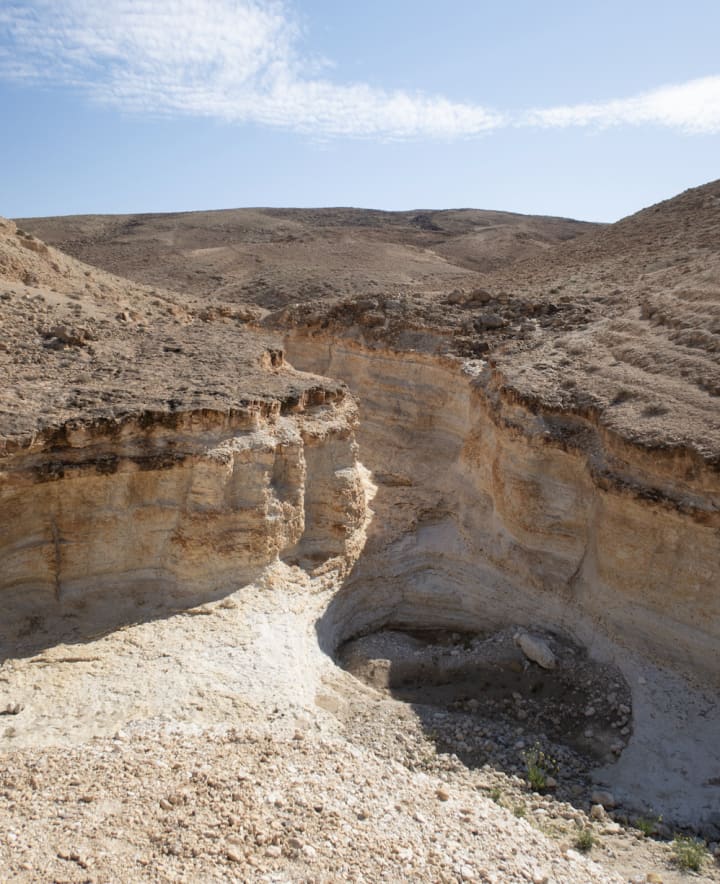
What’s up with the two names?
You’ll see this location referred to as both Tamerza and Tamaghza. Both names point to the same place, but Tamaghza ties more closely to its indigenous roots.
Tamerza is the spelling that tends to be used on maps, tourism websites, brochures and the like. It follows the French colonial transcription conventions that were adopted widely during and after the French Protectorate period (1881–1956).
Tamaghza reflects the original Amazigh (Berber) pronunciation. The prefix “Ta-” is a feminine marker in Tamazight dialects that gets used in names referring to natural features such as springs, valleys or mountains.
While both names are technically correct, Tamaghza more accurately reflects the village’s Amazigh heritage, which predates Roman and Islamic influence in the region. Thus, from now on, I’ll use the name Tamaghza, as I believe it’s more fitting to honor its indigenous identity.
What makes Tamaghza unique?
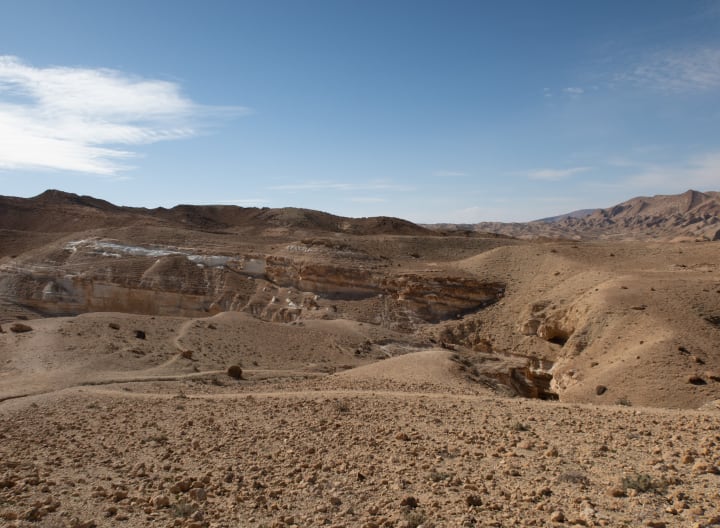
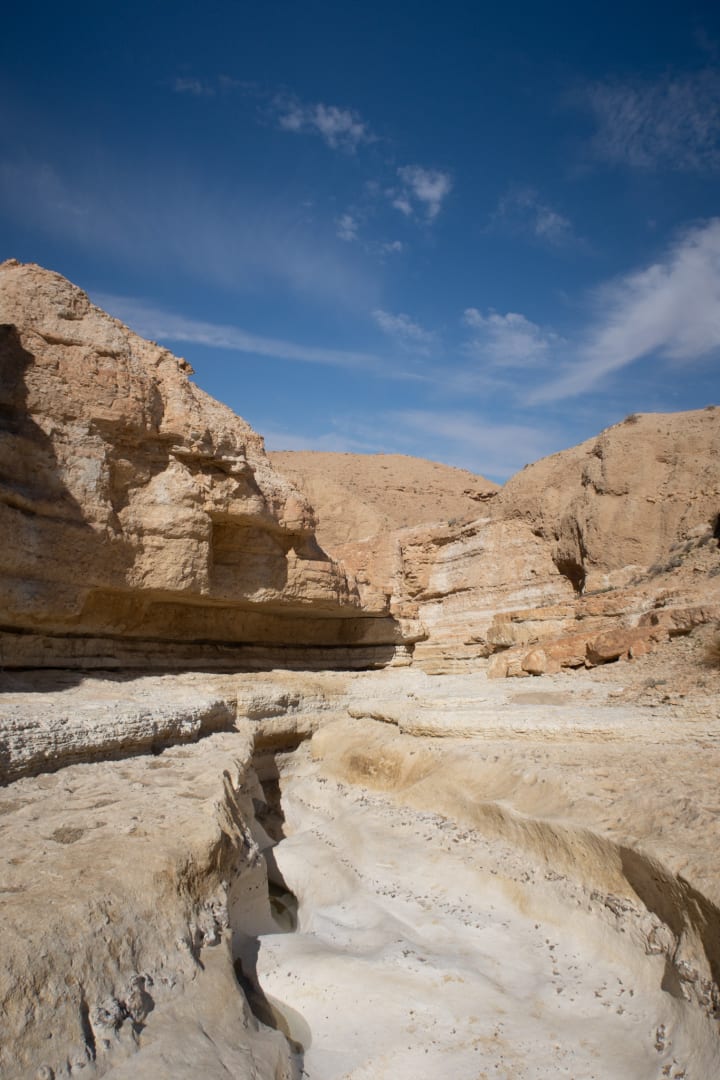
Tamaghza stands out because of its grand, sprawling canyon landscape, which is what earns its fitting nickname as Tunisia’s Grand Canyon.
Set against the backdrop of Tunisia’s western desert, the cliffs feature layered bands of red, ochre, and chalky white rock, carved over centuries by seasonal rains and natural erosion. The layers of rock contrast with palm trees growing beside the barren terrain, which gives the place a distinctly Tunisian character.
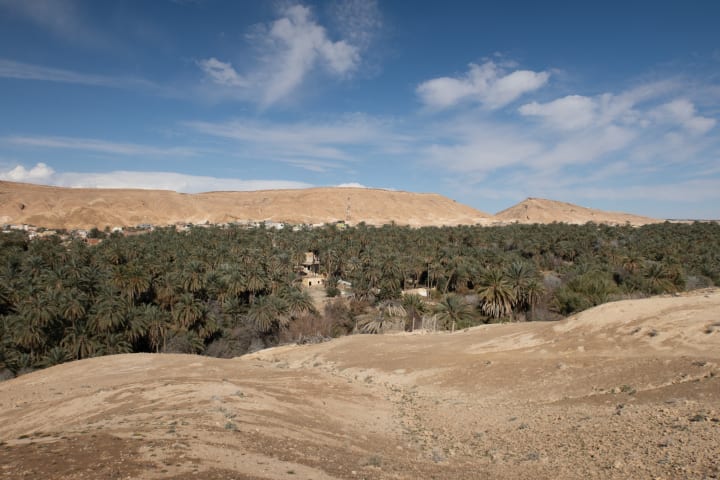
The main canyon, just a short walk from the old village ruins, is Tamaghza’s centerpiece. You can stick to the canyon rim for panoramic views, or descend into the dry riverbed to explore up close. For those looking for something active, take on multiple hiking trails. The location offers easy walks to more challenging routes!
2025 Travel Guide: Know before you go to Tamaghza (Tamerza)
Tamaghza is located in Tunisia’s Tozeur Governorate, near the Algerian border. As mentioned above, it’s typically visited alongside the neighboring mountain oases of Chebika and Midès Canyon as part of the popular “Three Oases Tour.”
How to Get to Tamaghza: Tamaghza is located about 70 kilometers northwest of Tozeur and is situated near the Algerian border. While it’s possible to reach the area in a regular sedan, the road conditions can vary, so a 4×4 vehicle is recommended if you want to access additional viewpoints or off-road tracks. If you do a guided tour that departs from Tozeur, chances are that you'll be in a 4x4. That said, a regular sedan is completely fine and is the more cost-effective option, especially if you're traveling across all of Tunisia and are using the same car.
For my budget travelers out there who are wondering if you can get to Tamaghza by public transportation: in theory, you can, but in practice, not easily. Louages (shared taxis that operate between towns) do run from Tozeur to Redeyef, the larger mining town past Tamaghza. However, they don’t regularly stop at Tamaghza, and you’d still need a ride from the highway to the canyon area, which is several kilometers off the main road. There are no direct buses from Tozeur to Tamaghza, and taxis willing to go that far may be expensive or require pre-booking.
Consider a Guide: Booking with a local platform such as WildyNess connects you with regional guides who know the terrain, history, and hidden spots across all three of the oases within the aforementioned circuit: Tamaghza, Chebika, and Mides Canyon. Beyond logistics, these guides offer valuable context. WildyNess can also help arrange your transportation, accommodation, and even meals with local families. Your money stays in the community, directly supporting the people who live and work in these remote areas.
Safety Note: American and Canadian travel advisories often flag this part of Tunisia due to its proximity to the Algerian border. As an American, I haven’t crossed into Algeria because of the visa complications and diplomatic hurdles that come with an American passport, so I can't comment on Algeria. However, tourism to this area is steady, and local communities are accustomed to hosting visitors. That said, this region is remote and mountainous, with limited infrastructure and cell coverage in certain areas. But if you're heading to Tamaghza, don't worry too much about the travel advisories. I just recommend not going solo, especially if you’re not familiar with hiking in desert terrain. Hire a local guide or travel with a buddy, both for safety and for better context on the region. It’s just good travel sense for anywhere off the grid.
What to Bring: Sturdy footwear is non-negotiable. The terrain around Tamaghza is rocky, uneven, and can get slippery near the canyon floor or waterfalls. Other essentials include:
- Plenty of water (there are no vendors in the canyon itself)
- Sunscreen and a hat for sun protection
- Snacks or energy bars if you’re planning a longer hike
- Light layers, especially in cooler months during mornings and evenings
The best time to visit is during the cooler seasons when the weather is mild and hiking is actually enjoyable. Avoid summer if you can: temperatures often soar above 40°C (104°F), and the sun is relentless with minimal shade along the trails. Seriously, I don't recommend it.
Want to stay connected?
If you like my work, please consider buying me a coffee or leaving me a tip on Vocal. Proceeds will go to me ordering a "direct," (pronounced the French way: "DEE-rect") which is a cappuccino-meets-latte in Tunisia. You can also support my photography by purchasing custom digital prints (I'm still working on them, and I'll happily take commissions! Just drop a comment if you're interested).
To stay updated with off-the-beaten-path explorations both in Tunisia and beyond, please subscribe to me on Vocal. I've been living in Tunisia in 2025 and believe that there's so much to share about this country. I'll also expand to other global destinations down the line (I've visited 30+ countries, which may not seem like a lot, but I've tried to focus on off-the-beaten-path countries).
You can also connect with me personally! If you're interested in a custom itinerary, comment below and I'm happy to discuss with you! Thank you so much for your support.
About the Creator
Atoosa Ryanne Arfa
I'm a hopelessly curious wanderer and love sharing stories of interesting perspectives around the world. My goal is to share stories from the periphery, inspired by my love for traveling to off-the-beaten-path places.
Keep reading
More stories from Atoosa Ryanne Arfa and writers in Wander and other communities.
Midès Canyon: A guide to Tunisia’s dramatic canyon oasis
Most posters or images of Tunisia showcase two extremes: the Mediterranean north with its blue-and-white coastal neighborhoods such as Sidi Bou Said or the endless dunes of the Sahara, where camels and mirages define the MENA landscape within society's imagination.
By Atoosa Ryanne Arfa8 months ago in Wander
Worth the Wait: Puerto Viejo, Costa Rica
Beach bumming in a small Caribbean beach town sounded like a perfect way to end our 6-month trip through Mexico and Central America. Or so we thought. The foul, fishy stench of rotten seaweed hit our nostrils as we stepped from the cramped bus and looked out at a rather depressing, empty, and underwhelming black sand beach. It was pouring with rain, and we had to quickly fish out our ponchos. We thought, this couldn’t be it, could it?
By Sh*t Happens - Lost Girl Travel10 days ago in Wander
Lost in Translation: How Getting It Wrong in Asia Taught Me How to Travel Right
My first morning in Hanoi started with a sensory assault. I was sitting on a tiny blue plastic stool, knees touching my chin, watching a woman whisk an egg yolk into a cup of robusta coffee. The air smelled of charcoal smoke, cilantro, and exhaust fumes. It was chaotic, loud, and utterly mesmerizing.
By Eleni N. Markou7 days ago in Wander



Comments
There are no comments for this story
Be the first to respond and start the conversation.