
Mattancherry Palace: A Historical Gem in Kochi
Get Information about Mattancherry Palace for your trip to Kochi

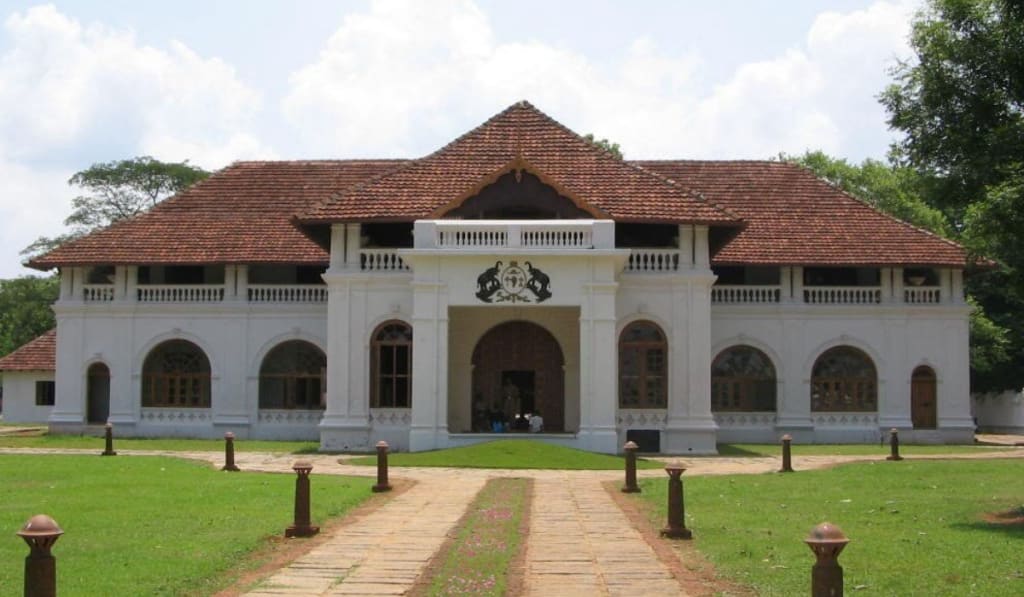
Mattancherry Palace, also known as the Dutch Palace, is a landmark that echoes the rich cultural and colonial history of Kerala. Nestled in the vibrant district of Mattancherry in Kochi, this palace is a symbol of the artistic brilliance and historical significance that shaped Kerala over centuries. Known for its fusion of Kerala’s indigenous architecture with colonial influences, the palace stands as a testament to the confluence of Portuguese, Dutch, and local traditions and we will know about Mattancherry Palace History.
Mattancherry Palace History
Built in 1555 by the Portuguese, Mattancherry Palace was presented as a gift to the Raja of Kochi, Veera Kerala Varma, as a token of goodwill. The Portuguese, aiming to strengthen their relationship with the local rulers, constructed this palace to win the favor of the Kochi royal family. This was part of a broader strategy to maintain their trade dominance along the Malabar Coast, where Kochi’s strategic location played a pivotal role.
While the Portuguese constructed the palace, it was the Dutch who renovated and extended the structure after they captured Kochi in 1663. This is how the palace came to be known as the “Dutch Palace,” despite its Portuguese origins. The Dutch restoration helped preserve the building, which continues to stand today as one of the most well-preserved examples of Kerala’s architectural legacy.
The Portuguese and Dutch Contributions
Though built by the Portuguese, the palace exhibits the classic Kerala architectural style, known as "Nalukettu," characterized by a central courtyard with a temple and sloping, gabled roofs. The Dutch, during their renovations, added more details and preserved much of the original structure, enhancing its grandeur without erasing its distinct local features.
The temple at the center of the palace is dedicated to Pazhayannur Bhagavathy, the family deity of the Cochin royal family. Additionally, the palace complex also contains shrines dedicated to Lord Krishna and Lord Shiva. These elements of the palace reflect not just the architectural splendor but also the deeply ingrained religious traditions of the royal family.
Architectural Significance of Mattancherry Dutch Palace
The Mattancherry Palace is a beautiful amalgamation of European colonial influences with traditional Kerala architectural styles. Despite its colonial roots, the palace embodies Kerala's indigenous "Nalukettu" style, featuring an inner courtyard, intricately carved wooden ceilings, and expansive halls with murals and paintings.
The palace is a two-storied quadrangular structure with a tiled roof, and it boasts fine wooden interiors. The central courtyard, a hallmark of traditional Kerala architecture, is an open space that leads to a small temple. The simplicity of the exterior design contrasts with the rich embellishments within, making it an architectural marvel.
One of the palace's standout features is the intricate wooden ceiling in the coronation hall, showcasing the excellent craftsmanship that Kerala is renowned for. The use of teak wood in combination with the sloping roof design allows the palace to stay cool even in Kerala’s tropical climate.
The Murals of Mattancherry Palace Kochi
What makes the Mattancherry Palace famous worldwide are the magnificent murals that adorn its walls. These murals, painted between the 16th and 18th centuries, are considered some of the finest examples of Kerala's traditional art forms. Done in the typical Kerala mural style, the paintings primarily depict scenes from Hindu mythology, especially from the epic tales of the Ramayana and the Mahabharata.
The most prominent murals in the palace depict:
The coronation of Lord Rama, a significant event from the Ramayana.
Various episodes from the life of Lord Krishna, including his childhood miracles and the famous battle scenes of the Mahabharata.
Hindu gods and goddesses, including Shiva, Vishnu, and Parvati, in their many forms.
The murals stand out for their vivid colors, emotional intensity, and artistic detail, representing a high point of medieval Kerala’s artistic achievements. These murals cover the walls of the main halls and are a visual journey through some of Hinduism's most significant mythological events.
Why is Mattancherry Palace Famous?
Mattancherry Palace is famous for several reasons, making it a major draw for tourists and historians alike.
Architectural Heritage: The palace is an exceptional representation of Kerala’s architectural traditions combined with European influences. The fusion of Portuguese and Dutch styles with traditional Kerala elements gives the palace a unique aesthetic, making it a rare example of cultural synthesis.
Exquisite Murals: The most defining feature of the palace is its breathtaking mural paintings. These murals are considered some of the finest examples of traditional Kerala artwork and depict a variety of scenes from Hindu mythology with intricate detail and artistry.
Historical Significance: The palace is a symbol of the colonial history of Kochi. It provides insight into the relationship between European powers and the local rulers of Kerala, particularly the strategic importance of the Kochi kingdom during the time of the Portuguese and Dutch colonial reigns.
Cultural Importance: Besides being a palace for the royal family, it housed temples and became a site of religious and cultural importance. The royal family’s patronage of the arts and religion is reflected in the murals and shrines present in the palace.
Role in Kerala’s Monarchical History: The palace was used for the coronation ceremonies of the kings of Kochi. While it wasn’t a permanent residence, it became an important site for royal rituals and functions.
Who Stayed in Mattancherry Palace?
Despite its grandeur, the Mattancherry Palace was never a full-time residence for the rulers of Kochi. Instead, the palace was primarily used for ceremonial purposes. One of its key functions was hosting the coronation ceremonies of the kings of Kochi, making it a politically significant site in the history of Kerala’s monarchy.
The palace also served as a storage site for royal artifacts, including portraits of the Cochin kings, palanquins, and other items of historical value. Today, the palace functions as a museum, showcasing these royal artifacts along with its famed murals. Visitors can see portraits of the rulers of Kochi, royal palanquins, swords, and other items that reflect the royal family’s legacy.
Mattancherry Palace Today: Entry Fee and Visiting Information
Today, Mattancherry Palace is managed by the Archaeological Survey of India and is a major tourist attraction in Kerala. The palace’s enduring allure lies in its artistic and historical significance, attracting thousands of visitors every year.
Entry Fee: INR5 for Indian citizens and INR100 for foreign nationals.
Timings: The palace is open from 10:00 AM to 5:00 PM, with a lunch break between 1:00 PM and 2:00 PM. It remains closed on Fridays and during national holidays.
The Mattancherry Palace is easily accessible as it is located near Fort Kochi, a major tourist hub. The proximity to other historical sites like the Jewish Synagogue, Jew Town, and the bustling spice markets of Mattancherry makes it a perfect stop for anyone exploring the cultural richness of Kochi.
Conclusion
Mattancherry Palace, or the Dutch Palace, is a treasure trove of Kerala’s royal and colonial past. Its fusion of Portuguese, Dutch, and Kerala architectural styles makes it a unique landmark in India. The palace’s beautiful murals, depicting stories from Hindu mythology, are a feast for the eyes and a key highlight of Kerala’s artistic traditions. Serving as both a royal ceremonial venue and a museum today, the palace offers a glimpse into the life of the Kochi kings and the region’s complex history. A visit to Mattancherry Palace is an enriching journey through time, offering insights into Kerala's art, architecture, and heritage.
About the Creator
Akash
Akash is a tour guide consultant who provides advice and guidance to the Indian tourist regarding their travel
related queries in the best possible way to satisfy the customers.
Worth the Wait: Puerto Viejo, Costa Rica
Beach bumming in a small Caribbean beach town sounded like a perfect way to end our 6-month trip through Mexico and Central America. Or so we thought. The foul, fishy stench of rotten seaweed hit our nostrils as we stepped from the cramped bus and looked out at a rather depressing, empty, and underwhelming black sand beach. It was pouring with rain, and we had to quickly fish out our ponchos. We thought, this couldn’t be it, could it?
By Sh*t Happens - Lost Girl Travel3 days ago in Wander
The Little Things Americans Take For Granted
America isn’t perfect. The entire country needs a serious makeover and attitude adjustment. We have it better in the country than people in some places, despite the flaws. People in some countries cannot enjoy freedom of speech. Women do not enjoy equal rights. Basic humanneeds like water and electricity are not always available. Simple acts can land someone in jail. We take so much for granted here in America. We’ve come to expect extras like electricity and Internet service. Far too often, we forget that people in some countries could only dream of the same luxuries.
By Criminal Matters5 days ago in Wander
The BAFTA Awards
By now, in a stunning departure from recent years, most of the world is aware of what happened at the BAFTA film awards. Social Media Headlines will tell you the bare bones: that John Davidson, a Tourette's Syndrome advocate, shouted a racial slur at two Actors of Colour, Michael B Jordan and Delroy Lindo.
By Natasja Rose6 days ago in Psyche




Comments
There are no comments for this story
Be the first to respond and start the conversation.