
First-Class Travel Writing Tips
Craft Captivating Stories That Transport Readers Anywhere


Everyone loves a holiday. But how do go about earning your living writing about them? Surely it’s the easiest gig going, right? You hop on a plane, chill out by the pool for a week or two and write about the fabulous hotel you stayed in when you get back. If you want to write and give a travel copywriting agency a run for its money, then read on to discover our selection of first-class travel writing tips that will get your writing off to a head start.
Get personal
The best kind of travel writing is the kind that takes the reader on a journey. To do this, you need to be able to evoke a sense of place through your writing. How did you feel when you were there? What time of day was it? What was going on around you? What else added to the experience aside from the obvious? Don’t go overboard with information as you’ll waste too many words, but extra details will help personalise your travel writing and make it unique.
Ditch the clichés
Travel writing is packed with clichés – turquoise seas, crystal-clear water, cobbled streets, that sort of thing – so if you want to keep your writing fresh, avoid them at all costs. Your readers will love you for it.
Be tight
Don’t waste words – why use three words when one will do?
Use your senses
Bring your travel writing to life by drawing on senses other than the main one – sight. What do places sound like? How do your favourite dishes taste and smell? Obviously, it’s imperative you describe what a place looks like, but if you can add depth by using your other senses, your writing will be all the more richer.
Deliver something unique
Let's face it, the world isn’t short of a guidebook or two. So if you want to get your travel writing noticed, you’re going to have to deliver something new. To do this, you’ll need to dig deeper. Go off the beaten track, find the bars that people don’t know about, discover the hotels that deserve to be found, and find the beaches that shouldn’t be kept a secret any longer.
A beginning, middle, and an end
Just like any story, your travel writing should embrace structure. Structure helps to make your writing cohesive, meaningful, and satisfying to the reader. If, for instance, you’re able to bookend your article, by linking the final paragraph to the introduction, you’ll be well on your way to creating a piece that's an enjoyable, rewarding read.
A little more conversation
Adding dialogue is a great way to get your reader into the story and in the moment. It also adds a genuine sense of local colour and flavour. Keep it punchy though, and don’t use it if it slows down the pace of your writing.

Double-check everything
Before you hit submit, go through your article and check for spelling and grammatical errors. You should also double-check you've spelled every place and person correctly. And if you list any contact details for hotels and opening times for attractions, make sure they’re right.
The thing about writing is that everyone thinks they can do it. And yes, while we were all taught how to string a sentence together at primary school, we aren’t all graced with a way with words. If you think the world needs a fresh new travel writing talent – and you’re it – we hope our first-class travel writing tips will help you on your way to travel-writing stardom.
About the Creator
Isabella Wood
I’m Isabella Wood, a 40-year-old storyteller from the USA. I live with my two children and our dog, Charlie. When I’m not writing, I enjoy painting and finding inspiration in everyday life and the world around me.
Keep reading
More stories from Isabella Wood and writers in Wander and other communities.
An Essential Guide To Staying Safe When Travelling By Foot
There are plenty of ways to travel from place to place these days but are any as reliable as the traditional travel by foot? Walking will help ensure you stay fit and healthy even if it’s just short distances, but no matter where you’re travelling to you will need to take extra care to ensure you stay safe.
By Isabella Wood8 months ago in Wander
Away from the Crowds in Wyoming
Devils Tower is the first declared National Monument in the US. It is not really known how this formed into such a unique shape. Legend has it that two girls were playing, and along came giant bears. They tried to run away from the bears and climbed to the top of a rock, praying to be saved. Then the rock rose high up into the air, and the girls were saved while the bears left their claw marks on the side of the mountain trying to climb it but failing. The Devils Tower received the honor of becoming the first National Monument in 1906, 13 years after the first recorded climb of the mountain by William Rogers and W.L. Ripley in 1893.
By Rasma Raistersabout 10 hours ago in Wander
The Kelpies and The Falkirk Wheel
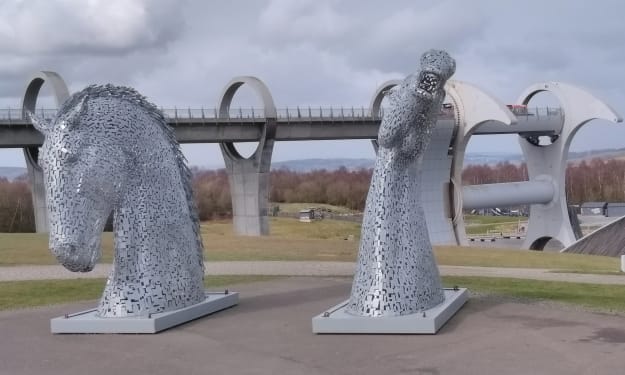
The Kelpies The Kelpies A few years ago I was driving up the M9 towards Dollar in Scotland, it was dark and raining and suddenly I nearly crashed the car when I saw two huge hundred-foot-high horses' heads to my left-hand side. I had to pull over. I am not sure if I tried to take a photograph but I was dumbfounded.
By Mike Singleton 💜 Mikeydred 5 days ago in Wander
Pearl
1980 something. we all hung out at Pearl and you and i were nothing special, or so i thought. i mean we all danced, drenched in our own sweat, our own saline solution of fear, too many beers, shots, laughter, tears, fucks in the bathroom and i don't know when we began to be afraid. do you?
By ROCK aka Andrea Polla (Simmons)4 days ago in Fiction



Comments
There are no comments for this story
Be the first to respond and start the conversation.