
Dudhsagar Trek: Best Time to Visit, How to reach and Tips
While you can take the easy route by jeep, trekking to the falls is an experience that feels raw, exhilarating, and unforgettable.
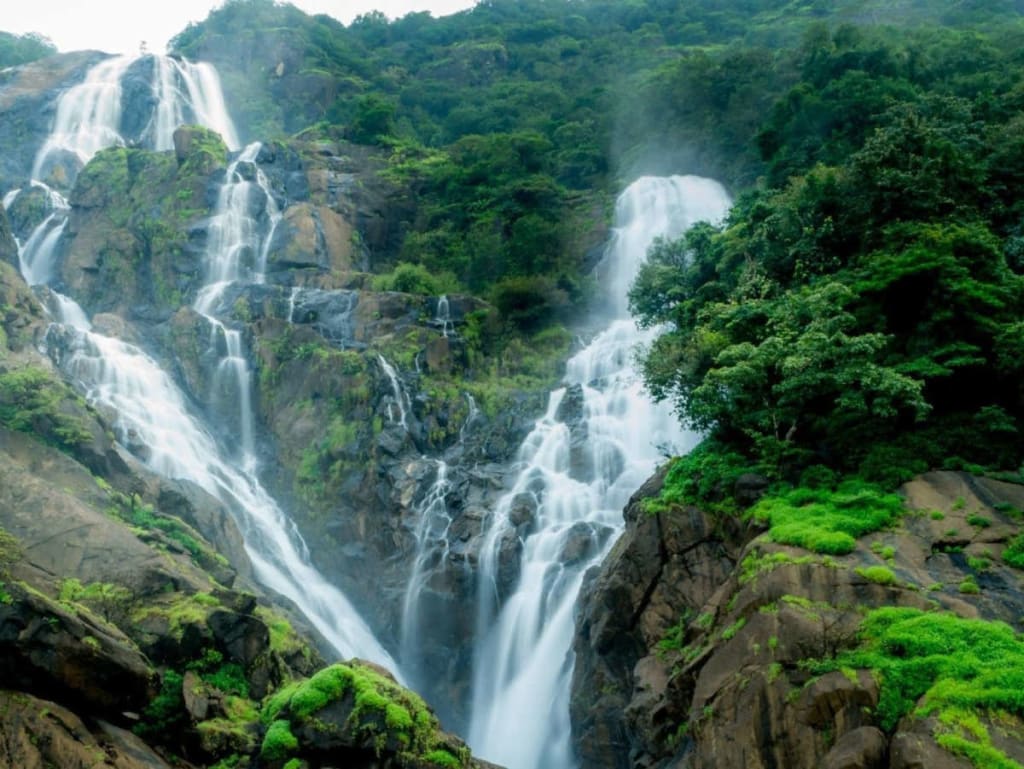
When people think of Goa, they imagine beaches, shacks, and late-night parties. But tucked away in the state’s eastern edge, deep within the Bhagwan Mahavir Wildlife Sanctuary, lies an adventure that shows you a very different side of Goa: the Dudhsagar Waterfall Trek. Translating to “Sea of Milk,” the Dudhsagar Falls is one of India’s tallest waterfalls, cascading dramatically from a height of 310 meters. And while you can take the easy route by jeep, trekking to the falls is an experience that feels raw, exhilarating, and unforgettable.
If you’re looking to trade flip-flops for hiking boots and cocktails for jungle streams, Dudhsagar is calling.
Why the Dudhsagar Trek is Special
The charm of Dudhsagar Falls isn’t just in its size—it’s in its setting. Imagine a four-tiered waterfall thundering down a lush green cliff, mist rising as if the mountain itself is breathing. The famous railway bridge cutting across the waterfall adds a cinematic touch; you’ve probably seen it in photos or Bollywood films.
But reaching it on foot gives you something those photos can’t: the sound of rushing water growing louder with every step, the feel of damp earth under your boots, and the joy of spotting exotic birds and butterflies flitting through the jungle. The Dudhsagar trek isn’t just about reaching the falls—it’s about immersing yourself in Goa’s wild, untamed side.
Routes to the Falls: Picking Your Adventure
There are a few ways to trek to Dudhsagar Falls, each with its own character.
The most popular route starts from Castle Rock station in Karnataka. This trail is about 14 km long, following the railway tracks. It’s relatively easy but requires patience—you’ll be walking on uneven sleepers for much of the way. The sound of trains, tunnels echoing with laughter, and peeks of the Western Ghats make it a unique experience.
Another option is the Kulem route in Goa, about 11 km long. This path feels more like a proper jungle trek, winding through streams, dense forest, and muddy trails. It’s more adventurous and scenic, but also more demanding, especially after the rains.
If you want a blend of both, you can trek one route and return by the other, depending on your stamina and transport.
Best Time to Do the Dudhsagar Trek
Timing is everything when it comes to Dudhsagar.
Monsoon (June to September): The falls are at their most powerful, a roaring curtain of white. But the trek becomes tricky—slippery paths, swollen streams, and leeches are common. It’s breathtaking but best for seasoned trekkers.
Post-monsoon (October to February): The sweet spot. The falls are still majestic, the jungle is lush, and the weather is pleasant. This is the best time for most trekkers.
Summer (March to May): The flow reduces significantly, and the heat can make trekking uncomfortable. It’s the least rewarding season.
If you want both safety and beauty, November to January is the ideal time to attempt the Dudhsagar trek.
How to Reach the Starting Point
The base villages and stations are well-connected, but you’ll need to plan depending on your chosen route.
By Train: Castle Rock and Kulem are small railway stations on the Goa–Londa line. You can catch trains from hubs like Madgaon, Vasco, or Hubli.
By Road: From Goa, buses and taxis can take you to Kulem. From Karnataka, you can reach Castle Rock via road from Belgaum or Hubli.
By Air: The nearest airport is Goa International Airport (Dabolim), around 70 km from Kulem.
Most travelers from Goa prefer the Kulem route, while those coming from Karnataka start at Castle Rock.
Local Tips and Safety Advice
The Dudhsagar trek is beginner-friendly but not without its challenges. Wear sturdy trekking shoes—slipping on railway tracks or muddy jungle paths is common. Carry at least 2 liters of water and light snacks, though remember that plastic use inside the sanctuary is restricted, so pack responsibly.
Hire a local guide, especially if you’re trekking from Kulem. They know the forest routes, help with tricky stream crossings, and ensure you don’t wander off restricted paths. Guide charges are reasonable, usually around ₹500–700 for a group.
Since this is part of a wildlife sanctuary, respect the rules: no loud music, no littering, and definitely no swimming near the base of the falls during peak flow—it’s dangerous.
Budget-wise, you can expect to spend around ₹2,000–3,500 for the trek, including transport, guide, food, and permits. If you’re on a shoestring, group travel helps cut costs.
Suggested Itinerary for the Dudhsagar Trek
Here’s a simple 2-day plan that works well for most travelers:
Day 1: Arrive in Goa or Castle Rock. Travel to Kulem or Castle Rock and stay overnight in a guesthouse or homestay. If you’re in Goa, you can also combine this with a relaxed evening at a South Goa beach like Palolem.
Day 2: Start early (around 6:30–7:00 am) for the trek. Carry packed breakfast. Reach the falls by late morning, spend an hour soaking in the view and clicking photos, then return to the base by afternoon. Head back to your stay or onward journey.
If you have more time, extend your trip with nearby attractions like Tambdi Surla Temple, Mollem National Park safaris, or a lazy day on Goa’s quieter beaches.
Why Dudhsagar Trek Shouldn’t Be Missed
The Dudhsagar trek isn’t just about chasing a waterfall—it’s about discovering a side of Goa that most visitors overlook. It’s about walking through forests that feel alive, hearing the call of unseen birds, and finally standing in awe as thousands of gallons of water crash down in a white frothy roar.
For adventurers, it’s a chance to break away from the clichés of Goa and step into its wild, untamed soul. And even if you’ve been to Goa a dozen times, Dudhsagar offers an experience that feels brand new every single time.
So, next time you plan a trip to Goa, don’t just pack beachwear. Bring your trekking shoes, a sense of curiosity, and a love for the outdoors. Because the Sea of Milk is waiting—and it’s best tasted step by step, through the heart of the forest.
About the Creator
Rohit SEN
Hey! Come along with me to explore beautiful places, learn about different cultures, and share my adventures. Let's Explore together! From a travel lover!
Away from the Crowds in Oklahoma
Imagine traveling in Catoosa and seeing the Blue Whale. This blue creature was built by Hugh Davis in 1972 as a 34th wedding anniversary gift for his wife. Since then, people driving down Route 66 have admired it. Another purpose for building the whale was so that it could serve as a swim dock for neighborhood children to dive and slide into a pond.
By Rasma Raisters5 days ago in Wander



Comments
There are no comments for this story
Be the first to respond and start the conversation.