
Away from the Crowds in Oklahoma
Not the usual tourist spots



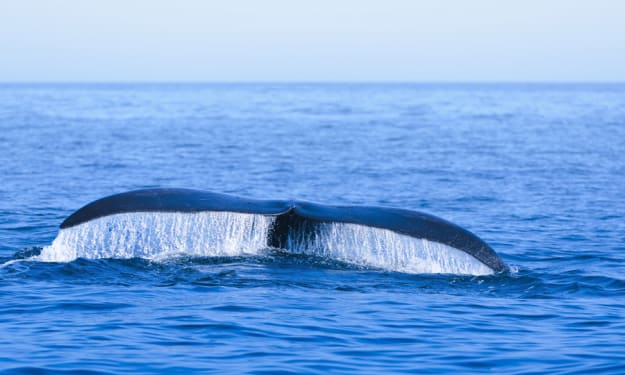
Imagine traveling in Catoosa and seeing the Blue Whale. This blue creature was built by Hugh Davis in 1972 as a 34th wedding anniversary gift for his wife. Since then, people driving down Route 66 have admired it. Another purpose for building the whale was so that it could serve as a swim dock for neighborhood children to dive and slide into a pond.
In Nowata, you’ll find Bowling Bowl Yard Art. (pictured above) In her rose garden, Carol Barbee started turning some old bowling balls into art, creating a traditional English garden.
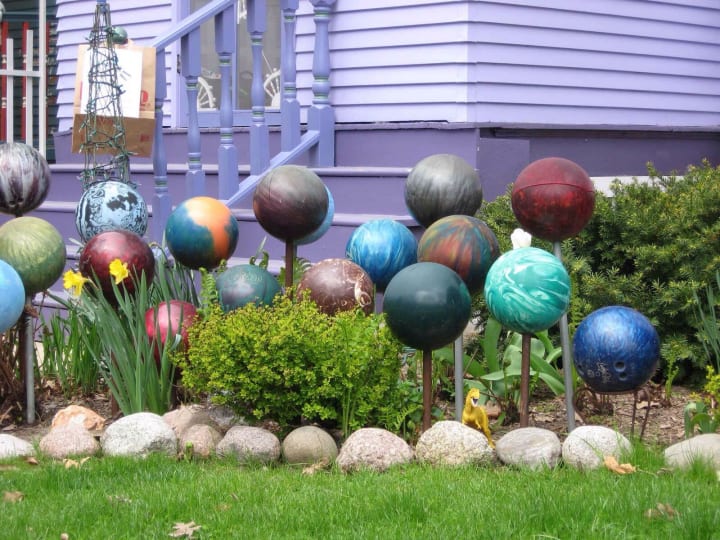
After her death, her husband took over, and now the sculptural yard art has more than 3000 bowling balls. It is open to the public, and visitors can bring bowling balls to add to the collection.

A former chicken restaurant became the Cave House of Tulsa. The house comes with a local legend that it once had tunnels leading into a secret room, which was a speakeasy by night. Patron would sneak in through concealed passageways. However, there has been no evidence found of any of this. Once the restaurant closed, strange stories were told of former residents, such as a woman who collected rags and hung scraps of fabric to dry from the windows and a lady who loved to collect keys. In one of its corners is a “key tree” with branches full of keys. The former owner doesn’t live here, but she is known as the “stick lady.” Visitors can see things like a bird’s nest-like bed she created from branches.
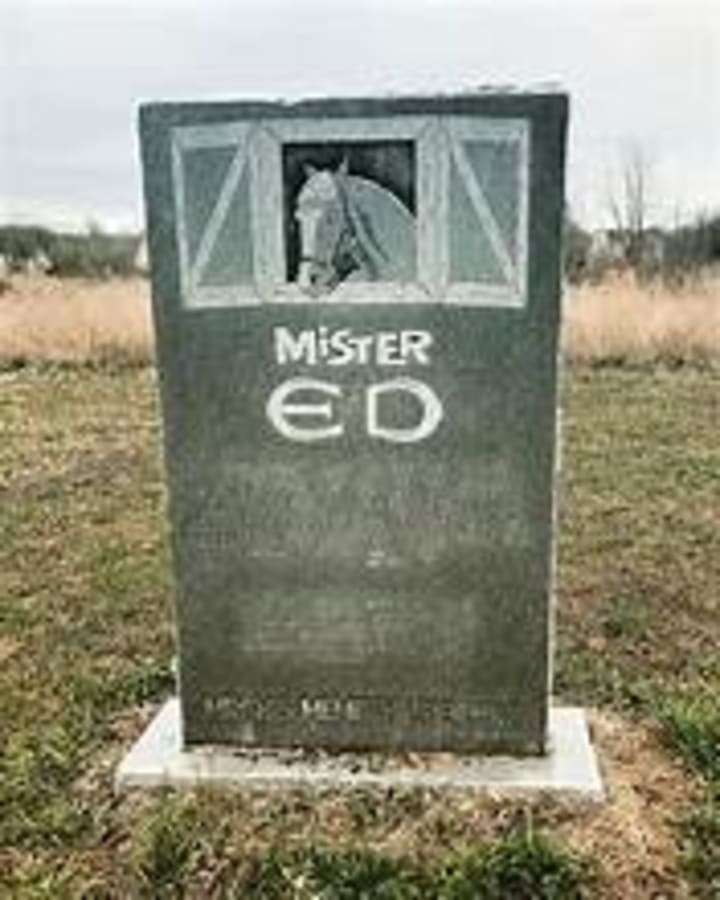
For those who remember the TV show “Mr. Ed” about a talking horse then in Tahlequah you can visit Mr. Ed’s Grave. The granite monument is engraved with the image of the talking horse's head coming through a barn door. The gravestone is engraved. “According to media reports, Mr. Ed moved to Oklahoma in the late 1960s, after a successful Hollywood career. Mr. Ed continued to entertain and bring joy to many Oklahomans, finally retiring in this very field. May his memory live long.”
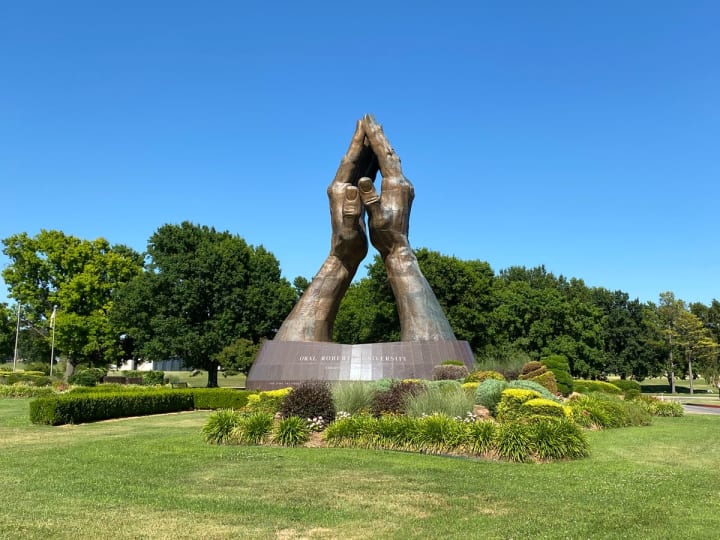
Outside of the City of Faith Medical and Research Center, a modern complex that was established as a holistic Christian hospital by the Oral Roberts University, you’ll find the amazing Praying Hands in Tulsa. The large sculpture was cast in 1980 in Mexico and shipped to Tulsa. It is 60 feet tall and made of bronze.

The restaurant Thirty Nine in Oklahoma City was named for the 39 tribes that live in Oklahoma; this restaurant's menu deliciously highlights local flavors. Oklahoma is home to 39 different Indigenous tribes. Some of those groups have always lived in the region. Its menu is the creation of Indigenous chefs with ingredients that have been grown, gathered, and hunted in the area for centuries. The First Americans Museum of Oklahoma City honors their resilient history in its exhibitions and performances and at its on-site restaurant.

.In Chelsea you’ll find Totem Pole Park, a historic folk art garden with the largest concrete totem pole in the world. This is the creation of local artisan Ed Galloway. A former art teacher, he started creating totem poles with concrete, rebar, and steel reinforcement. These colorful totem poles surround the “Fiddle House,” modeled after a hendecagonal Navajo hogan.

The highlight of the park is the main totem pole, taking Galloway 11 years to complete. The massive tower stands around 90 feet tall and is covered in bright reliefs of animals and characters similar to some traditional Native American styles. It features 200 carved pictures, with four nine-foot Indians near the top, each representing a different tribe. The totem pole sits atop a large concrete turtle.
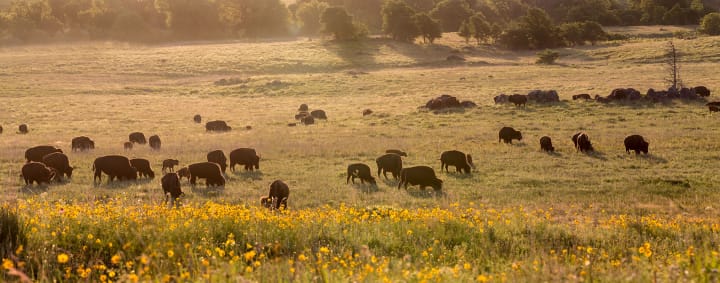
In Lawton the Wichita Mountains Buffalo Herd are an American bison herd descending directly from a Bronx Zoo breeding program that saved the species from extinction. The first 15 bison to leave the breeding program were boarded on a train on October 11, 1907, for the journey to Oklahoma. The bison were loaded on wagons and released in the Wichita Mountains National Wildlife Refuge to roam free. In 2005, the Wildlife Conservation Society relaunched the American Bison Society to continue to preserve the American bison and their ecological future.
About the Creator
Rasma Raisters
My passions are writing and creating poetry. I write for several sites online and have four themed blogs on Wordpress. Please follow me on Twitter.
Keep reading
More stories from Rasma Raisters and writers in Wander and other communities.
The Top 10 Traditional French Dishes That Warm the Heart
French cuisine is not only about fine dining or artistic plates. At its core, it is home cooking. It is the smell of butter melting gently in a pan, onions slowly turning golden, herbs filling the kitchen with warmth. These are dishes that have been passed down through generations. Recipes we watched our parents and grandparents prepare. Meals that comfort, gather people together, and awaken memories.
By Bubble Chill Media 7 days ago in Wander


Comments
There are no comments for this story
Be the first to respond and start the conversation.