
Craft, Culture, and Curiosity
Documenting the Embroidery of the World
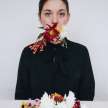

There isn’t anything richer in value than craft. To me, the word “craft” speaks of expertise, time, heritage, and dedication. As an embroidery artist, my dream is twofold. It is to pursue my craft and share with others its rich history. I started doing embroidery with very little guidance. I was taught some basic stitches and told to explore. When I moved to Kanazawa, Japan, I had the privilege to participate in a small embroidery class that taught the traditional embroidery of the region, Kaga Nui. In the lessons, I was introduced to the rules of the technique. And like many things in Japan's culture, there was a proper way to do everything. It was the total opposite of how I was taught. After I finished the introductory course, I was told that my future work would not be Kaga Nui. They went on to explained that I needed to complete the full training to claim to be a Kaga Nui artist. This class opened my eyes to the depth of the world of embroidery. And, the pride artists take in their craft.
My embroidery improved exponentially after this class. I do not follow their rules, but their guidance taught me the importance of my tools, the direction of my thread, and my commitment to the craft. I have since dedicated myself to pushing my skill in thread painting. This technique builds small stitches on top of each other to create depth and full-color images. Instead of a brush and paint, I use a needle and thread. Recently, I have been sewing on second-hand clothing. I want to create works of art on them bringing old things back to life. Like many artists before me, I am starting with a still-life. These works of art are a slow process, I hope that as I build up my portfolio more and more people will be interested in buying and wearing the works of art that I have made.
My art-making is only half of it though. The second part of my dream is to share embroidery with others in an accessible way. I posted my Kaga Nui experience on my social media page and a blog. I displayed images of the shop, the project that I worked on, and the tools that I was using. A few weeks later, a couple of Brazilian women who were visiting Kanazawa reached out to the school and were able to do a small Kaga Nui workshop. They told the teachers how they had seen my post and were inspired to stop by while they were in the city. I was amazed that my post influenced these women’s experiences of Japan. Also, it showed me that I am not the only one who is looking to learn more about embroidery. And, if I hadn’t posted about it, these women would have never known about this small embroidery school because the school’s website is in Japanese.
I am not a teacher, however, I am a student. And the world is full of so much embroidery heritage that I wish I could share it with others in addition to learning. To monetize this dream, I would create a documentary series similarly formatted to a food travel show. I would travel, listen, learn, and share about embroidery. I only got a glimpse of Japanese embroidery through Kaga Nui. There is so much more to explore. There is Bunka Shishu, a remarkable form of thread painting using rayon thread. Or, Sashiko, an embroidery first used by commoners to stabilize their clothing. Outside of Japan, Korea has some of the most beautiful silk thread paintings I have ever seen. Guatemalan embroidery is a rainbow of color in intricate designs. The UK specializes in Goldwork. In France and Italy, couture uses Tambour beadwork. In Pakistan and India, a similar technique called Ari is used for beadwork on a sari. Ukraine has a rich history of geometric embroidery designs. I could name every country and what makes their craft special. In my series, each episode would focus on a different technique and region. It would be curated to get a glimpse of the process, recognize the artist behind the work, the cultural development of the style, and how the viewer could have an opportunity to learn themselves. I would focus on places that are interested in teaching tourists, and connect students to teachers stitch by stitch.
A good place to start my documentary would be in London. London has many established embroidery schools with a fountain of techniques available. It has a rich history with embroidery houses like Hand & Lock, which was established in 1767 by a French immigrant. They first specialized in military badges using goldwork and later became a couture house, which it continues to be till this day. The Royal School of Needlework was first established in 1872 and has many branches across the UK and internationally. The London Embroidery School is a smaller establishment committed to creating accessible classes in a range of techniques. Additionally, there is the School of Stitched Textiles, the largest online textile school in the UK. All these locations are interested in preserving the craft of embroidery and its history. I would like to interview the artists in the ateliers, discussing with them the current industry for hand embroidery and their personal journey in finding embroidery. I would tour museums and discuss the embellishments found on the Royals' gowns and uniforms, paired with myself trying my hand at the same techniques. I would also equip tourists with the knowledge of where to go to learn the technique themselves. London would only be the beginning from which I could branch across Europe, into Asia, and then South America.
I know that since the pandemic many have started taking an interest in many different crafts, including embroidery. With the world opening up again, I want to open people's eyes to the history and range of this craft. I want to encourage them to honor the cultures that the skill comes from and maybe when they do venture out again, influence their vacation to be more than a trip to the beach, but a gained experience. I also don’t want the skill of embroidery to disappear and I want to promote the people who are keeping it alive.
About the Creator
Julia Windom
Embroidery Artist and Writer
Keep reading
More stories from Julia Windom and writers in Wander and other communities.
Floral Skins
I am a bit obsessed with tattoos, but I have a difficult time deciding what I want on my skin for the rest of my life. This led me to pursue a different type of needlework. I like to think of clothing as a chosen skin that we put on daily and embroidery as the tattoos of cloth. We choose our clothes according to our lifestyles, our personalities, our heritage, our generation, or our professions. We also change styles during different seasons of our lives. Sometimes, I feel like a different person depending on what I am wearing. It is our protection. Whether that is because it is snowing outside, or because tough clients are easier to face in a power suit. Embroidery is an embellishment to this layer of protection. It can be a monogram or a patch of where we have visited. It can be delicate lace or chunky crewelwork using wool. Embroidered clothing can be changed to fit our moods and activities.
By Julia Windom5 years ago in Lifehack
Away from the Crowds in Wyoming
Devils Tower is the first declared National Monument in the US. It is not really known how this formed into such a unique shape. Legend has it that two girls were playing, and along came giant bears. They tried to run away from the bears and climbed to the top of a rock, praying to be saved. Then the rock rose high up into the air, and the girls were saved while the bears left their claw marks on the side of the mountain trying to climb it but failing. The Devils Tower received the honor of becoming the first National Monument in 1906, 13 years after the first recorded climb of the mountain by William Rogers and W.L. Ripley in 1893.
By Rasma Raistersabout 16 hours ago in Wander
The Kelpies and The Falkirk Wheel
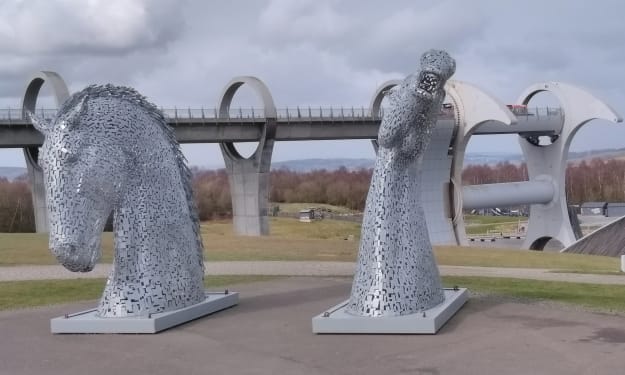
The Kelpies The Kelpies A few years ago I was driving up the M9 towards Dollar in Scotland, it was dark and raining and suddenly I nearly crashed the car when I saw two huge hundred-foot-high horses' heads to my left-hand side. I had to pull over. I am not sure if I tried to take a photograph but I was dumbfounded.
By Mike Singleton 💜 Mikeydred 5 days ago in Wander
Pearl
1980 something. we all hung out at Pearl and you and i were nothing special, or so i thought. i mean we all danced, drenched in our own sweat, our own saline solution of fear, too many beers, shots, laughter, tears, fucks in the bathroom and i don't know when we began to be afraid. do you?
By ROCK aka Andrea Polla (Simmons)5 days ago in Fiction



Comments
There are no comments for this story
Be the first to respond and start the conversation.