
Climbing Mount Masada
Standing at the site of Resistance and Ingenuity

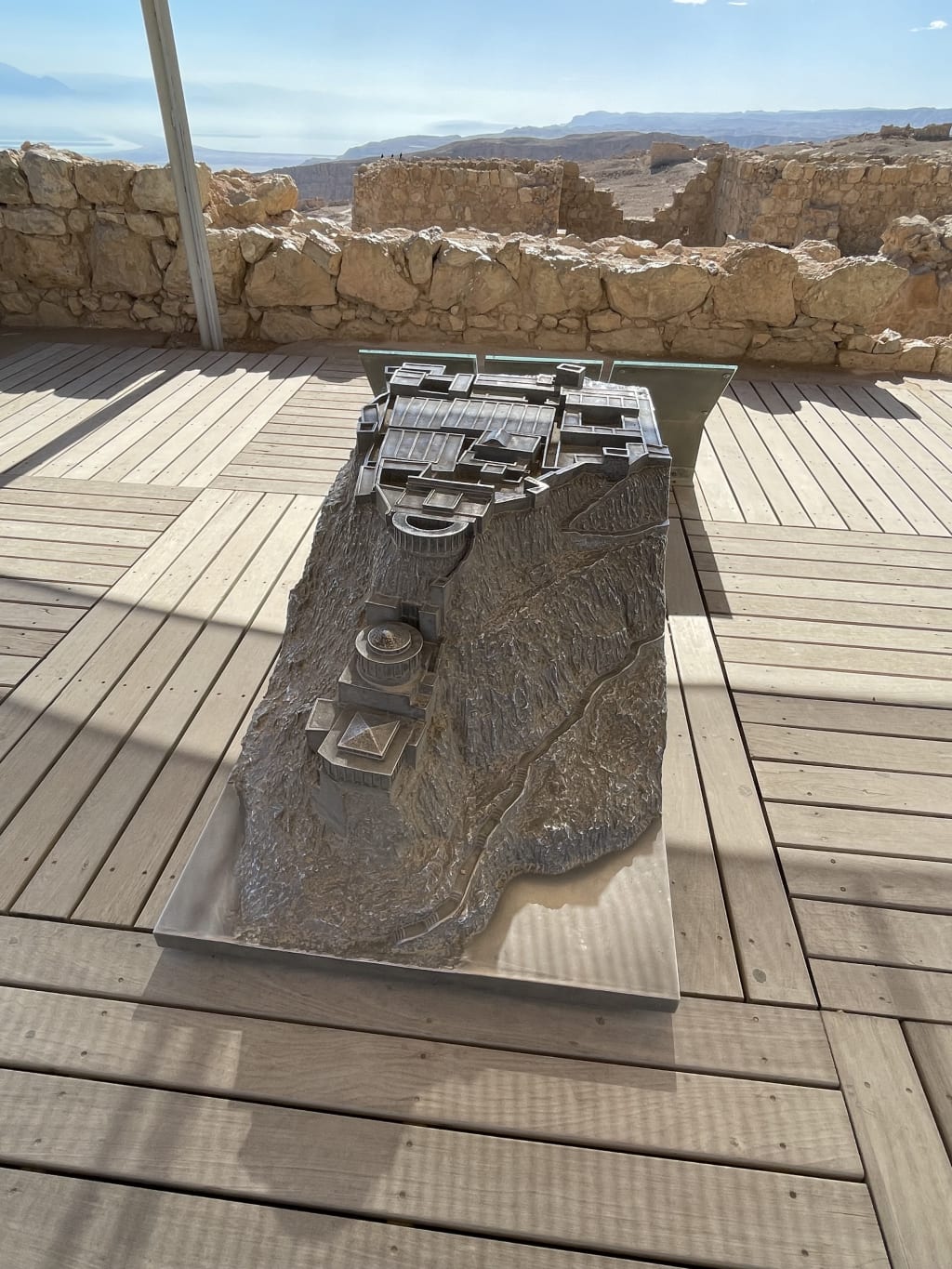
The sun had barely crested the horizon when my Canadian friend, Freddy, and I tightened the straps on our packs and set off toward the base of Mount Elazar. The air felt still and almost sacred, as if the desert was quietly breathing before the day began. My boots crunched over gravel and loose stone as we found an easy rhythm, our shadows long and lean in the rosy morning light.
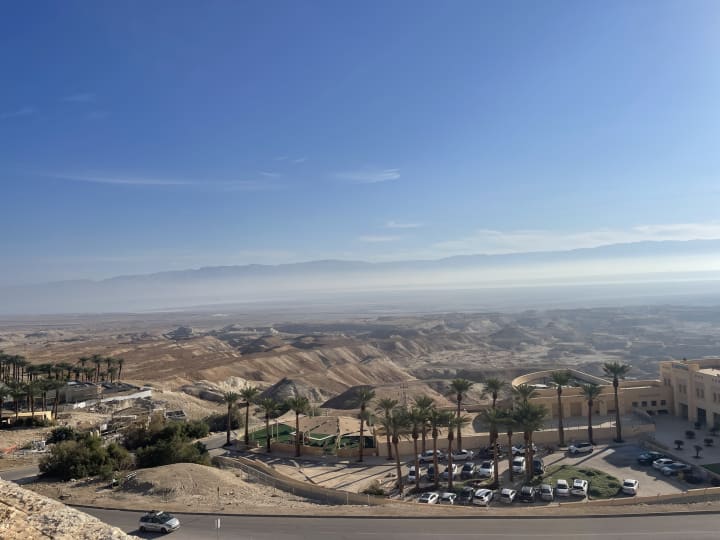
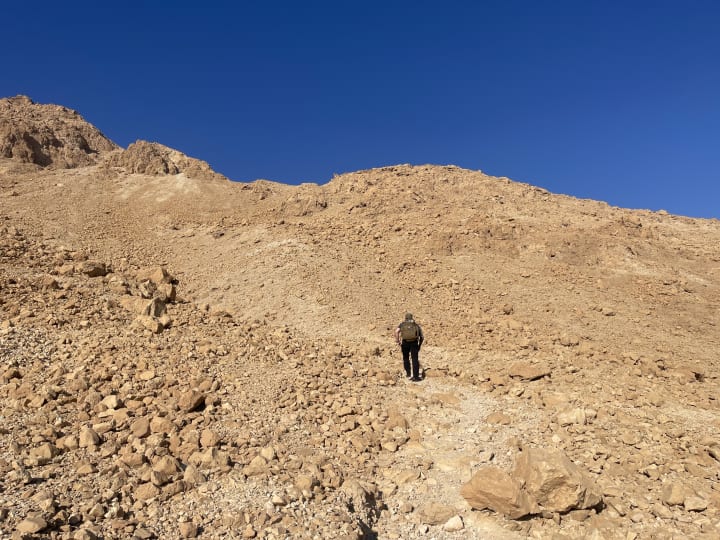
The Fit Hike that is officially called the "ELAZAR” Path up Mount Elazar was a steady climb. It wasn’t too technical, but it made you feel like you earned every meter. I have hiked before in the Adirondack Mountains in New York and Mount Soyosan in South Korea, but this was a different experience for me. The desert wind teased wisps of hair across my forehead, and I caught the faint scent of salt from the Dead Sea as we ascended. Freddy, always a cheerful companion, kept up a steady stream of observations about the terrain, the sky, and how this stark and quiet environment felt surprisingly alive in its own way.
At one point, midway up, we stopped to look back at the valley below. The Dead Sea shimmered like a silver mirror, stretching to the horizon, where sky and water seemed to blend. We didn’t speak for a moment because no words seemed adequate. We just breathed deeply and took in the vastness.
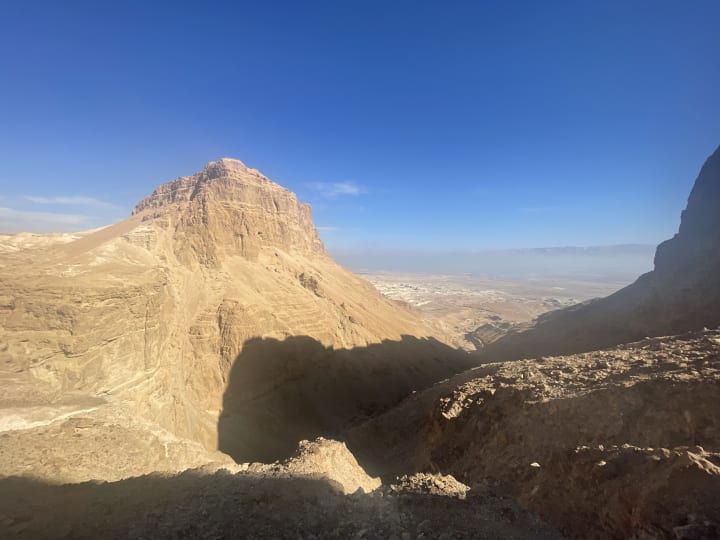
Reaching the summit of Mount Elazar felt like a quiet triumph. It wasn’t just about gaining elevation, but about being present. That feeling settles in your bones after moving with purpose through the world in the early morning. We took a long break at the top, drank water, ate light snacks, and watched the light stretch across the Judean Desert. There’s a kind of humility that comes from being surrounded by land that has seen thousands of years of history.
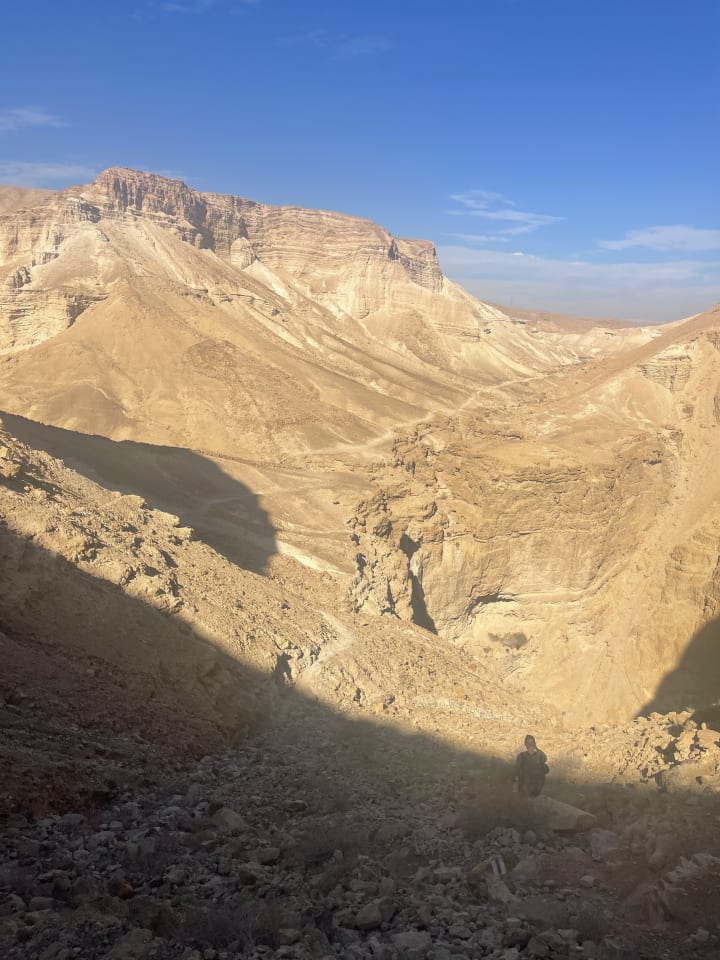
From there, we looked ahead to our next challenge: the Roman Ramp leading up to Mount Masada, the mountain fortress of the remnants of the Jewish resistance. The path, carved thousands of years ago by the engineers of the Roman Empire, winds its way up as a testament to human persistence. I tried to imagine the footsteps that came before ours—soldiers, laborers, maybe even travelers and merchants—all climbing this same slope under harsher suns and heavier loads.
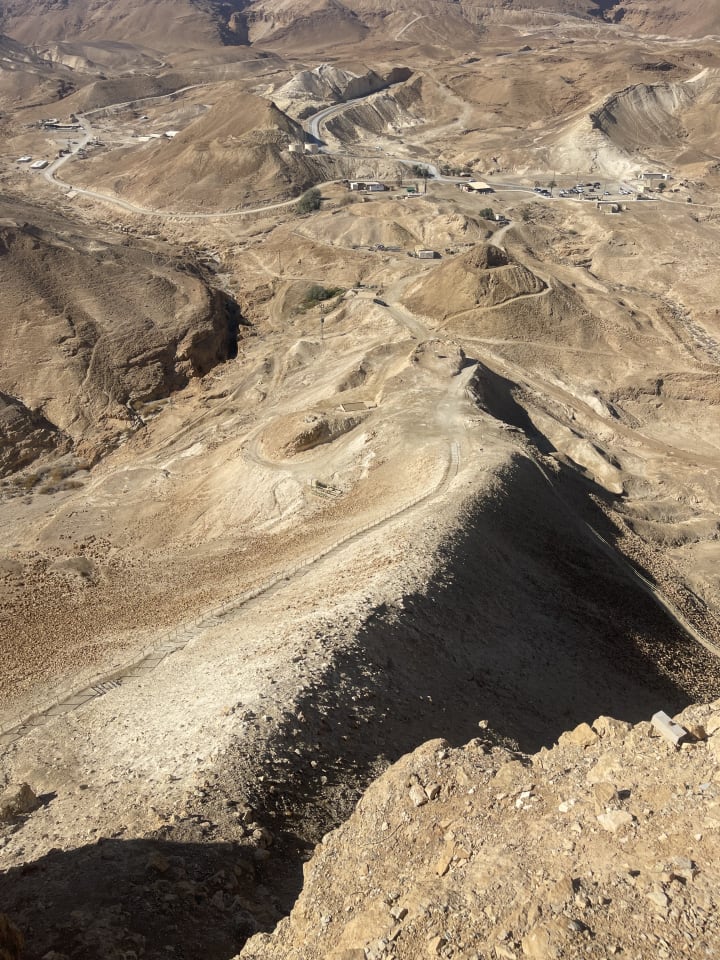
Freddy and I made our way upward. The sun was now higher and warmer, but the slope was still manageable. The trail wound back and forth, and each switchback revealed another piece of the stunning landscape. With every step, I felt both tired and excited, a reminder that effort often makes you appreciate things more.
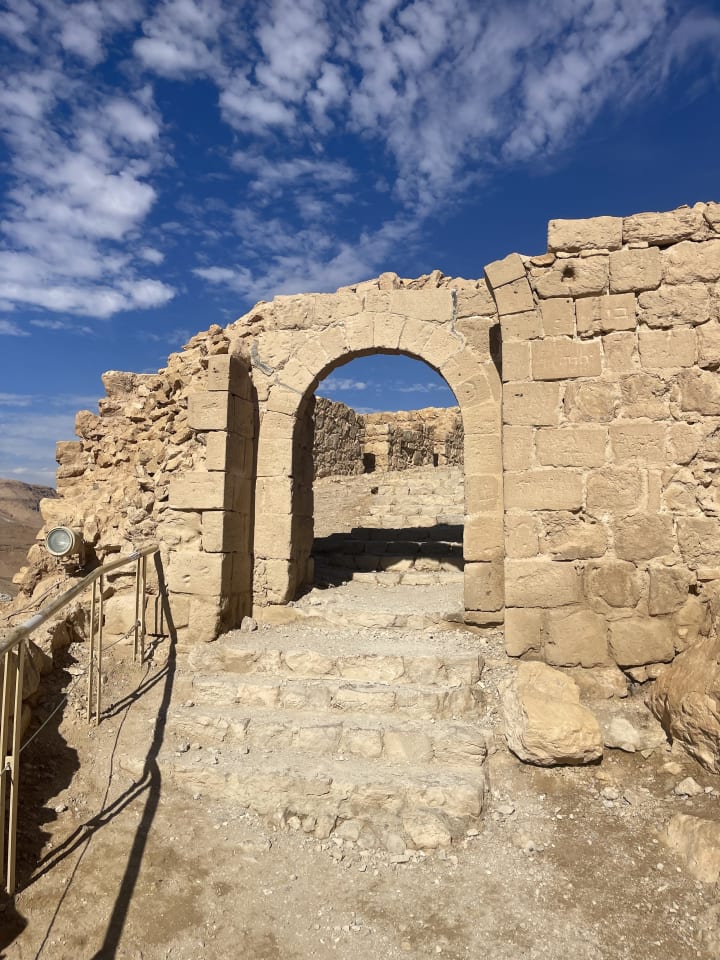
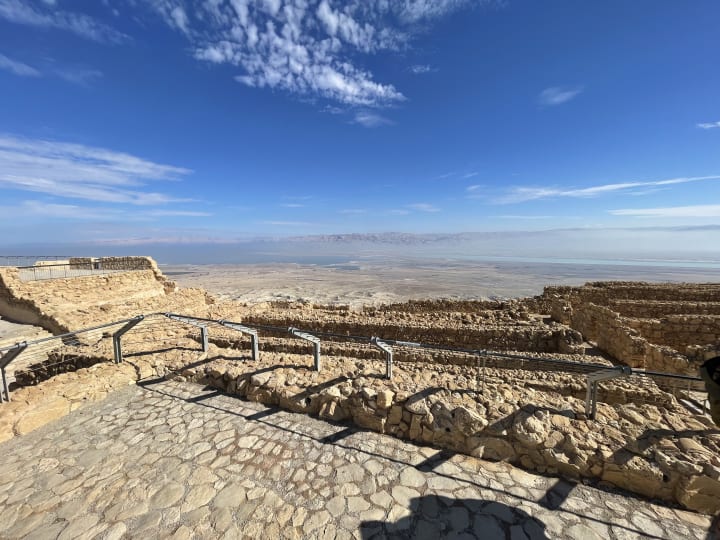
When we finally reached the top of the Roman Ramp and stepped onto the plateau of Masada, the moment felt almost spiritual. The ruins lay silent under the midday sky, a mosaic of stones and stories. We wandered through the remains of ancient walls, pausing often—sometimes in awe, sometimes in quiet thought. Reading about history is one thing, but standing where it happened, feeling the sun on your back and the wind against the stones, is something else entirely.
Going down the Snake Path was a lesson in contrasts. After the steady climb earlier, this steep, winding trail demanded all our attention. Loose gravel shifted underfoot, and the farther we went, the more the landscape changed—from the open plateau to the deep ochres and rusts of the canyons below. We moved carefully, sometimes laughing at how every joint in our bodies suddenly made itself known, and how every view, every turn in the trail, felt worth the effort.
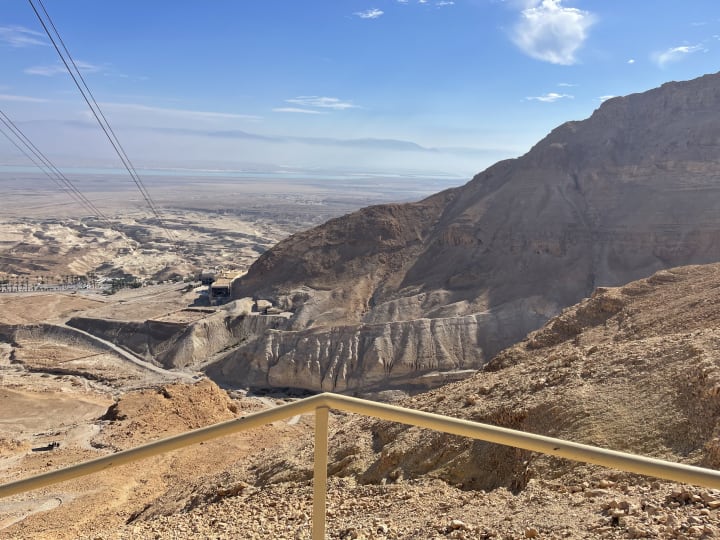
By the time we reached the base again, the sun was high and relentless. Dust clung to our boots, and our water bottles were half-empty, but we were smiling. There’s something about a long day on the trail, the kind that tests you, stretches you, and then gently brings you back to stillness, that doesn’t just fill a memory—it shapes it.
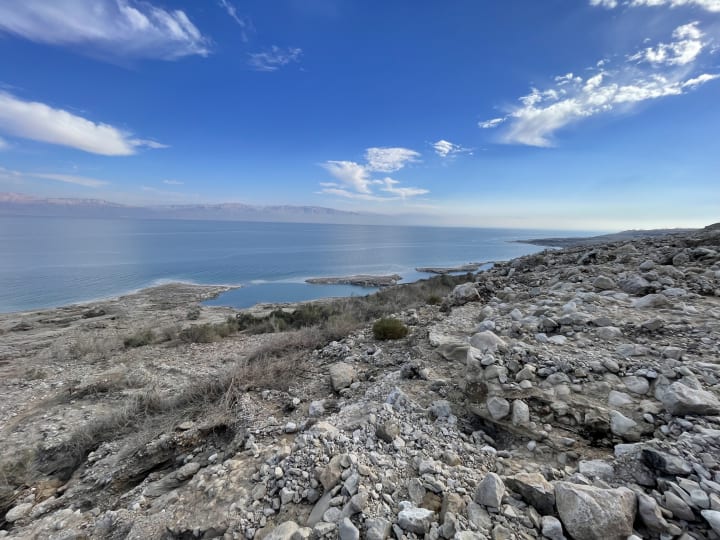
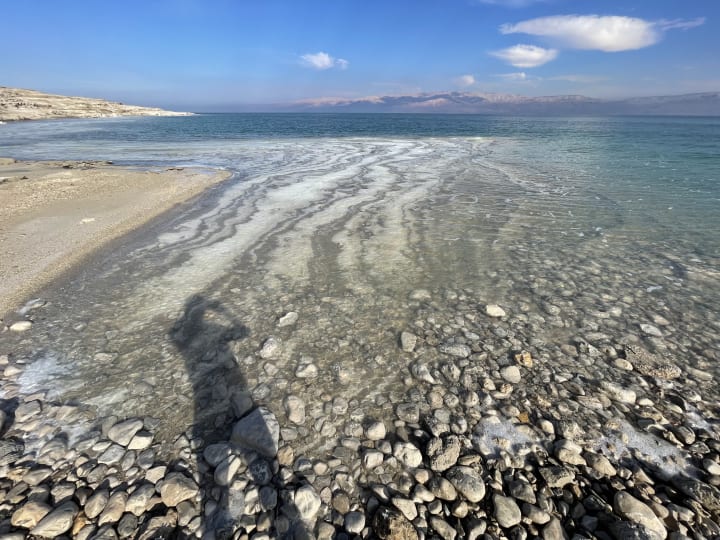
We sat in the shade of a lone acacia tree, breathing deeply and enjoying the quiet satisfaction that comes only from moving through the land with purpose. I looked at Freddy, and we both knew that hikes like this aren’t just walks up hills. They are conversations with the land, with the past, and with ourselves. After the hike, we stopped at the Dead Sea's shore, and I took the opportunity to taste the water. The saltiness exceeded anything I have tasted in other bodies of water, and something I’ll never forget.
After a long day, we made our way to Jerusalem.
And that is a story worth bringing home.
About the Creator
Chad Pillai
Military Officer, World Traveler, and Author.
Keep reading
More stories from Chad Pillai and writers in Wander and other communities.
Normandy, France
If you have seen the movie Saving Private Ryan, the first ten minutes of the beach landing were traumatic for those who watched it, especially for WWII veterans. One of those veterans was my childhood barber, Ernie Barone, a U.S. Coast Guard Amphibious Corps member who drove the landing ships full of Soldiers onto the beaches on January 6, 1944 (D-Day).
By Chad Pillai10 months ago in Wander
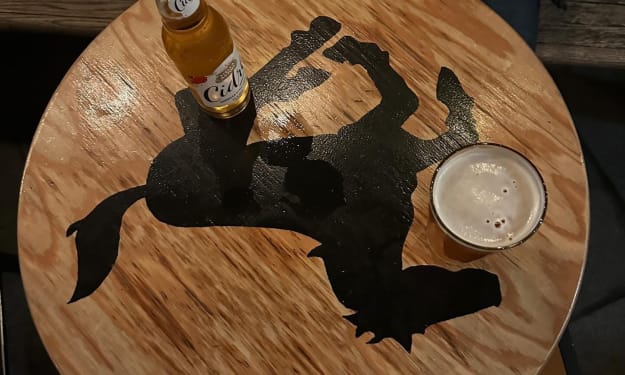
Seattle Nightlife Report: Pony
Mid-winter Friday night. Early but already so dark. The days are getting longer but 6 PM is still pitch black. “Firepit!” You declare things after just a few seconds of solemn thought – not a request or suggestion, not a demand. Last week you walked around saying, “Hot tub?” to anyone who would listen. Or one afternoon you pointed at two men holding hands as they crossed 12th Avenue, looked me in the eyes and said, “Boyfriends.”
By Joe Nasta | Seattle foodie poet10 days ago in Wander


Comments
There are no comments for this story
Be the first to respond and start the conversation.