
Witches of the Modern Age: How They Enchant the 21st Century
Witchcraft on Social Media

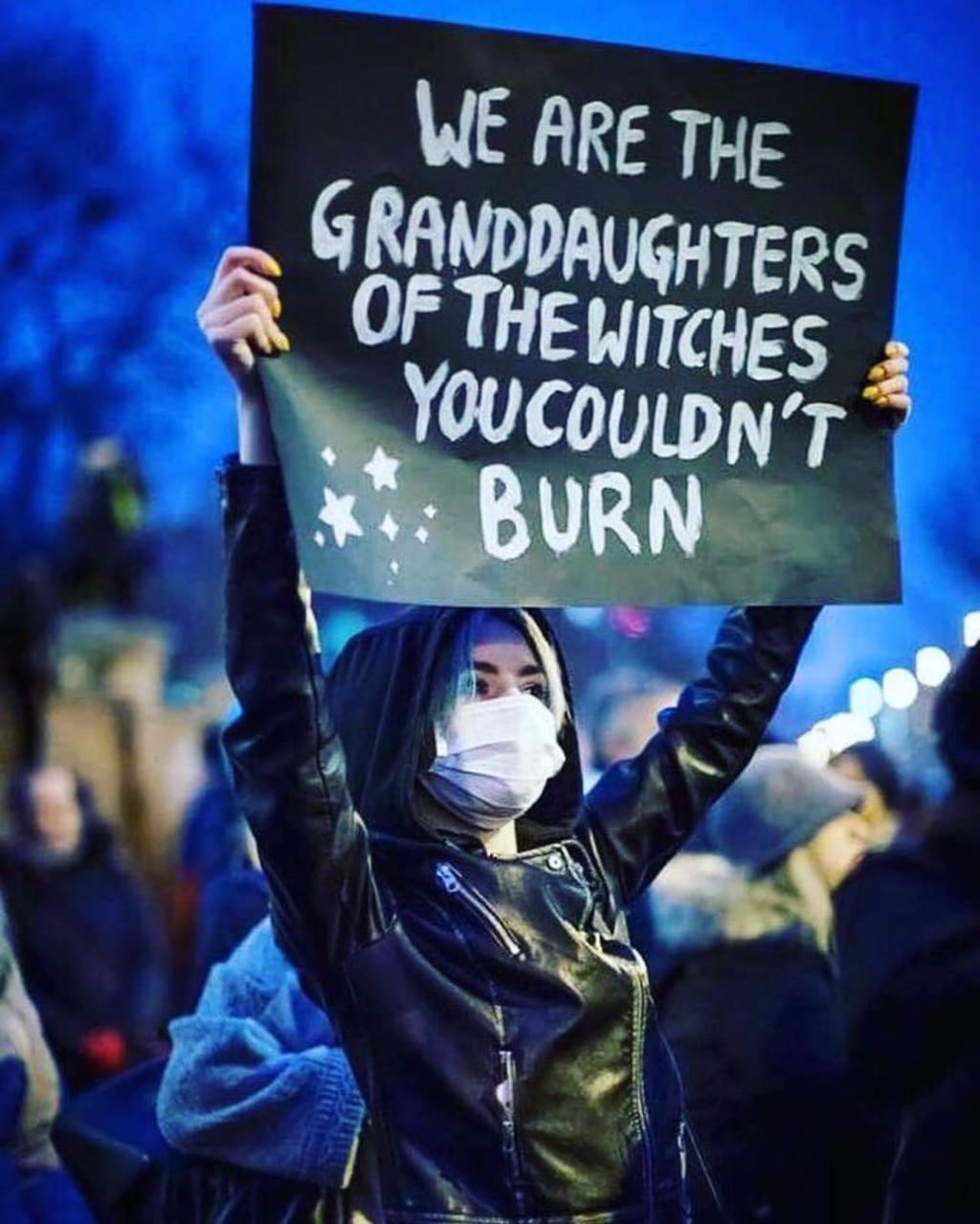
You probably know them as hunchbacked old women with hooked noses and flying broomsticks – witches. Hundreds of years ago, they were among the terrors of the night, and even today, you can still find them in countless gruesome costumes at Halloween and Carnival. But there are more and more women who beautifully and proudly call themselves witches. But why? What exactly is behind this phenomenon, and who even uses witchcraft in the digital age?
• The Dark Past of the Witches
When you think of a witch, the first image that comes to mind is a sinister woman with curly hair, long fingernails, and a creepy laugh. She often lives in isolation, usually in a dark forest, brews poisonous potions from plants and animal bones, and immediately transforms intruders into ugly toads—or shoves them into the oven after a fattening feast.
The word "witch" is derived from Old High German and describes a being that sits on a hedge. This creature hangs on one leg in our world and with the other in a magical, unknown existence—pretty eerie, if you ask. Going back even further in time, it becomes clear that witchcraft was associated with demonic forces such as sin, possession, and illness. Beliefs in black and good magic can also be found among various ancient cultures.
Among the most gruesome catastrophes in human history were the world-famous witch trials and persecutions that began in the 15th century. Out of the blue, supposed witches were charged with heresy and the worship of the devil, leading to a bad harvest, an outbreak of plague, or merely an unfortunate incident. But it was enough to be more beautiful, clever, faster, and better than others – once an accusation was raised, death was essentially inevitable.
• Witches in the 21st Century
Today, witchcraft has even partially entered the mainstream. Hardly anyone gets a strange look anymore when handling incense sticks, applying herbal ointment to their skin, or claiming to have trouble sleeping during a full moon. While many still imagine elderly, eccentric ladies who supposedly predict their grandchildren's fortunes when they hear the word "witch" and even laugh at the term, the classic witch is increasingly disappearing into the past.
The image of a modern witch, however, is a very special one. Modern witchcraft is much more about women's self-determination, linked to feminism, closeness to nature, and spirituality. Women who call themselves witches now do so with their heads held high and do not hide to escape the test of time.
The term "witch" is being reclaimed by all those who oppose the patriarchy and follow their own path. Anyone who feels the strength of empowerment within and sees it as the magic that it is can and may call themselves a witch – regardless of gender.
• Witches Practice According to Their Own Will
Strong female images, independence, and rebellion—all well and good, but isn't a witch also defined by rituals and special practices? Is it not necessary to either hang a totem or, at the very least, light a black candle?
Of course, in addition to having the right attitude, witchcraft is also about manifesting it in a certain way. However, it's very broad, ranging from energy practices and divination to simple self-care rituals and herbalism—it's as individual as the witch who practices it.
To give a few examples, here are four common types of witches:
Cosmic Witch: For this type of witch, the planets and stars play a particularly important role. Spells and rituals are performed precisely according to the various cycles of the celestial bodies. Simply attributing certain character traits to individual zodiac signs can be considered a form of witchcraft.
Crystal Witch: Whether for fortune-telling, healing, or meditation, this witch harnesses the power of various crystals and gemstones to work her magic. Using a rose quartz roller on the face—currently very popular in the beauty scene—also counts as one of these practices.
Elemental Witch: Fire, earth, air, and water – the elemental witch draws on the four elements in her magical work. This includes, among other things, burning a written wish on paper to make it come true.
Green Witch: This witch is closely connected to nature and usually practices outdoors. She primarily uses natural resources for her rituals. She frequently creates objects using twigs, leaves, and various protective totems designed to repel negative energy.
There are many other types of witchcraft, each one entirely tailored to the practitioner's interests and beliefs.
• Witchcraft on Social Media
Thanks to social media, witchcraft is slowly but surely becoming a real trend, and more and more young people are choosing to immerse themselves in the world of witchcraft. Which is a good thing, since witchcraft is about the strength of the outcast, a healthy nature, and a conscious and content self.
Especially on TikTok, thousands of witches share their magical world with curious viewers under #witchtok, encouraging them to explore the witch cult. Instagram is also home to numerous so-called "Witchfluencers" who provide tips and tricks to young witches and provide information. Thus, witches also benefit from digitalization – even if the idea of a witch reading her spell from a phone seems somewhat inappropriate.
Isabella, for example, spends a lot of time on Instagram exploring the power of various crystals and gemstones and providing insights into her magical world. She also runs her own enchanting gemstone shop.
• The Magic Within the Self
No matter how many witches there may be on Instagram, TikTok, or Facebook, and no matter how many witchcraft practices can be performed, at the end of the day, witchcraft is about the spiritual self. Modern witches are free in their actions, independent, and self-confident. They don't allow themselves to be pigeonholed, and their witchcraft is as diverse as our world itself.
So, if you just enjoy reading tarot cards and want to call yourself a witch, then do just that. There are no magical boundaries or rituals that need to be crossed or performed to work magic. A touching word, a helping hand, or euphoric music – all of these things have a certain magic within them. And as long as you believe you feel magical energy within, it exists. Even if it manifests itself in a completely different way than described in fairy tales.
About the Creator
Keep reading
More stories from Uchenna Cosmas Nwokafor and writers in Viva and other communities.
Is Beauty Realistic? – How Different Cultures Rate Beauty
Learn about the most important standards of beauty throughout history and across cultures. However, we can say that beauty standards vary according to the era. There are also some factors and requirements that greatly influence people's concepts regarding the ability to determine the characteristics of beauty and ugliness. Among the most important and prominent beauty requirements that have become common recently are long, soft hair, a well-proportioned body, and perfect teeth.
By Uchenna Cosmas Nwokafor 9 months ago in Viva
What Makes Colombo Special?
Wondering what makes Colombo stand out among the capitals in Asia? This stunning city blends colonial heritage, modern attractions, rich culture, and mouthwatering cuisine all within this amazing hotspot. From exploring colourful markets and serene temples and holy sites, to trying out some tasty street food and exquisite rooftop bars, Colombo has something for everyone! Here's how to experience its vibrant spirit and discover what truly makes it special.
By Aurora Gianna4 days ago in Viva
A Historic Decision in Jersey: Choosing Dignity at the End of Life
In February 2026, the island of Jersey made history. Lawmakers voted to allow assisted dying for terminally ill adults. This decision has started important conversations about dignity, suffering, and the right to choose how life ends.
By dua fatima2 days ago in Viva



Comments
There are no comments for this story
Be the first to respond and start the conversation.