
Patriarchy: A Timeless Sickness
Exploring the toxic legacy of patriarchal violence through the lens of cinema.


On a lonely night in Helsinki, I found myself on my sofa, watching Ridley Scott's The Last Duel. Expecting just another historical drama to pass my sleepless night, I was instead met with a strikingly relevant film—one that confronts the enduring violence of patriarchy. What I initially saw as a medieval courtroom drama unfolded into a poignant examination of power, misogyny, and injustice.
I won’t spoil the movie, but I urge you to watch it, or even better, read the book by Eric Jager on which it is based. The story follows Lady Marguerite, a woman who falls victim to a man so deluded by his entitlement that he cannot even comprehend the concept of consent. It is a film about a time when patriarchal society instinctively rushed to protect men and justify their crimes, leaving women to suffer in silence.
Sounds familiar?
Yes, that was the question that echoed in my mind throughout the film. Even though the story is set in the Middle Ages, its themes are disturbingly relevant today. Beyond the strong script, performances, and direction, what struck me the most was how little has changed. As a man, I am privileged to be shielded from many of the worst aspects of patriarchal violence. Yet, this system of oppression does not only harm women—it dehumanizes men as well, conditioning them into enforcers of a violent, outdated order. Still, it is undeniable that women remain the primary victims. Acknowledging this is not a matter of competition but a simple obligation to the truth.
Over the past few years, my home country, Greece, has experienced its own Me Too movement, igniting long-overdue conversations about gender-based violence. It started within the arts—cinema and theatre—before spreading to everyday people, to victims who had endured abuse in silence for years. The media, of course, initially treated these revelations as mere gossip, sensationalizing trauma for ratings. Yet, despite this, I want to believe that these stories have given hope and courage to countless others to speak out. I want to believe that they mark the beginning of a cultural reckoning. And yet, I remain disappointed by how often these crimes are framed as entertainment rather than as symptoms of a society that is deeply unwell.
What is the Disease?
If these crimes are the symptoms, then what is the disease?
The answer is simple: patriarchy.
To those who romanticize it, who equate it with noble knights, chivalry, and traditional values. I urge you to look closer. Patriarchy has never been about protection; it has always been about power. It is a system built on control, where one gender is conditioned to dominate and the other to submit. Its legacy is one of oppression, not honour.
It manifests in phrases we have repeated for generations:
"He’s a man; it’s normal if he loses his temper."
"Did you ask your husband for permission?"
"The way she was dressed was provocative."
"She was asking for it."
"A father has the right to discipline his children."
None of these are just words. They are the foundation upon which systemic violence is built. Patriarchy operates through justification,through a thousand little excuses that normalize abuse, diminish victims, and uphold the power of the abuser. This is why its toxicity is so difficult to uproot. It is not enforced only through overt violence but through whispers, traditions, and unchallenged habits that sustain it generation after generation.
What can we do?
The first and most crucial step is to recognize this violence. In workplaces, in families, in sports, in politics everywhere. We must stop normalizing what is unacceptable. Patriarchy is not an inevitable way of life; it is a structure that can and must be dismantled.
We need legal systems that listen to survivors, not dismiss them. We need media that treats abuse as a crisis, not as spectacle. And most importantly, we need to foster cultures that do not raise boys to become oppressors or girls to endure oppression.
The voices of the women who have died in Greece and around the world over the years do not ask for revenge. They ask for justice. They remind us of our responsibility to ensure that future generations are not trapped in this cycle of violence.
Because if we fail to act, this sickness will continue. And more lives will be lost to an old, broken system that should have died long ago.
Written and published by Sergios Saropoulos.
About the Creator
Sergios Saropoulos
As a Philosopher, Writer, Journalist and Educator. I bring a unique perspective to my writing, exploring how philosophical ideas intersect with cultural and social narratives, deepening our understanding of today's world.
Keep reading
More stories from Sergios Saropoulos and writers in Viva and other communities.
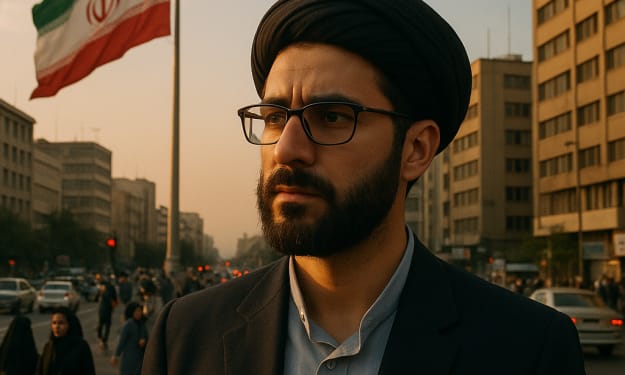
Winds of change in Iran.
A Symbol of Resistance The death of 22-year-old Mahsa Amini in Tehran, allegedly due to improperly wearing her hijab under Iran’s strict dress code laws, has ignited a movement that refuses to be silenced. Since the 1979 Islamic Revolution, Iranian women have been subjected to rigid laws enforcing the hijab, with the morality police ensuring compliance. However, Amini's tragic death has become a catalyst for resistance, turning her into an enduring symbol of defiance.
By Sergios Saropoulos3 years ago in Viva
It Finally Happened, Now What's Next for Evil Zaria (and Sol Ruca)?
Well, folks, the journey was a long one, but we finally got there. The tandem of Zaria and Sol Ruca, known as ZaRuca, finally split up in vicious fashion after many months of teased tension. The tandem started pairing up early last year, and they were so popular that many thought that they would be tag champs together, but that wouldn't happen. What did happen was Sol getting gold, and quite a bit of it, as she actually co-held the NXT Women's North American Championship and the Women's Speed Championship as well. Injuries forced Sol to surrender the latter, but the former was lost to Blake Monroe, who defeated Zaria (in Sol's place).
By Clyde E. Dawkins6 days ago in Viva
Review of 'Man on the Run'
My wife and I saw Man on the Run, a nearly 2-hour documentary on Amazon Prime, about Wings, Paul McCartney's group that flew around the world from shortly after The Beatles broke up in early 1970 to shortly after John Lennon was murdered at the end of 1980, making a Beatles reunion forever impossible.
By Paul Levinson5 days ago in Beat



Comments
There are no comments for this story
Be the first to respond and start the conversation.