
Iran’s Soft Power in 2026
How a Sanctioned Nation Quietly Rewired Culture and Influence

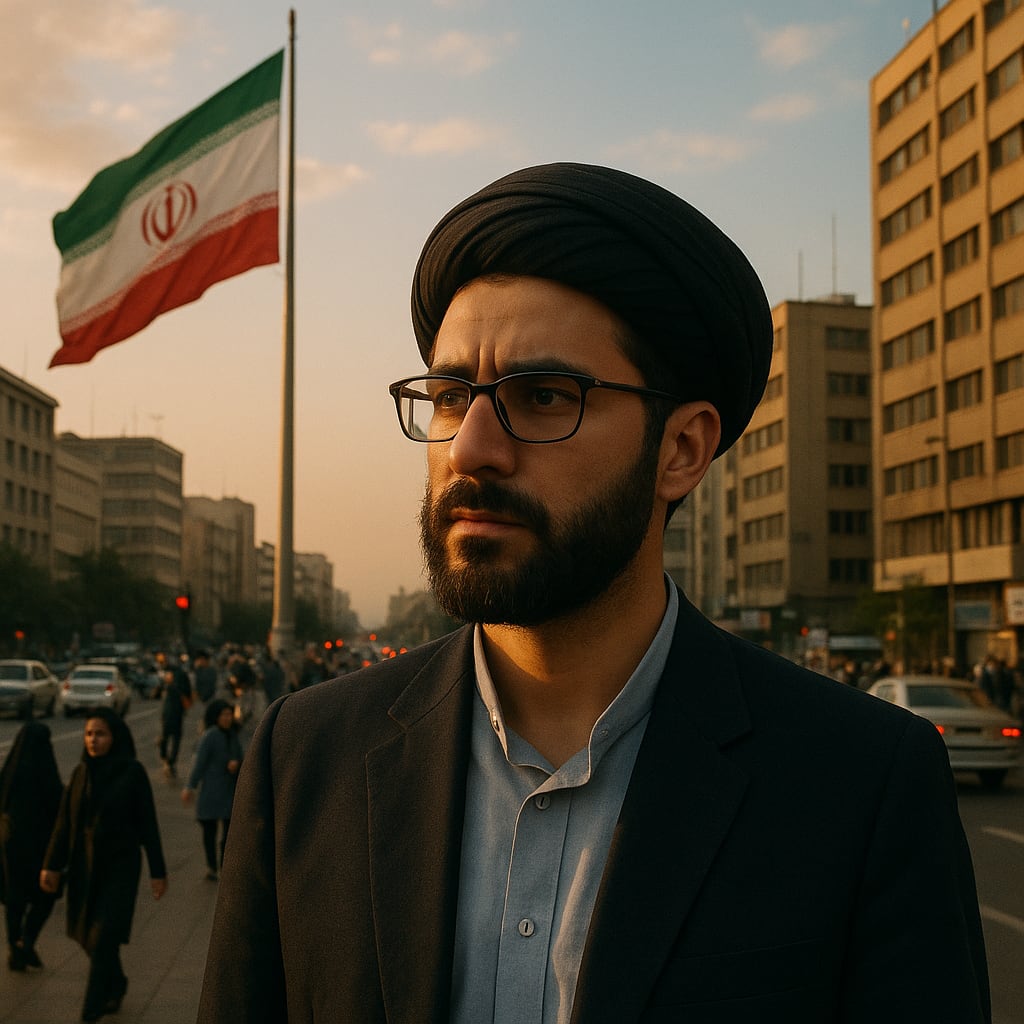
The surprising truth about Iran’s soft power in 2026 that sanctions never managed to kill
Iran’s soft power in 2026 doesn’t look like a government strategy deck.
It looks like a song passed over VPN, a TikTok dance in Tehran, a TV drama watched in Dubai, and a poem whispered in Farsi in a Berlin subway.
I remember the first time I realized sanctions hadn’t done what Western officials said they would.
I was at a small gathering in Istanbul in late 2025 — a strange mix of students, artists, and freelancers orbiting that city’s cafés and cheap Airbnbs.
Someone put on music, and the room shifted.
It wasn’t American hip-hop or K-pop or reggaeton.
It was Iranian rap.
Half the people in the room weren’t Iranian.
But they were mouthing the words in broken Farsi, swaying like they’d grown up with this track, not discovered it through a friend-of-a-friend Telegram link.
One guy from Spain shrugged when I asked him how he knew it.
“Man,” he said, “Iranian music hits different. You can feel the pressure in it.”
That sentence has stayed with me.
Because it’s not what I was taught to expect about a country supposedly “isolated from the global community.”
Not in 2026.
Not anymore.
Iran’s soft power in 2026: culture that leaks through every firewall
Iran’s soft power in 2026 isn’t about polished state propaganda.
It’s about something messier, more human, and much harder to sanction: culture that refuses to stay inside borders.
The paradox is almost cinematic.
On paper, Iran is boxed in — sanctioned, cut off from global banking, pressured diplomatically, portrayed in headlines mostly through the language of nuclear programs and security threats.
But beneath that, another Iran has been quietly threading itself into everyday life around the world.
You see it in three big arenas:
Culture – film, music, literature, diaspora communities
Media – satellite channels, social platforms, digital undergrounds
Influence – narrative framing, regional identity, “resistance culture”
Call it “soft power” if you want, but that phrase doesn’t quite capture the texture of it.
This isn’t just influence; it’s a kind of emotional gravity.
People feel Iran before they agree or disagree with it.
And that’s what makes it powerful.
The conflict no one admits: sanctions hit wallets, not stories
There’s a quiet assumption baked into a lot of foreign policy:
If you push hard enough economically, culture will collapse along with the currency.
But culture is stubborn.
Especially in a place like Iran, where poetry was a national sport centuries before anyone printed a modern passport.
Sanctions have absolutely hurt people:
Savings wiped out by inflation
Medicine shortages and delayed treatments
Young graduates trapped in low-paying, low-mobility jobs
Families watching loved ones leave, one visa at a time
What sanctions haven’t done is erase Iran’s voice.
If anything, they’ve sharpened it.
When you talk to Iranians under 35 — whether inside the country or in the diaspora — there’s this mix of exhaustion and defiance.
They might complain constantly about corruption, censorship, inflation.
But the moment someone outside casually dismisses Iran as just a “problem state,” something changes in their posture.
They start talking about Rumi and Hafez.
About Forough Farrokhzad and Abbas Kiarostami.
About underground bands, about women cutting their hair in protest, about filmmakers smuggling their work out on hard drives.
Sanctions may have cut Iran off from the global economy.
They did not cut Iranians off from the global conversation.
They just forced them to find side doors.
VPNs.
Telegram channels.
WhatsApp groups.
Private Instagram pages.
Diaspora screenings in London basements and Brooklyn lofts.
The cost is real: burnout, risk, self-censorship, exile.
But the culture keeps leaking out.
And the world, slowly, has been listening.
Why does Iran’s cultural influence still travel so far?
There’s a simple, uncomfortable reason Iranian soft power still spreads beyond sanctions:
Because pain, humor, and contradiction translate better than political talking points.
Iran’s influence doesn’t travel as policy.
It travels as feeling.
A few threads make that possible.
A deep storytelling tradition
Iranians are raised in a universe of metaphor.
Classical poetry, layered irony, double meanings — these aren’t academic; they’re survival tools.
Life under pressure as creative fuel
The daily absurdities of restrictions and workarounds feed a constant stream of dark humor and sharp commentary.
That energy is highly exportable.
A massive, emotionally connected diaspora
From Toronto to Berlin to Sydney, Iranians abroad act as cultural routers — translating, subtitling, sharing, explaining.
Digital smuggling
An entire ecosystem of unofficial channels: fan subs, reposted tracks, pirated films, semi-anonymous accounts.
Not “legal,” not neat, but extremely effective.
This is how you end up with a teenager in Brazil binge-watching an Iranian series with fan-made Portuguese subtitles.
Or a Palestinian activist quoting Iranian poetry at a protest.
Or Gulf kids sneaking Iranian pop into their playlists because it just feels honest in a way glossy Western hits don’t.
The more official doors close, the more human ones open.
How does Iranian media actually influence people beyond its borders?
If you only follow state-to-state relations, you miss where most of the soft power lives.
Because the real influence doesn’t come from official press conferences.
It comes from screens — big and small.
Here’s where Iranian media quietly stretches beyond sanctions:
1. Satellite TV that never really went away
Even with occasional jamming and legal threats, Persian-language satellite channels still beam into homes across the Middle East, Central Asia, and the diaspora.
Religious programs from Qom
State news from IRIB
Opposition channels funded from abroad
Entertainment channels offering dubbed Turkish or Korean dramas
People flip between them, building their own mental collage of reality.
No single channel controls the narrative.
But collectively, they keep “Iran” in the room — as a reference point, a talking partner, an example, or a warning.
2. The digital underground
Social media blocked?
Fine. People use VPNs, proxies, and mirror apps.
What happens next is something Western policymakers often underestimate:
Iranian creators post content meant for other Iranians.
The diaspora amplifies it.
Algorithms do the rest.
A meme mocking censorship trends in Farsi, then jumps into Arabic or Turkish via bilingual users.
A protest slogan gets translated into English and Spanish on activist TikTok.
A video essay breaking down Iranian cinema lands on film Twitter and Reddit.
None of that requires a government strategy.
It just requires people who won’t shut up about their lives.
3. Storytelling that doesn’t need perfect image quality
Iranian films have been winning awards for decades not because they have the best cameras, but because they’ve mastered the art of emotional compression.
Minimalist dialogue.
Symbolic objects.
Children as stand-ins for adults.
Everyday scenes that carry political charges just under the surface.
Streamers and film festivals keep this pipeline alive:
Even when official co-productions are blocked, independent distributors, niche platforms, and university screenings keep these stories circulating.
And once you’ve cried through one Iranian film, it becomes harder to reduce the country to a line in a sanctions briefing.
The surprising secret: diaspora as Iran’s unofficial soft power ministry
If you want to understand Iran’s soft power in 2026, you have to understand Iranians who don’t live there anymore.
They’re the glitch in the idea of “isolation.”
Because while you can sanction a state, you can’t sanction a scattered people with Wi-Fi.
Diaspora Iranians:
Open cafés, galleries, and bookstores that quietly serve as mini cultural embassies
Translate Iranian books, songs, and jokes into local languages
Appear in Western media, shaping how “Iranian” is visually and emotionally understood
Build YouTube channels and podcasts explaining the country from their messy, in-between perspective
Some are openly critical of the Iranian government.
Others are loyal to it.
Most are something more complicated — proud, hurt, angry, protective.
But when they host a Nowruz (Persian New Year) dinner and invite their non-Iranian friends, that’s soft power.
When they argue online with think tank analysts about what Iranians really think, that’s soft power too.
A friend of mine in Paris — second-generation, parents left after the 80s — once told me:
“I don’t owe either government anything. But I owe my grandparents’ stories everything.”
That’s the energy driving a lot of Iranian cultural work abroad right now.
Not a flag. A promise.
What mistakes do outsiders make about Iran’s influence?
There are a few recurring mistakes that show up in headlines, policy papers, and casual conversations.
They look small from the outside.
From the inside, they feel like erasure.
Mistake 1: Reducing Iran to its nuclear file
Ask the average person what they know about Iran, and you’ll often get:
Nuclear program
Sanctions
“Axis of evil” vocabulary that should have died years ago
What gets lost:
A 1000+ year literary tradition still quoted daily
A film industry that shaped global indie cinema
A youth culture fluent in meme, metaphor, and melancholy
You can’t understand Iran’s soft power if you only look at centrifuges and sanctions graphs.
Mistake 2: Assuming isolation equals cultural irrelevance
Sanctions are often sold as a way to “pressure” governments into changing behavior.
But culture doesn’t follow the same logic as trade.
Some of the most influential cultural movements in history came from marginalized, pressured, or “isolated” communities.
Iran in 2026 fits that pattern.
The more cornered people feel, the more urgently they create.
Mistake 3: Treating “Iranian influence” as purely sinister
When analysts talk about Iran’s influence, they usually mean:
Regional militias
Proxy groups
Political alliances
That side exists, obviously.
But there’s also:
Iranian women sharing hijab stories with Muslim women in Europe
Iranian engineers designing open-source tools used by developers worldwide
Iranian artists shaping how “Middle Eastern” gets visually represented in galleries and museums
To pretend it’s all one single, dark influence is intellectually lazy.
And it ignores the many ways Iranian culture is actually used to resist authoritarianism — including inside Iran itself.
So what does Iranian culture actually export in 2026?
If you strip away the jargon, Iran in 2026 exports a few big intangible things:
A language of resistance
Not just political resistance, but everyday resistance to absurd rules, hypocrisy, and injustice.
That resonates globally, especially with younger generations.
Aesthetic honesty
Iranian films, songs, and poems often have this unpolished sincerity.
Even when they’re metaphorical, they feel like they’re telling the emotional truth.
The normalization of contradiction
Being secular but spiritual.
Criticizing your country but defending it against outsiders.
Wanting freedom and stability at the same time.
People outside Iran recognize themselves in that.
Because most of us are contradictions too, just with less dramatic headlines.
A shared vocabulary of wounds and hope
Words like “gham” (sorrow) and “omid” (hope) show up in songs, films, slogans.
They’re heavy, but they travel well.
Pain that refuses to give up is strangely contagious.
Will Iran’s soft power actually matter in the long run?
This is the question experts keep circling:
Does any of this cultural influence actually change anything?
Not overnight.
Soft power is slow.
It doesn’t topple governments on its own.
But it does something more subtle and, in some ways, more lasting.
It changes who we’re willing to empathize with.
Every time someone outside Iran:
Cries at an Iranian film
Shares an Iranian protest song
Reads a translated Iranian novel and sees themselves in it
Follows an Iranian creator on Instagram or TikTok
A small piece of that “enemy state” label gets chipped away.
That doesn’t solve nuclear negotiations.
It doesn’t dissolve sanctions.
But it does make it harder to sell a simple story about a “dangerous, irrational country” to a generation that has already laughed, cried, and scrolled with its people.
In the long run, that matters.
Because wars, sanctions, and alliances all depend on stories we believe about each other.
Who is human.
Who is disposable.
Whose suffering is “unfortunate,” and whose is “necessary.”
Soft power rewrites those scripts line by line.
What should we actually carry away from Iran’s soft power story?
Maybe the point isn’t whether Iran “wins” the soft power game.
Maybe the point is this:
Sanctions can starve a country’s economy.
They cannot fully starve its imagination.
Iran in 2026 is proof of that.
A country under pressure is still exporting:
Songs people hum in cities that have never seen Tehran
Stories that win awards in languages they were never written in
Images of courage and contradiction that stick in your throat
You don’t have to like Iran’s government.
You don’t have to agree with its regional policies.
But if you care about how influence really works — beyond press briefings and policy memos — you can’t ignore the quiet, relentless way a sanctioned nation keeps showing up in playlists, group chats, film queues, and book clubs.
That’s the part no one has figured out how to sanction yet.
And maybe, in a world obsessed with hard borders and hard power, that’s exactly why it matters.
About the Creator
abualyaanart
I write thoughtful, experience-driven stories about technology, digital life, and how modern tools quietly shape the way we think, work, and live.
I believe good technology should support life
Abualyaanart
Keep reading
More stories from abualyaanart and writers in Viva and other communities.
A Historic Decision in Jersey: Choosing Dignity at the End of Life
In February 2026, the island of Jersey made history. Lawmakers voted to allow assisted dying for terminally ill adults. This decision has started important conversations about dignity, suffering, and the right to choose how life ends.
By dua fatima6 days ago in Viva
It Finally Happened, Now What's Next for Evil Zaria (and Sol Ruca)?
Well, folks, the journey was a long one, but we finally got there. The tandem of Zaria and Sol Ruca, known as ZaRuca, finally split up in vicious fashion after many months of teased tension. The tandem started pairing up early last year, and they were so popular that many thought that they would be tag champs together, but that wouldn't happen. What did happen was Sol getting gold, and quite a bit of it, as she actually co-held the NXT Women's North American Championship and the Women's Speed Championship as well. Injuries forced Sol to surrender the latter, but the former was lost to Blake Monroe, who defeated Zaria (in Sol's place).
By Clyde E. Dawkins5 days ago in Viva
Who is your "Person"?
It's important to recognize that you cannot go through life as easily on your own. My name is Elizabeth and I'm a survivor of child abuse and horrific trauma. Healing from trauma is not a quick fix and recognizing that it will take time, is part of the struggle.
By Elizabeth Woods2 days ago in Psyche

Comments
There are no comments for this story
Be the first to respond and start the conversation.