
Karida Griffith Walker:
Tapping Into a New Context for the Racism Conversation

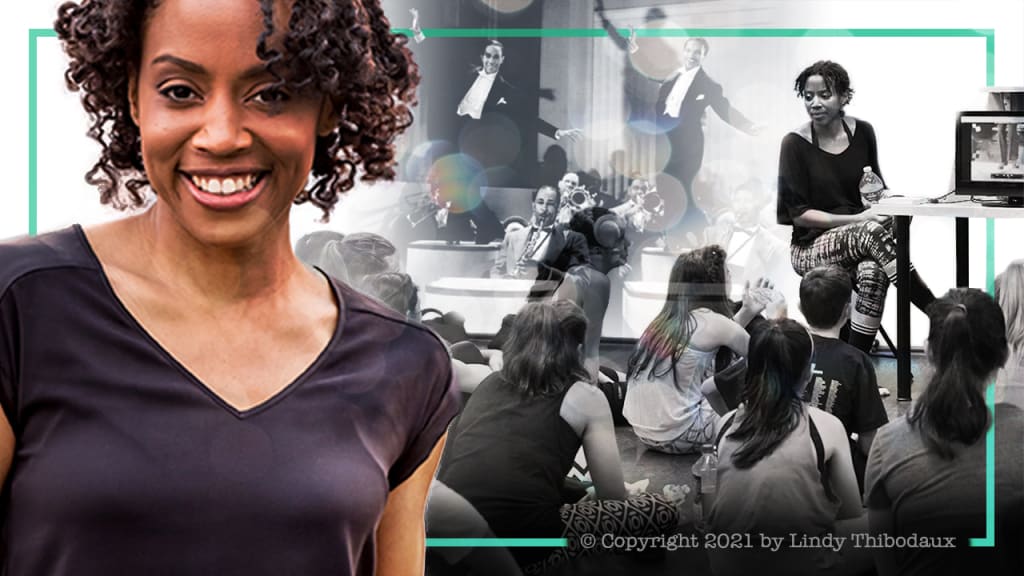
Like many little girls growing up in Portland, Oregon, Karida Griffith wanted to be a dancer. She describes herself as a "classic studio kid", progressing through the traditional curriculum of ballet, tap, modern, and jazz — and falling completely in love with tap dance. As an adult, she earned her business degree from New York University while pursuing her professional dance career, and she now has over twenty years of professional experience as a performer, instructor, and choreographer.
In 2018, after moving back to Portland, getting married, and starting a family, she decided the time was right to make her first entrepreneurial leap: she started The Tap Teachers' Lounge, an online education business that provides innovative training specifically for tap dance teachers. She's been growing this business organically, garnering rave reviews from her students as she continues to refine her curricula to inspire a growing audience of tap dance professionals and studio owners.
And then the pandemic changed the world.
Dance studios everywhere have been particularly hard hit, with many simply not able to keep their doors open. By the end of April 2020, Karida was forced to recognize the possibility that her customers simply couldn't afford additional training, even in the unlikely event they were able to keep their studios from closing down.
And then racism took over the headlines.
As a Black woman, Karida has been all too aware of the challenges facing dancers of color. She's also done extensive research into dance history, which she believes should be an integral part of every dancer's training. More specifically, she has also delved deeply into studying how racism has influenced dance history in ways that are still in evidence today. And in May 2020, she decided to talk about it.
Initially planned as a one-time-only event, Karida prepared an extensive online presentation called, "Racism and the Dance World: From Historical Context to the Current Climate", including what turned into a 3-hour Q & A session. This presentation, which, by the way, was not a free event, completely sold out, and so many people were disappointed at missing it that Karida decided to do an encore presentation — which also sold out. These online events were so clearly striking a significant chord with so many people that Karida ultimately used the presentation materials to create a 6-week course for all dance professionals (not just tap teachers). Called Roots, Rhythm, Race & Dance (affectionately known as R3D), she's currently running this program for the third time since the summer of 2020.
One of the ways in which I'm inspired by Karida, especially during the past year, is the way in which she has taken what could have been a disastrous turn of events for her business, and turned it into something she never imagined when she first start The Tap Teachers' Lounge. To call this a pivot would be a monumental understatement. (You know "pivot", the business buzzword that's been making the rounds for some time, and especially so during the pandemic.) Well, pivot is also a dance term, meaning to execute a turn around a single axis, without traveling — and let me tell you, there has been a lot of turning, and a lot of traveling (at least in a business-change sense), in Karida's business journey in the last year.
But what is most inspirational to me is the way Karida has used the context of dance to make what can be very uncomfortable conversations about race more manageable. By centering the topic of racism around dance history, she not only educates her dance-professional students about the history itself, she shows them, with concrete examples and exercises, how to introduce these lessons into their own classrooms — and why it's such a crucial component of dance education in general. No, it's not always comfortable, but without discomfort, where is growth?
I've had the privilege of working with Karida for the past two years (and then some), and I continue to marvel at the intuitive way she approaches her work; she seems to sense just what people need and want to hear, and perhaps more importantly, when and how they should hear it. And her mission of bringing awareness about the history and current issues of racism in the dance world to as many people as possible, and to inspire others to do the same, is a daily reminder to me just to simply be more loving. In this way, I believe she's using the context of dance to actually transcend the dance world!
Now Karida and her husband are dancing with their own two little daughters. May these girls also grow up to be beautiful Black dancers like their parents, with the same ability to effortlessly pivot with purpose and grace.
About the Creator
Lindy Thibodaux
Writes about the transformative power of color. Designs. Plays piano, speaks French, dances Argentine tango. Loves. https://www.colormusing.com
Keep reading
More stories from Lindy Thibodaux and writers in Viva and other communities.
Reflection
“Last name?” “Rogers.” Type, click. Click. “Renée?” She nodded. Click. “Okay, you’re all set.” The man in the booth glanced up at the darkening sky. “Looks like it’s going to be one of those unpredictable-weather days. Good thing you’re covered up. Enjoy the garden — you’ll have it mostly to yourself.” She nodded again and turned away, winding her thick brown scarf more closely around her neck as she walked through the gate and into the gusty wind.
By Lindy Thibodaux5 years ago in Humans
Why Every Woman Should Buy Her Own Diamond: The New Era of Independent Sparkle
For a long time, the narrative surrounding diamond rings for women was strictly linear. It began with a romantic proposal, followed by a wedding, and perhaps an anniversary a few years down the line. The diamond was always a gift—a token of someone else’s affection, a symbol of a promise made by another. But as we navigate 2026, that old-fashioned script is being rewritten.
By Mohd Kaish4 days ago in Viva
What Is Prolactin and Why Is It Important for Pregnancy?
Hormones play a crucial role in regulating the human body, especially during pregnancy and reproduction. One such hormone that has a major impact on fertility, pregnancy, and breastfeeding is Prolactin. Although it is most commonly associated with milk production after childbirth, prolactin actually performs several important biological functions that support reproductive health and pregnancy.
By Stories Today5 days ago in Viva
The BAFTA Awards
By now, in a stunning departure from recent years, most of the world is aware of what happened at the BAFTA film awards. Social Media Headlines will tell you the bare bones: that John Davidson, a Tourette's Syndrome advocate, shouted a racial slur at two Actors of Colour, Michael B Jordan and Delroy Lindo.
By Natasja Rose7 days ago in Psyche



Comments
There are no comments for this story
Be the first to respond and start the conversation.