
Do not forget the women who rebelled
For months now in Iran, amidst waves of demonstrations, women are being shot in cold blood, losing their lives alongside young men who are injured by police forces or even sentenced to death. All of this happens on the long and perilous road to freedom and democracy.

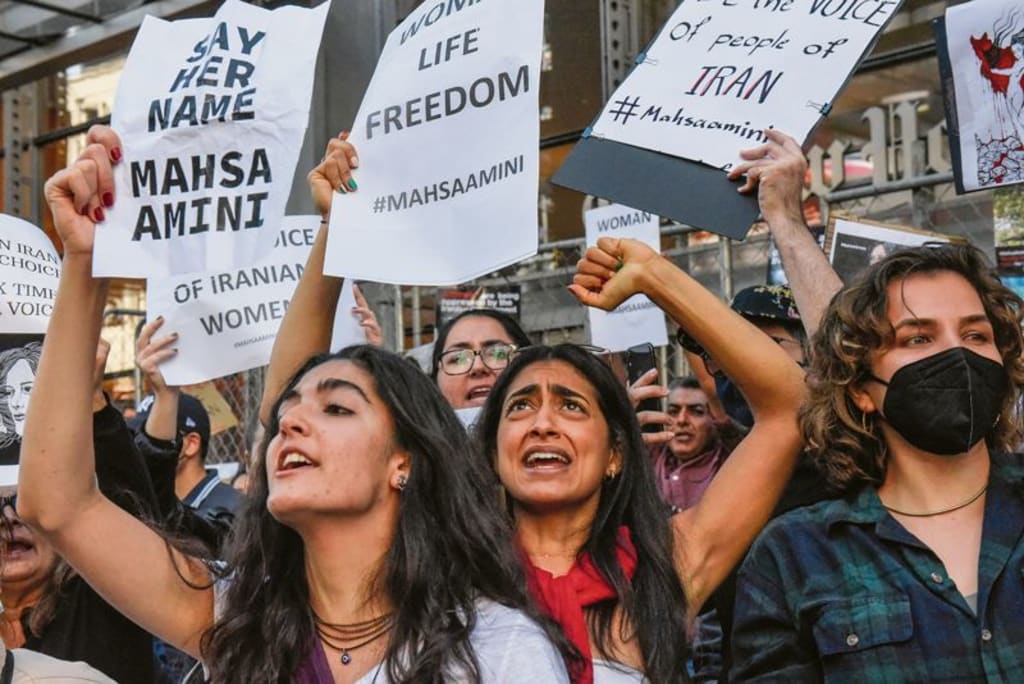
Iran has a long and painful history of protests. Election fraud, economic struggles, and civil liberties have all sparked revolts over the years. However, the most recent movement represents something unprecedented. A revolution led by women, supported by men, and deeply rooted in a demand for fundamental human rights.
The Persian song Baraye (Because of) by Shervin Hajipour has become the anthem of this movement, touching millions worldwide and even leading to Hajipour’s temporary release after his arrest. The lyrics capture the grievances of an entire generation that has reached its breaking point, unable to afford even the basic necessities while being forced to obey the oppressive rules of a religious dictatorship.
What could be more dangerous than a people who have nothing to lose? The French Revolution serves as a historical reminder that when desperation and oppression collide, the result is a force powerful enough to overthrow regimes.
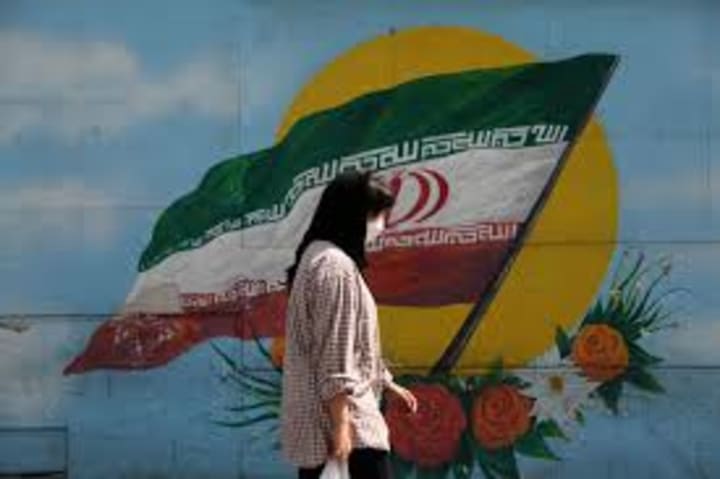
This is different
Iran has seen waves of protests in recent years, mainly over a long-running economic crisis exacerbated by Western sanctions linked to the country's nuclear program and human rights abuses. However, in almost all cases, the authorities have succeeded in suppressing the protests with violence and with no international organization being able to stop this nightmare.
The Regime usually creates the narrative of the "Evil" enemy, the United States, who will always try to bring down "the glorious theocratic revolution". Unfortunately, this narrative has been held for quite a while, justified to a lesser extent, since Western governments have been keen on implementing harsh economic sanctions against Iran. Affecting the people but having no actual plan of helping the people of Iran to rebel.
Their response
As for what Iranian women themselves think about what they have been experiencing for nearly half a century? Looking back at social networks even before the violent internet shutdowns and social media bans, what one finds is that they do not see themselves as powerless victims, as they are often portrayed outside of Iran. They have deeply believed for years that they are agents of social change. They are always on the front lines fighting.
A survey published in The Conversation among 391 Iranian women aged 18-35 from the city of Shiraz revealed a powerful truth: Iranian women grow up learning to fight for their basic freedoms. Many develop multiple identities—one for their public life, another for social networks, and yet another within private circles—to survive within the rigid constraints of their society.
Social media has played a crucial role in raising awareness and widening the ideological gap between younger and older generations. A recent study found that 58% of Iranians do not support mandatory hijab laws, while only 23% actively support the government’s strict regulations. This statistic reveals that the majority of the population does not wish to abolish the hijab itself—they simply want the freedom to choose.
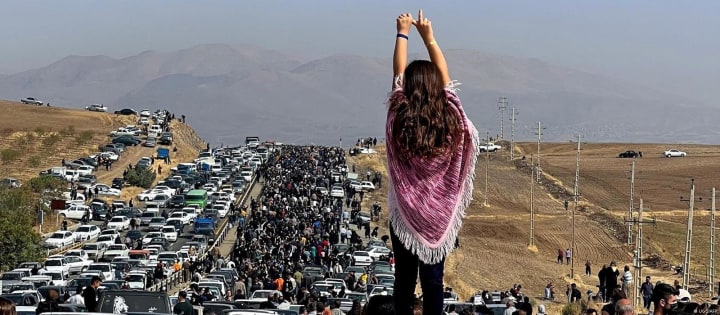
Our respons(e)ibility
Economic sanctions alone are not enough. In some cases, they may even be counterproductive, particularly when they disproportionately affect the working class and strengthen the regime’s anti-Western narrative.
So, what should the international community do? This is a question I have wrestled with myself. A more active approach is necessary—though not in the form of military intervention. Instead, we must support Iran’s pro-democracy movements through diplomatic recognition, financial assistance, and public visibility.
International organizations should empower Iranian activists, ensuring that their voices are heard on the global stage. At the same time, democratic nations must be prepared to offer asylum to those fleeing persecution and to amplify the stories of those who remain and resist.
Some may find this idea extreme, but if the time comes when democratic movements in Iran see armed resistance as their only path forward, then the world should consider supporting them. Just as history has shown in past revolutions, authoritarian regimes do not fall without struggle.
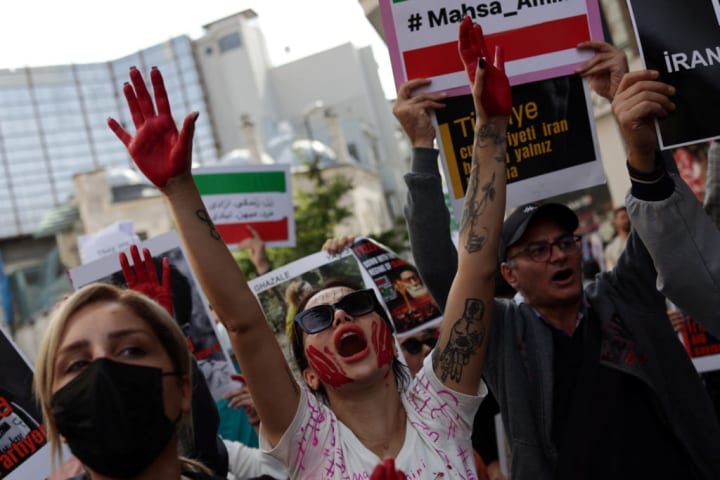
A Revolution Worth Remembering
The women of Iran are not just protesting; they are leading a movement that challenges one of the most repressive governments in the world. They are demanding the right to exist freely, to live without fear, and to shape their own futures.
If we fail to support them, history will judge us for our silence. Let us not forget the women who rebelled.
Written and Published by Sergios Saropoulos.
About the Creator
Sergios Saropoulos
As a Philosopher, Writer, Journalist and Educator. I bring a unique perspective to my writing, exploring how philosophical ideas intersect with cultural and social narratives, deepening our understanding of today's world.
Keep reading
More stories from Sergios Saropoulos and writers in Viva and other communities.
Patriarchy: A Timeless Sickness
On a lonely night in Helsinki, I found myself on my sofa, watching Ridley Scott's The Last Duel. Expecting just another historical drama to pass my sleepless night, I was instead met with a strikingly relevant film—one that confronts the enduring violence of patriarchy. What I initially saw as a medieval courtroom drama unfolded into a poignant examination of power, misogyny, and injustice.
By Sergios Saropoulos3 years ago in Viva
Is Lab-Grown Meat Even Edible?
For decades, the idea of meat grown in a laboratory sounded like something out of science fiction. The concept of producing a steak or chicken nugget without raising or slaughtering animals seemed futuristic, even unsettling to many people.
By Navigating the World2 days ago in Viva
The goddess of ten thousand names.
I wanted to write about the goddess Isis for some time now, but felt like my understanding of her is too limited, and my perspective won’t do this powerful archetype a justice. Mainly because, just like the title of this essay suggests, she was the embodiment of countless archetypes, and I haven’t studied them enough.
By Eva Smitte4 days ago in Viva


Comments
There are no comments for this story
Be the first to respond and start the conversation.