
Black, Female, and Neurodiverse in Science
Dr. Maggie Ebunoluwa Aderin-Pocock MBE

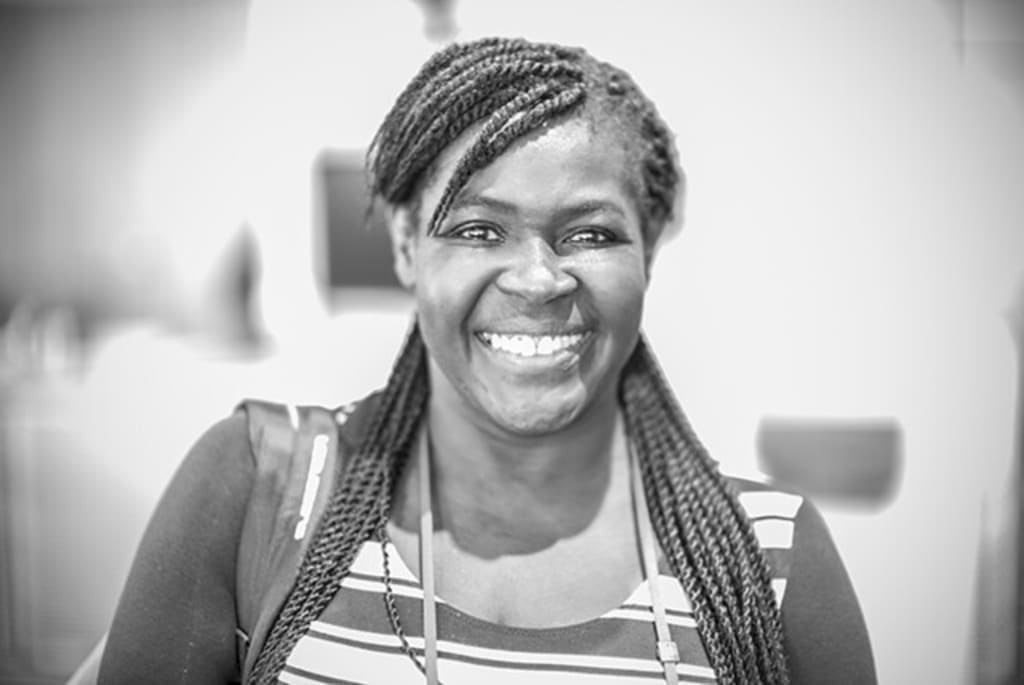
Being Black in science comes with a set of challenges. Black scientists and moreover Black professionals have to battle the forces of institutional and scientific racism. Hence we work tenfold to prove our value. But to be Black...and female...and neurodiverse is a whole new level.

Science is a male-dominated discipline. Plus, quite a number of these scientists tend to show traits characteristic of neurodiversity, specifically autism. If you're a White male scientist - great! On/perceived to be the spectrum as well? Even better - you're a genius, like Einstein!
However, if you're a Black female scientist...huh?
"Shouldn't you be singing or dancing?"
"I thought you were a runner?"
Once on my way to university, I passed another university campus. On the campus building, there was a display of pictures of former students and their discipline. There were around 15 pictures and only 2 of them showed former Black students; One was an athlete and the other was a musician.
In addition to the stereotyping, there is scientific racism and sexism. If you are neurodiverse as well as Black then that's probably included in the justification of scientific racism. Assumed to be less intelligent due to skin colour, and even less intelligent because of neurological makeup. I can attest to this from my personal experience during higher education as an undergrad.
Furthermore, educated Black people not only face issues from outside of the Black community but also from within. An educated Black person is generally looked at as being an "Oreo", "coconut", "acting White" or a "sellout" by their less-educated counterparts. People often believe that being Black is synonymous with being uneducated. That is simply not true!
She's a Space Scientist & Science Communicator
Dr. Maggie Ebunoluwa Aderin-Pocock is a British space scientist and science communicator. She studied at Imperial College London (which has an equivalent reputation to those of Ivy League Universities) and graduated with a BSc in physics. After her bachelor's, she went onto study for her PhD in mechanical engineering. She is now an honorary research associate of University College London's Department of Physics and Astronomy (where I studied for my master's).
She is one of the few role models in the science world who has inspired me on both a professional and personal level. She has proven that anyone can be a scientist, regardless of one's cultural background or identity. Moreover, she alongside other diverse scientists has shown that science is not solely reserved for a specific group of people - It is for everyone!
Looking To The Stars And Beyond
Maggie's fascination with space began when she was a young girl. She loved to look up at the night sky and gaze at the stars. Her favourite tv show as a child was 'The Clangers', a children's animation of mouse-like beings from outer space.
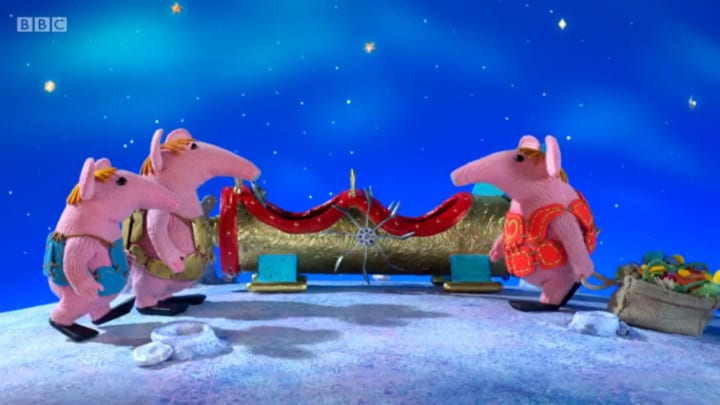
"I think The Clangers made me into a space scientist", she said during an interview.
Maggie wanted to pay the mousy beings a visit. During her childhood, Maggie moved in between schools numerous times and lived (with her siblings) back and forth between her parents, who had divorced - space was her path to success.
Dyslexic And Determined
Attending mainstream school as a student who is not neurotypical is extremely challenging. As a neurodiverse person, I was constantly underestimated by my teachers and peers. However, I chose to pursue my education and get my qualifications nonetheless.
Maggie was diagnosed with Dyslexia at 8 years old. Dyslexia is a life-long condition that affects one's ability to read, write and spell. Maggie was placed at the back of the classroom.

Dreambusting teachers placed her in 'remedial classes' (classes for individuals with learning difficulties) and considered her to be 'academically incapable'. When Maggie expressed her interest in becoming an astronaut, she was suggested to take up nursing "because that's scientific too".
Despite the naysayers, she went on to achieve 4 A-Levels in maths, physics, chemistry, and biology. Maggie's passion for space and the stars propelled her to where she is today.
Dr Aderin-Pocock co-presents on the show 'The Sky At Night', BBC's longest-running astronomy programme. She has been a presenter on the show since February 2014. Bet the teachers didn't see that in the stars huh?
Her Career And Research
After her PhD, Dr Aderin-Pocock went to work for the Ministry of Defence (MoD). She designed instruments such as a missile warning system and land mine detectors. She even created an optical subsystem for the James Webb Space Telescope. Very impressive!
Dr Aderin-Pocock was appointed MBE for her exceptional services to science and education in 2009. In 2013, she was named as the UK's top 10 most influential Black people on the UK Power List.
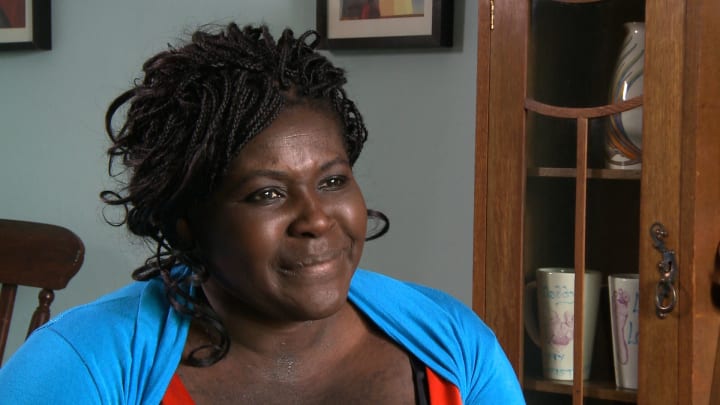
Dr Aderin-Pocock has won several awards over the years. In 2020, she was awarded the William Thomson, Lord Kelvin Medal and Prize by the Institute of Physics for her work and inspiration. This was a historical moment as she is the first Black woman to win a gold medal in the award's history.
The Mission For Inclusivity Of Women In Science
There are still many sectors where women are the minority and STEM is one of them!
According to UIS data, less than 30% of the world’s researchers are women
Dr Aderin-Pocock emphasised the draining nature of an all-male environment and that there needs to be support available. In a Q&A, the doctor revealed an occasion where she was mistaken for a cleaner. There is nothing wrong with having an elementary occupation. The issue is just assuming that one's appearance or identity equates to having a certain job role.
The competitiveness and lack of awareness of different backgrounds in academia can contribute to creating spaces within schools or universities that are non-inclusive.
The lack of diversity can really be off-putting. There are some jobs that I didn't bother applying for because diversity seemed non-existent. During my physics career, in one of my courses, women were the majority. To be frank, this was a nightmare. Toxic feminity alongside internalised misogyny and other factors caused a lot of problems. Relational aggression and smear campaigns by the girls lead to my alienation, which at the time I wasn't fully aware of (because of my neurodiversity). I didn't realise the full extent of these social dynamics a few years after completing my bachelor's. Being in this toxic environment took a toll on me mentally. I kept second-guessing my skillset and allowed the behaviours and opinions of others to make me feel as though I do not belong in science. On the flip side, I am grateful that I had lecturers who supported me throughout my studies.
Should there be fewer female scientists? No. There is already a small percentage of us as it is. However, I will say that female empowerment is one of the most important, if not the most important aspect in the inclusivity of women.

I have been fortunate to have supportive academics; it was the students who were the issue. Oddly enough, as a postgrad, I studied in a mostly all-male (and mostly non-Black) environment and for me, it was the opposite of draining; It invigorated me! They didn't care whether I was Black, autistic or a woman - they saw me as their colleague, an equal. These guys were the best!
Creating A Starry Future
In November 2017, Dr Aderin-Pocock set up Science Innovation Ltd, a company aimed at changing the demographics and knowledge in science. She has created activities and given talks to share the wonders of space with many children and adults. What's more astonishing is the level of enthusiasm she shows in her work.
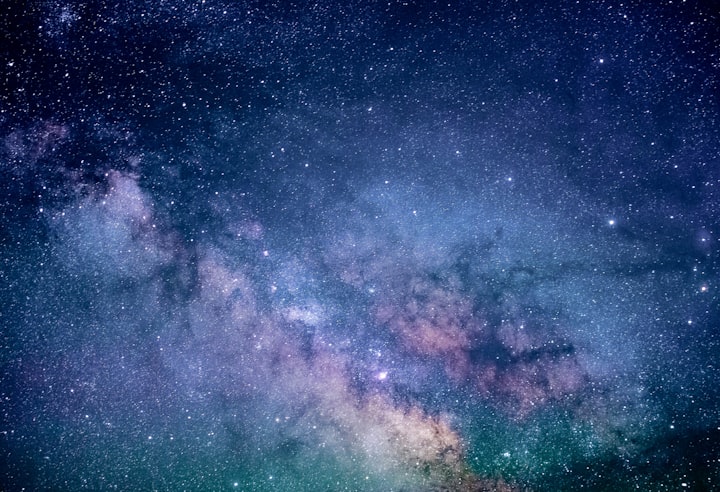
Dr Aderin-Pocock's engagement in physics and advocacy for diversity in science is changing the public's perception of what a scientist should look like. Seeing how much she has accomplished despite her race, gender and neurodiversity encourages me to keep progressing in my physics career. Her determination, courage and dedication will inspire many more people in the years to come.
"In space, race doesn't matter, nationality doesn't matter. In space, you see the world as a globe and you don't see the boundaries."
- Dr Maggie Ebunoluwa Aderin-Pocock MBE
Maggie also expressed her interest in retiring on Mars and travelling to space. Hopefully, Elon's plan will work. Or who knows maybe the colonisation of Mars may be achieved by someone we would least expect...
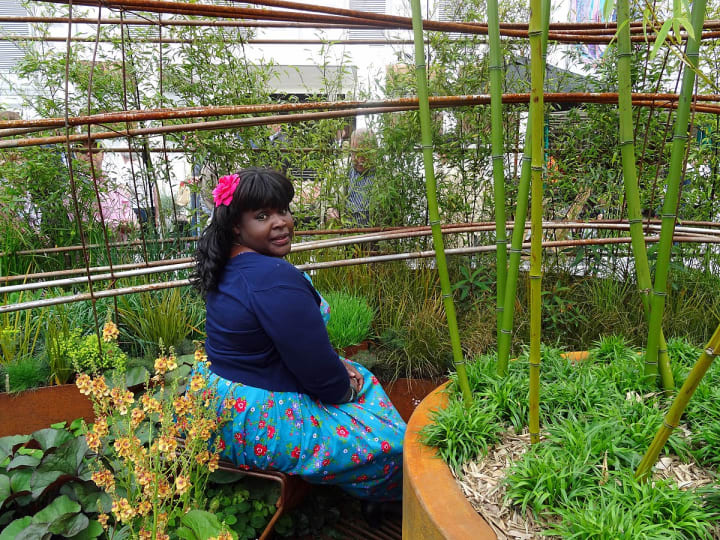
Thank you, Maggie! <3
About the Creator
Shan Lena
I am a writer and Autism Rights activist based in London.
My Hopes for the Women's Division at WrestleMania 42
It's that time again, fellow wrestling fans! The Elimination Chamber came and went, and now, it's the home stretch on the road to WrestleMania. As a sports fan, I can't help but compare this to home stretch periods in sports, especially in the NHL and NBA, mainly because WM will take place as both playoffs start. As always, I'm always thinking of the women's action, but before I talk about the subject at hand, I have to get this off my chest.
By Clyde E. Dawkins6 days ago in Viva
How Class Shapes Access to Elite Sports
Elite sports are often portrayed as meritocratic arenas where talent, discipline, and hard work determine success. The dominant narrative suggests that anyone with sufficient dedication can rise to the highest levels of competition. In reality, however, access to elite sports is strongly influenced by socioeconomic class. Financial resources, social networks, institutional access, and geographic location all shape who is able to train, compete, and remain in high-performance pathways. Talent is necessary, but opportunity is unevenly distributed. As a result, class functions as a structural filter that determines which athletes can realistically pursue elite competition.
By Gus Woltmann5 days ago in Viva


Comments
There are no comments for this story
Be the first to respond and start the conversation.