
When Styles Collide: What the Suns vs. Hawks Game Revealed About Modern Basketball
Watching Phoenix and Atlanta square off this week reminded me how NBA basketball has split into philosophies—one chasing precision through structure, the other thriving in chaos.


The Suns and Hawks don’t just play basketball—they represent two competing ideologies that the modern NBA hasn’t quite reconciled. Sitting through their matchup this week, I found myself less consumed by who was scoring and more fascinated by how the game itself has changed. The Suns, with their carefully designed sets and deliberate pace, feel like a throwback to a time when basketball was an execution contest. The Hawks, meanwhile, embody raw chaos—the kind of improvisation that can either redefine the game or unravel it entirely.
As I watched Devin Booker grind through double-teams and Trae Young pull up from the logo, I couldn’t help but notice how each team’s approach said something deeper about basketball’s identity crisis. Phoenix trusts the system; Atlanta trusts the moment. The Suns run their half-court offense like a symphony—meticulous, layered, and dependent on every instrument staying in tune. Kevin Durant’s midrange jumper isn’t just a shot—it’s punctuation. Every movement has a planned rhythm. You can almost see the geometry traced beneath the surface: a drive here, a kick there, a soft cut off the weak side.
Atlanta, on the other hand, thrives on improvisation. Young’s confidence borders on rebellion—the kind that makes coaches nervous but keeps fans glued to their screens. He’s not beholden to structure because his game is structure, bent around his will. When he throws a no-look pass to a cutting De’Andre Hunter, it’s part calculation, part improv theater. You can’t coach that kind of unpredictability, which is both a blessing and a curse.
I grew up thinking basketball rewarded control. Coaches in my day preached discipline and ball movement like gospel. But watching the Suns and Hawks reminded me how that idea has evolved. Control now doesn’t necessarily mean passing twenty times before shooting—it might mean dictating chaos, bending randomness to your advantage. Phoenix still believes in systems; Atlanta believes in momentum. Neither approach feels wrong, but each exposes the other’s philosophical gaps. The Suns’ structure can turn rigid when Booker or Durant sits. The Hawks’ spontaneity, dazzling as it is, often burns itself out by the fourth quarter.
In many ways, this matchup was less a game and more a mirror of the NBA’s broader tension. The league has reached a point where individual brilliance and systemic harmony coexist uneasily. Superstars are both architects and anarchists. I respect Phoenix’s dedication to the blueprint—it’s built them into a perennial threat—but I also envy Atlanta’s willingness to embrace volatility, even when it hurts them in the standings. There’s something honest about a team that’d rather lose its way than pretend to be someone else.
Midway through the second half, I found myself rooting not for a team but for a moment of synthesis. When Booker and Young traded threes, it felt like watching two artists working in entirely different mediums suddenly find a shared rhythm. For a blink, the game stopped feeling like a clash of styles and more like a conversation between them. That’s what I love about basketball: the dialogue hidden inside competition. Every possession is an argument, every bucket a counterpoint.
What struck me most wasn’t who won—it was how fragile dominance feels in this era. The Suns looked methodical, nearly flawless, until one defensive rotation broke and Young made them pay. The Hawks were reckless, even careless, until one possession spun into brilliance. You can’t build permanency out of either philosophy. You just have to hope your version of chaos lasts longer than theirs.
After the buzzer, scrolling reactions online, I noticed the usual debates about “who’s elite” and “who’s cooked.” But none of that captured what I had just witnessed—a living tension between order and impulse, played out in sneakers and sweat. Maybe I’m romanticizing it, but that’s what basketball has become for me: the most expressive argument in sports.
Watching the Suns and Hawks trade blows felt less like spectating and more like reflecting on creativity itself. Phoenix creates beauty through balance. Atlanta finds it in defiance. And somewhere in between those extremes lies the future of the game—a space where precision meets improvisation, and neither side gets the final word.
About the Creator
Trend Vantage
Covering the latest trends across business, tech, and culture. From finance to futuristic innovations, delivering insights that keep you ahead of the curve. Stay tuned for what’s next!
Keep reading
More stories from Trend Vantage and writers in Unbalanced and other communities.
How Denver and Milwaukee Changed the Way I Watch Modern Basketball
In the past few NBA seasons, I’ve found myself studying Denver Nuggets and Milwaukee Bucks games with a kind of reverence I hadn’t felt for basketball in years. It’s more than admiration; it’s fascination. These two teams, led by Nikola Jokić and Giannis Antetokounmpo, are redefining what dominance looks like in an era obsessed with spacing, shooting, and positional ambiguity. They aren’t mirror images of each other, but what they represent feels interconnected—a kind of philosophical tug-of-war about how a team should win in the modern game.
By Trend Vantageabout 6 hours ago in Unbalanced
Wild Card Weekend Recap: What Happens Now?
I think I figured out why I love Wild Card Weekend so much. It's because it's the first playoff anything of the calendar year. The NFL season starts in the fall, and once upon a time, the champion was crowned either on or slightly before New Year's. The evolution of the NFL schedule has resulted in the playoffs starting just into the New Year, and currently, the final week of the season falls on the first weekend of the New Year, with Wild Card Weekend coming a week after that. So yes, chronologically, the NFL's Wild Card Weekend serves as the first playoff anything of the calendar year.
By Clyde E. Dawkins11 days ago in Unbalanced
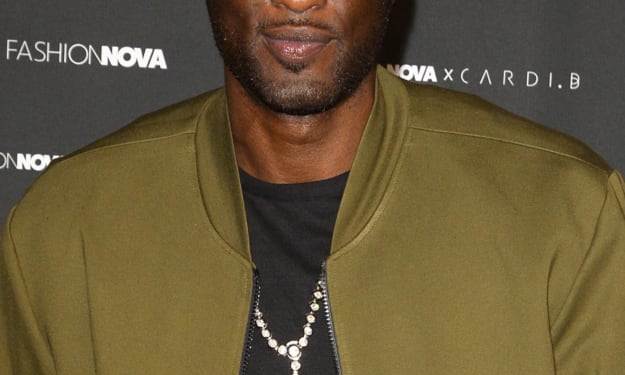
Lamar Odom DUI Arrest Article – Complete
Sober driving is the only rational way to drive on the roadways. NBA two-time champion Lamar Odom was picked up for driving under the influence, violating lane changing protocol, and for not maintaining his vehicle in his own lane.
By Skyler Saunders6 days ago in Unbalanced
Autonomy Is The Real Privilege
Good morning, freedom-seekers! Today we’re gonna be looking at autonomy. A strange word, I know; one many would probably look at blankly and run away from on sight. We’re gonna figure out what it actually means, consider how it’s achieved, and decipher just how deeply most of us are tangled up in dependence without realising it.
By That ‘Freedom’ Guy4 days ago in Humans


Comments
There are no comments for this story
Be the first to respond and start the conversation.