
Jeff Hafley and the Dolphins: A Discipline-First Reset
Breaking Down the 2026 NFL Coaching Carousel

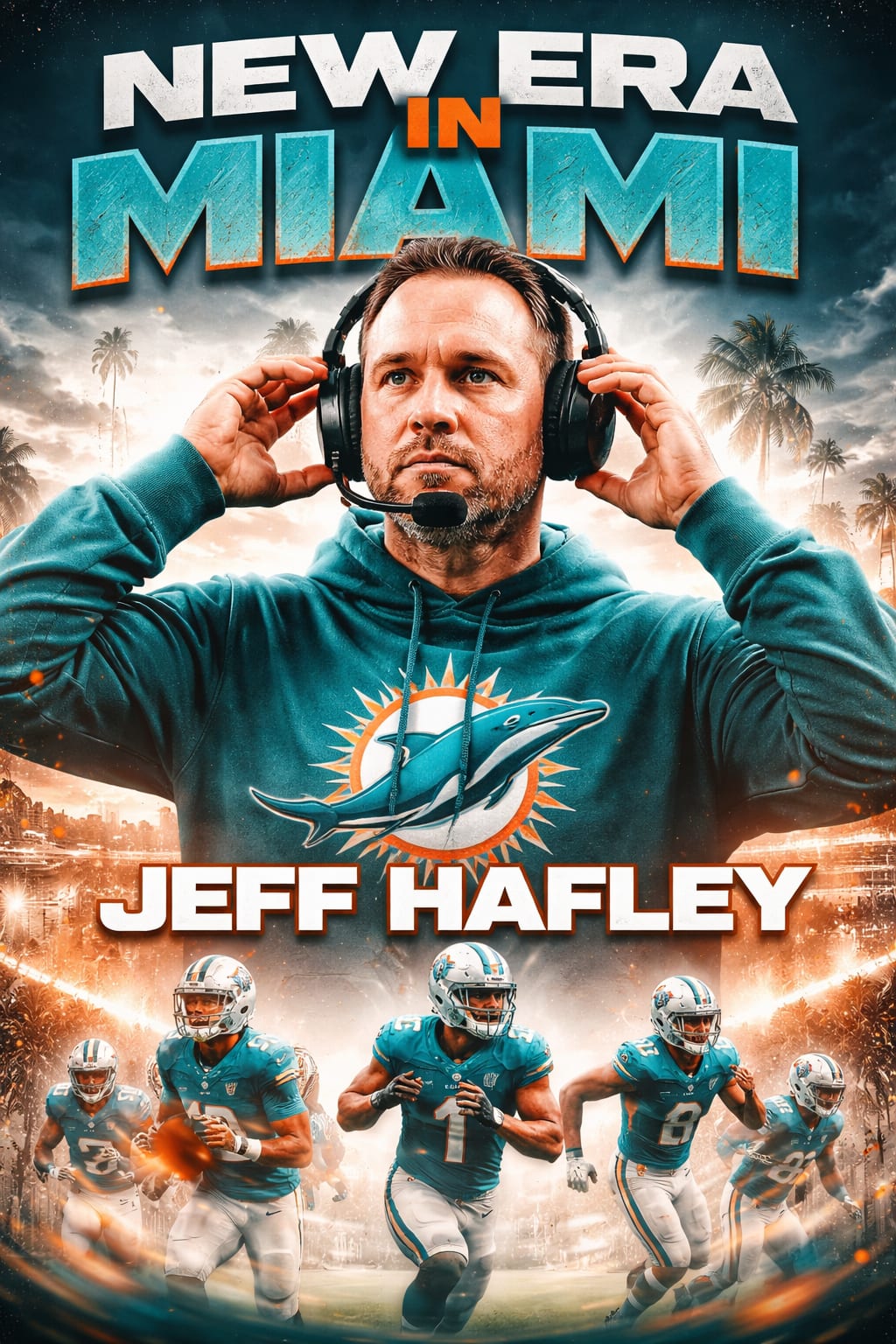
The Miami Dolphins’ decision to hire Jeff Hafley as their head coach is less about immediate results and more about signaling a structural reset. This is a team that has chased “quick fixes” at quarterback for several years, only to find itself perpetually underperforming despite high-end talent on both sides of the ball. Hafley’s hire signals a pivot: a move toward discipline, accountability, and a potential rebuild, rather than an attempt to squeeze another win-now season out of a roster that has plateaued.
Hafley’s résumé is unconventional for an NFL head coaching hire. He has never led a professional team before. His most recent NFL experience was as the defensive coordinator for the Green Bay Packers (2024–2025), where he oversaw a defense that ranked among the league’s top 10 in key categories, including total defense, scoring, and takeaways. Prior to that, he held defensive backs coaching positions with multiple NFL franchises, including the 49ers, Browns, and Buccaneers. His only prior head coaching experience was at Boston College from 2020 to 2023, where he compiled a 22–26 record and led the team to three bowl games, including a Fenway Bowl victory in his final season. While he left voluntarily for the Packers, his tenure at Boston College was largely viewed as mediocre — competitive but never exceptional, with critics citing inconsistent performance and the challenges of recruiting and NIL management as hurdles he struggled to navigate.
In Miami, Hafley inherits a team that has consistently overperformed on paper but underdelivered on results, particularly at quarterback. Brian Flores’ tenure emphasized defense and toughness, producing a 24–25 record despite a talented roster. However, his relationship with Tua Tagovailoa was strained, limiting the team’s ceiling. The Dolphins then hired Mike McDaniel to emphasize offense and “unlock” Tua’s potential. Instead, the offense improved statistically but stagnated situationally, while Tua’s development plateaued and his performance in high-pressure games remained inconsistent. McDaniel’s firing after three seasons reflected the team’s recognition that the current quarterback-driven strategy was not producing results.
The pattern of moves clearly indicates a change in organizational philosophy. By hiring Hafley — a coach whose profile emphasizes defense, structure, and discipline — Miami is signaling that it is no longer prioritizing Tua as the centerpiece of its plan. Observers widely speculate that the Dolphins are preparing to move off Tua, potentially in favor of a younger, cheaper option, perhaps even the Packers’ backup quarterback who would be familiar with Hafley’s system. If that occurs, it effectively confirms that 2026 is intended as a transition or rebuild year, rather than a campaign focused on immediate contention.
Hafley’s strengths align with the type of reset the Dolphins need. He has a track record of instilling accountability and discipline in both college and professional players, and his defensive expertise can provide structure to a team that has struggled to perform consistently in key situations. He is not being brought in to elevate a struggling quarterback to elite status, but rather to stabilize a roster, instill a long-term culture, and prepare a younger core for sustained competitiveness. The trade-off, of course, is that this strategy likely comes with short-term growing pains; Miami fans should not expect a 10–12 win season immediately.
Critics may question whether a first-time NFL head coach with a largely underwhelming college record is the right choice for a roster that has legitimate talent and playoff expectations. The concern is valid: Hafley will be tested in ways he never has been before, particularly in managing a high-expectation locker room and making in-game adjustments at the professional level. Unlike John Harbaugh’s Giants hire, where Harbaugh brought decades of proven NFL head coaching experience, Hafley is stepping into a high-pressure role that leaves little room for error. The stakes are amplified because the Dolphins’ front office appears willing to make bold personnel moves, including a likely quarterback change, which Hafley will be expected to execute smoothly.
That said, Hafley’s hiring does provide a clear vision. The Dolphins are no longer content to chase incremental improvements. They are moving deliberately toward a defense-first, discipline-first identity that prioritizes long-term competitiveness over immediate results. This approach acknowledges that the current quarterback situation has reached its ceiling and that rebuilding under a coach who can establish structure and accountability may be the fastest path back to meaningful contention. In other words, 2026 is not about Tua or McDaniel-era offensive schemes — it’s about resetting Miami’s culture, evaluating talent, and creating a foundation for sustained success.
In the end, the Jeff Hafley hire signals a calculated pivot by the Dolphins. It is a recognition that the team has plateaued, that previous fixes have failed, and that long-term success requires a coach who can prioritize discipline, manage a rebuilding roster, and prepare the organization for the future. Whether this strategy succeeds depends on Hafley’s ability to adapt quickly to the professional game, manage expectations, and make the tough personnel decisions that a reset requires. If the Dolphins move off Tua and embrace a short-term rebuild, Hafley’s tenure will be the defining start of a new chapter — one that prioritizes structure over flash, preparation over improvisation, and long-term competitiveness over immediate wins.
About the Creator
Logan M. Snyder
https://linktr.ee/loganmsnyder
Keep reading
More stories from Logan M. Snyder and writers in Unbalanced and other communities.
From Chaos to Contender at the Right Time
The New York Giants’ decision to hire John Harbaugh may not have generated the loudest headlines of the offseason, but it might end up being one of the most consequential moves any franchise made. This is not a gamble on upside or a bet on novelty. It is a calculated investment in stability, culture, and long-term competitiveness—three things the Giants have lacked since their last Super Bowl era.
By Logan M. Snyder4 days ago in Unbalanced
Wild Card Weekend Recap: What Happens Now?
I think I figured out why I love Wild Card Weekend so much. It's because it's the first playoff anything of the calendar year. The NFL season starts in the fall, and once upon a time, the champion was crowned either on or slightly before New Year's. The evolution of the NFL schedule has resulted in the playoffs starting just into the New Year, and currently, the final week of the season falls on the first weekend of the New Year, with Wild Card Weekend coming a week after that. So yes, chronologically, the NFL's Wild Card Weekend serves as the first playoff anything of the calendar year.
By Clyde E. Dawkins14 days ago in Unbalanced
Denver Broncos: Team Overview, History, and Current Direction
The Denver Broncos are one of the most recognized franchises in the National Football League (NFL). Based in Denver, Colorado, the team competes in the American Football Conference (AFC) West division. Since joining the NFL, the Broncos have built a reputation shaped by competitive seasons, notable players, and periods of rebuilding. This article provides a clear overview of the Denver Broncos, focusing on team history, performance trends, and organizational direction.
By Saad a day ago in Unbalanced
Affection and Healing for Yourself
During the night of the last quarter moon, I gathered my ritual supplies. I carefully handled the chunk of black tourmaline that would protect me from your overall negative and narcissistic energy. I carefully walked the house with my stick of selenite in hand, asking the universe to cleanse our working space.
By Alisha Wilkins ✒️🦋🖋️7 days ago in Fiction



Comments
There are no comments for this story
Be the first to respond and start the conversation.