
From Chaos to Contender at the Right Time
Breaking Down the 2026 NFL Coaching Carousel


The New York Giants’ decision to hire John Harbaugh may not have generated the loudest headlines of the offseason, but it might end up being one of the most consequential moves any franchise made. This is not a gamble on upside or a bet on novelty. It is a calculated investment in stability, culture, and long-term competitiveness—three things the Giants have lacked since their last Super Bowl era.
Harbaugh’s résumé speaks for itself, but what makes it especially compelling is how it began. When the Ravens hired him in 2008, he had no head coaching experience and was not an offensive or defensive play-caller. That raised eyebrows at the time, yet it proved to be his greatest strength. Harbaugh was never hired to impose a scheme; he was hired to lead an organization. Over the next 18 seasons, that philosophy produced one of the most consistently successful franchises in the NFL.
Under Harbaugh, Baltimore won 61.4% of its regular-season games and 54.2% of its playoff games—numbers that place him firmly among the most reliable head coaches of the modern era. More importantly, that success spanned multiple roster constructions and quarterback eras. Harbaugh developed a rookie Joe Flacco into a Super Bowl–winning quarterback, then later oversaw one of the most dramatic offensive evolutions in league history with Lamar Jackson. Very few coaches manage to survive one philosophical shift; Harbaugh thrived through several.
The Flacco years are particularly relevant to the Giants’ current situation. Harbaugh did not rush Flacco into being something he wasn’t. Instead, he built a team that protected him early, leaned on defense and special teams, and gradually expanded the offense as the quarterback matured. The result was not just sustained success, but one of the greatest postseason quarterback runs ever in 2012. That type of patient, adaptive development is exactly what the Giants need as they turn the page with a promising young quarterback of their own.
This is where the hire becomes especially intriguing. Harbaugh is not walking into a teardown. He inherits a roster with room to build, meaningful cap flexibility, and a quarterback situation that offers genuine hope rather than desperation. That combination matters. Coaches with Harbaugh’s stature tend to choose situations where they can shape outcomes rather than merely survive them, and the Giants clearly sold him on both autonomy and vision.
The surprise for many observers was not that Harbaugh landed another head coaching job, but that he chose New York over other openings. That decision suggests confidence—not just in ownership’s commitment, but in the competitive landscape. The NFC East, despite its reputation, is not a dominant division. Dallas remains talented but perpetually volatile. Philadelphia is still strong but aging in key areas and no longer invulnerable. Washington has promise but has yet to prove it can sustain success. There is no entrenched dynasty blocking the path.
For context, the Giants have not won the NFC East since 2011. That drought is striking, but it also highlights opportunity. Divisions defined by instability tend to reward teams that prioritize discipline, coaching continuity, and situational excellence—areas where Harbaugh’s teams have always excelled. He does not rely on gimmicks or unsustainable peaks. His teams win by being prepared, physical, and mentally resilient, especially in close games.
Critics will point to Baltimore’s recent playoff frustrations as evidence that Harbaugh’s ceiling has lowered. That interpretation ignores the reality of organizational cycles. The Ravens did not fire Harbaugh because he failed; they moved on because they believed the partnership had run its course. That distinction matters. Long tenures naturally accumulate philosophical tension, postseason fatigue, and diminishing marginal returns. A reset benefits both sides.
For the Giants, the upside is clear. Harbaugh brings instant credibility, a proven developmental track record, and the kind of leadership that stabilizes a franchise from top to bottom. He understands how to build teams that travel well, handle adversity, and peak at the right time—qualities that become magnified in January football.
This will not be an overnight transformation. Year one will be about establishing standards and competitiveness. Year two should bring legitimate playoff contention. By year three, it is entirely reasonable to expect the Giants to be in the conversation for NFC East supremacy. Given the division’s volatility and Harbaugh’s history, winning the NFC East for the first time since 2011 is not a stretch—it is a realistic benchmark.
In an era obsessed with innovation and flash, the Giants made a grown-up hire. Those are often the ones that age the best. If New York returns to sustained relevance—and eventually, to Super Bowl contention—this move will be remembered as the moment the franchise chose leadership over noise.
About the Creator
Logan M. Snyder
https://linktr.ee/loganmsnyder
Keep reading
More stories from Logan M. Snyder and writers in Unbalanced and other communities.
A Change at Quarterback and a Tougher Path
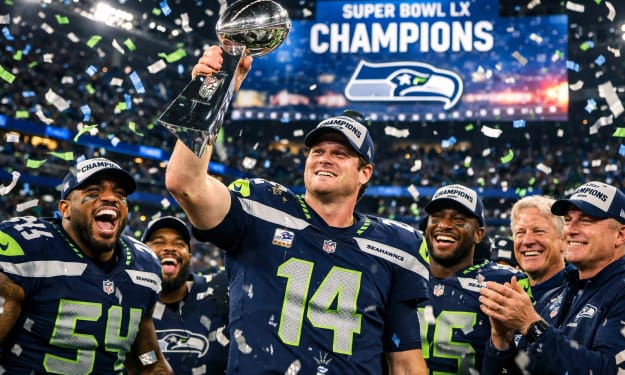
On February 8, 2026, the Seattle Seahawks etched their place in NFL history in a dominant all-around performance, defeating the New England Patriots 29-13 in Super Bowl LX. What made this victory especially compelling wasn’t just that Seattle hoisted the Lombardi Trophy — it was how they did it, and how contrasting paths to the Super Bowl highlighted the impact of personnel moves, especially at the most important position in sports. 
By Logan M. Snyderabout a month ago in Unbalanced
Impressive Raducanu into Indian Wells Third Round
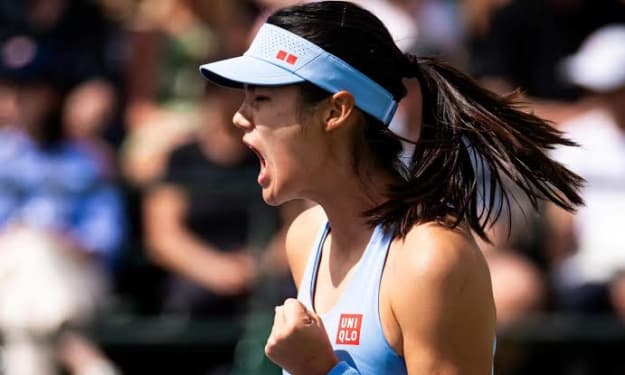
British tennis star Emma Raducanu produced one of her most confident performances of the season to reach the third round of the prestigious Indian Wells Open, defeating Russia’s Anastasia Zakharova in straight sets. The victory, achieved with a commanding 6–1, 6–3 scoreline, marked another step forward for the 23-year-old as she continues her resurgence on the WTA Tour. Raducanu entered the tournament looking to build momentum after a mixed start to the year. The former US Open champion has endured several challenging seasons since her remarkable breakthrough victory in New York in 2021, dealing with injuries, coaching changes and fluctuating form. Yet in the Californian desert she looked composed, focused and determined, displaying the aggressive baseline tennis that first propelled her into global stardom. From the opening game against Zakharova, Raducanu dictated the tempo of the match. Her powerful forehand and sharp return game put immediate pressure on the Russian player, who struggled to match the Briton’s pace and consistency. Raducanu quickly broke serve and surged to a 4–0 lead in the first set, drawing loud applause from the crowd at the Indian Wells Tennis Garden, one of tennis’s most iconic venues. The British player’s movement around the court was particularly impressive. Sliding confidently across the hard court surface, Raducanu chased down several difficult balls and turned defense into attack with remarkable efficiency. Observers noted that her fitness and court coverage appeared significantly improved compared to earlier tournaments this season. Zakharova attempted to regroup in the second set, briefly matching Raducanu in longer rallies. However, the British star maintained her composure, breaking serve again midway through the set to seize control of the match. Her serve, often considered a developing part of her game, proved reliable when it mattered most, allowing her to close out the contest without facing serious pressure. For Raducanu, the victory was more than just progression to the third round—it represented growing confidence in her game and a sign that her training adjustments are beginning to pay off. After the match, she acknowledged that consistency has been a major focus of her recent preparation. “Tournaments like this are about building momentum,” Raducanu said. “I’m trying to play each point with clarity and enjoy the competition. The support from the crowd really helped me today.” Indian Wells is widely regarded as one of the most prestigious tournaments outside the four Grand Slams. Often described as the “fifth Grand Slam,” the event attracts the world’s best players and draws massive global audiences. For Raducanu, a strong run here could provide valuable ranking points and renewed confidence as the season progresses toward the clay-court swing and eventually the summer Grand Slams. Tennis analysts believe Raducanu’s biggest strength in this match was her tactical discipline. Instead of rushing points or forcing risky winners, she constructed rallies patiently, waiting for the right moment to attack. This mature approach reflected the lessons she has learned since bursting onto the professional scene as a teenager. The Briton’s next challenge will come against American Amanda Anisimova, a powerful hitter known for her aggressive style. The matchup promises to be one of the most intriguing contests of the round, as both players possess the ability to dominate rallies from the baseline. For British tennis fans, Raducanu’s performance in Indian Wells is an encouraging sign. While expectations around her career have often been immense, the young star continues to evolve and adapt on the tour. With improved physical conditioning, growing tactical awareness, and the confidence gained from victories like this, Raducanu appears determined to reestablish herself among the elite players in women’s tennis. If her performance against Zakharova is any indication, the former Grand Slam champion may be rediscovering the fearless tennis that once captivated the sporting world. As the tournament continues under the bright desert sun, Raducanu’s journey at Indian Wells is quickly becoming one of the most compelling stories of the event.
By Fiaz Ahmed 7 days ago in Unbalanced
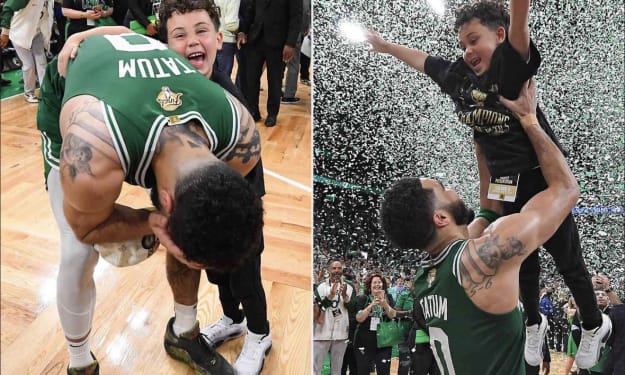
Jayson Tatum says he’s returning ‘without fear’ as Celtics star shines in first game after devastating injury
The way through anything is sometimes through everything. Working through the pain, playing through scoring droughts, making a way through self-doubt and not ceding to mental strain are all part of what makes Jayson Tatum a superstar.
By Skyler Saunders6 days ago in Unbalanced

Comments
There are no comments for this story
Be the first to respond and start the conversation.