
Game 163, We Hardly Knew (and Saw) Ye
A tribute to the MLB Tiebreaker, also known as Game 163

We're in the month of September, which is the pivotal final month of MLB's regular season. So with that, I think it's time that I finally do what I had planned on doing for a few years now. This story is a long overdue elegy of an underseen, underrated, yet amazing attribute to the sport of baseball: the tiebreaker.
The tiebreaker, also known as "Game 163" since MLB fully switched to a 162-game season in 1962, is the bonus game (or games) needed to decide an important position in MLB's postseason. If after 162 games, at least two teams finished tied for first place, bonus games were played between said teams for that important placement. This made MLB stand out above the other three main leagues, as the NBA and (especially) the NFL relied on internal tiebreakers, while the NHL's points system made identical ties in the standings impossible. In MLB, if there were ties or important positions, they settled it on the field.
In over a century, we only saw 16 instances where tiebreakers were needed. Though the tiebreakers had that playoff feel, they were counted as extensions of the regular season. Everything in the games were added to the regular season numbers and the standings, meaning that some batters had chances to win batting titles or even the Triple Crown. So here is a look at the 16 tiebreakers that took place, divided into eras:
Classic World Series (1903-1968)
During the 66 seasons played where the World Series served as the only bit of postseason play, the tiebreaker only came into play if after 154 games, there was a tie for the pennant. Back during that era, however, the leagues had different tiebreaker formats. In the National League, the tiebreaker was a best-of-three series, which served as Games 155, 156, and if needed, 157. In the American League, the tiebreaker was one single game.
The first-ever tiebreaker took place in 1946 between the St. Louis Cardinals and the Brooklyn Dodgers, who finished with identical 96-58 records. The Cardinals swept the series two straight to win the National League pennant, and they would defeat the Boston Red Sox in that year's World Series. Two years later, the American League race ended with the Red Sox and the then-named Cleveland Indians tied for first, and in the tiebreaker, Cleveland won, 8-3, to win the pennant, and they defeated the Boston Braves to win their most recent World Championship to date.
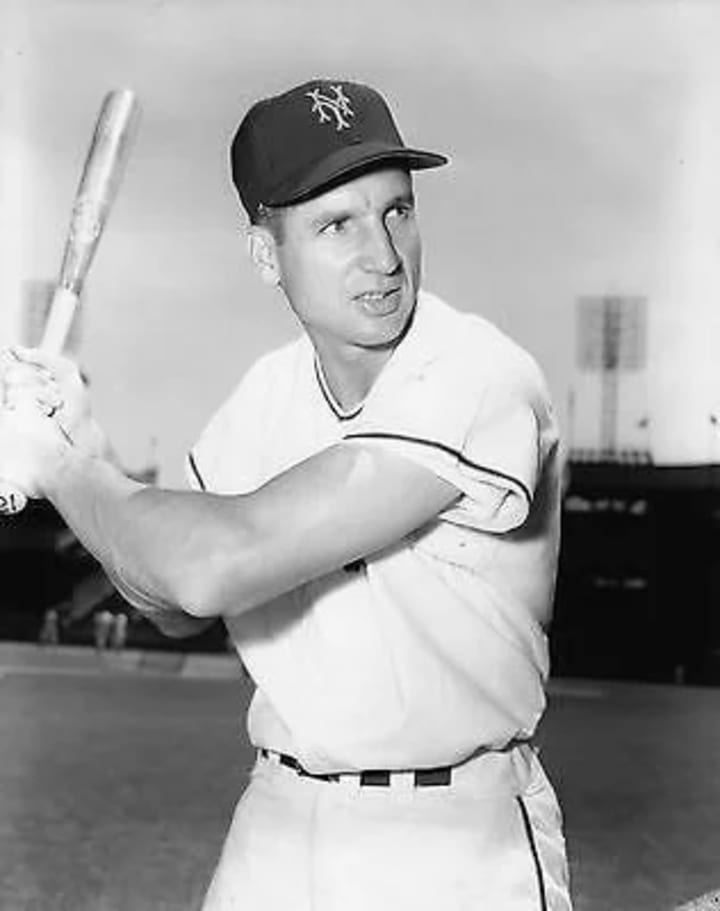
The classic era had the first five tiebreakers, with four of them in the National League, while 1948 featured the only American League tiebreaker. The most known of the five was the famous 1951 National League tiebreaker between the Dodgers and the New York Giants, with the Giants taking Game One at Ebbets Field, but getting blasted in Game Two at the Polo Grounds. The Polo Grounds hosted the deciding Game Three, and that ended with Bobby Thomson's walk-off three-run homer, dubbed "The Shot Heard 'Round the World," sending the Giants to the World Series, where they were defeated by the Yankees.
The last two tiebreakers took place in 1959 and 1962, and both featured the Dodgers. In 1959, the Dodgers (in their second season in LA) swept the National League tiebreaker over the Milwaukee Braves, and went on to defeat the Chicago White Sox in the World Series. Three years later, it was the Dodgers and Giants (the latter in their fifth season in San Francisco) again, and the Giants won the pennant in three again. And similar to 1951, the Giants lost the World Series to the Yankees.
Divisional Play & League Championship Series (1969-1993)
In 1969, the growing expansion led MLB to divide the American and National Leagues into two divisions--West and East, which also marked the birth of the League Championship Series, which served as the first-ever playoff round and was contested between the Eastern and Western winners in each league. Regarding the tiebreaker, it would now be needed in the event of a tie for first place in the division, and it's a single game tiebreaker all around.
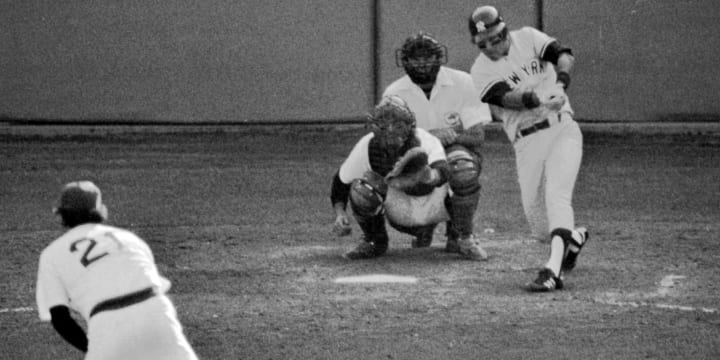
This period featured one of the most legendary tiebreaker moments in baseball history. The year was 1978, and the Red Sox had a massive 13.5 game lead in the American League East over the Yankees. In a matter of about seven or eight weeks, the Yankees were ahead, but the season ended with the teams tied atop the division at 99-63. The two teams met in the tiebreaker on October 2 of that year, and of course, it would be the day where Bucky Dent would etch his name into the rivalry's rich history, hitting the homer that would be the difference. The Yankees won, 5-4, our 100th win of the season, taking the East and going on to win the pennant and the World Series that year.
The only other tiebreaker during this era came two years later in 1980, and it was the National League West that was up for grabs. The Houston Astros and the Los Angeles Dodgers finished tied with identical 92-70 records, and the game at Dodger Stadium saw the Astros win, 7-1, to take the division. Yes, folks, once upon a time, the Astros defeated the Dodgers fair and square in a postseason setting. Houston would lose the NLCS to the eventual World Champion Philadelphia Phillies.
Wild Card & Division Series (1995-2011)
1994 saw the divisions realigned and increased from two in each league to three, as a few teams from the West and East formed Central Divisions. This led to the postseason format changing as well, as with three divisions, MLB added a fourth playoff team known the Wild Card, which resulted in the birth of the Division Series. We would see the Division Series officially debut in 1995 due to 1994 being strike-shortened. Regarding Game 163, it would be needed not only for division titles, but also for the lone Wild Card spot as well. However, there was an added wrinkle with this format. Regarding division tiebreakers, the extra game would only be needed if only one of the teams involved could qualify for the postseason. In other words, it had to be a pure elimination game. If both teams were playoff bound, the game is not needed, and internal tiebreakers determined who would be the division champion and who would be the Wild Card.
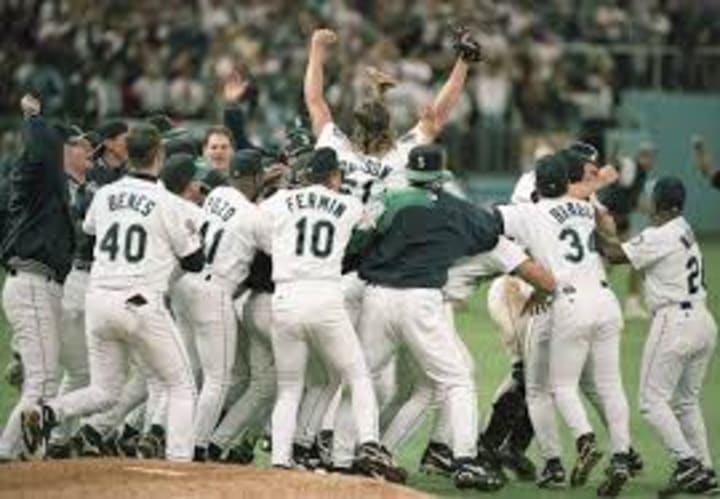
This era featured the most tiebreakers, as six were played. 1995 was the first one, and in this case, it was Game 145, as 1995 was a 144-game season. The Seattle Mariners (who actually faced possible contraction entering that year) finished tied with the California Angels atop the AL West, and the game was played in Seattle--the memorable game that saw Randy Johnson pitch a dominant complete game and lead Seattle to a 9-1 win. The AL West title that came with that victory marked Seattle's first-ever postseason appearances, and they went all the way to the ALCS, where they were ousted by Cleveland.
1998 featured the first Wild Card tiebreaker, and it was the Chicago Cubs facing the San Francisco Giants in the extra game. I remember this vividly, especially since 1998 was the year of the big home run race between Mark McGwire and Sammy Sosa (which later became clouded due to the whole "steroids" thing), but Sammy's Cubs were on the verge of the postseason. Cubs won 5-3 to get that Wild Card spot, only to be defeated by the Braves in the NLDS. The NL Wild Card needed Game 163 again a year later, this time it was the New York Mets and the Cincinnati Reds playing for that spot. The Mets blanked the Reds in the extra game, and turned that into an NLCS appearance, only to fall in six against the Braves.
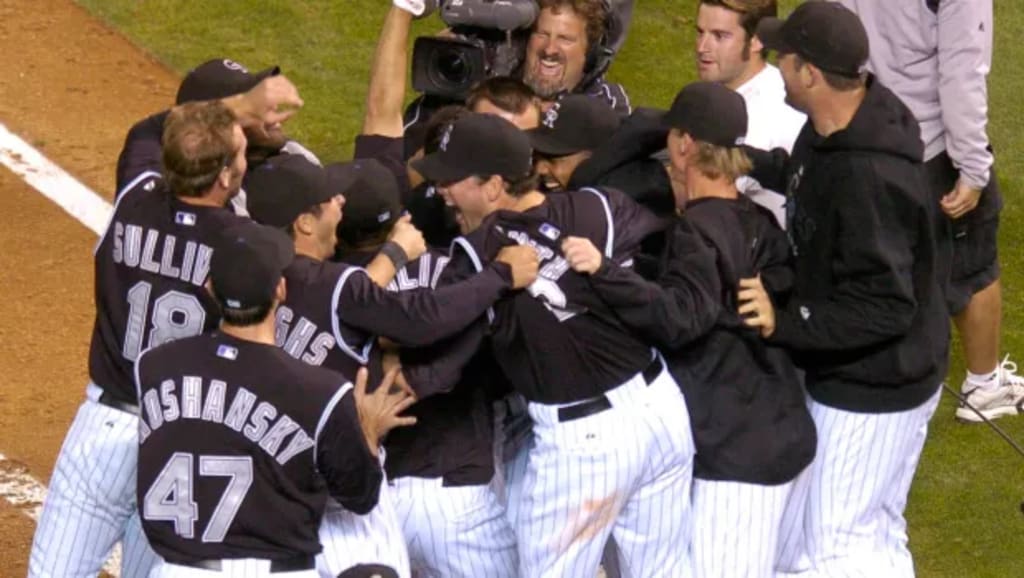
It would be eight years before another Game 163 would be played, and that's where the main photo comes in. 2007 was a wild year in the National League. That was the year that Philadelphia's rise began, but mainly, the San Diego Padres and the Colorado Rockies were in a tight race for that NL Wild Card. After 162 games, they were tied, leading to the clubs facing off in Coors Field on October 1, 2007. The game was historic for the network that aired it: TBS. That was the year that TBS truly went national with their MLB coverage, as they had only been the Braves network for so long. The game went 13 innings, and saw the Rockies down 8-6 in the bottom half of the inning, but they would score three in the inning, with the winning run scored by Matt Holliday, though some still say Holliday didn't touch the plate.
That began a dream run for the Rockies. They won that Wild Card and went on to sweep their way to their first pennant in franchise history, but they were swept in the World Series by the Red Sox. The 2007 season was the first of three straight seasons to feature Game 163, as both 2008 and 2009 had the extra game in the American League Central. In 2008, it was the Minnesota Twins and the Chicago White Sox, and I recall the White Sox had to play a makeup game to get this one. The White Sox, a half game out, defeated the Tigers in the makeup game to end up tied with the Twins, and in Game 163, the White Sox blanked the Twins 1-0. Chicago ended up ousted by the Rays in the ALDS. 2009 was the memorable game between the Twins and Tigers, which served as the final regular season game played in Minneapolis' Hubert H. Humphrey Metrodome. It was an extra inning thriller that the Twins won, 6-5 in a dozen innings, but they would be swept in the ALDS to the eventual World Champion Yankees.
Double Wild Card (2012-2021)
Following an insane ending to the 2011 season, MLB decided to add a second Wild Card in each league, increasing the overall total of playoff teams to 10. With two Wild Cards in each league, that resulted in the debut of the new opening round, the Wild Card Game, in 2012. In each league, the two Wild Cards, seeded #4 and #5, would face each other in a single game playoff round, while the three division winners all advanced to the Division Series. The winner of the Wild Card Game advanced to face the #1 seed in the Division Series, and to make things easier, MLB eliminated the caveat prohibiting division rivals from facing each other in Division Series.
Regarding the rules for the tiebreaker, that changed as well. Now, tiebreaker games for division titles would take place simply if needed, regardless if it was winner take all or not. This means that even if both teams involved qualified for the postseason, they would play that extra game, with the winner taking the division while the defeated team played in the Wild Card Game.
In this era, the first time a tiebreaker was needed was in 2013, and I remember this race. It was a close Wild Card race in the American League between Cleveland, Tampa Bay, and Texas. After 162 games, Cleveland finished at 92-70 and locked in one Wild Card spot. The Rays and Rangers were both 91-71, meaning that they would face each other for that second spot. The game took place in Arlington on September 30, 2013, and it saw the Rays victorious, winning 5-2 to advance and continue the Rangers' downward spiral--going from back-to-back pennant winners in 2010 and 2011, to blowing the AL West late and losing the Wild Card Game in 2012, to being eliminated in Game 163 in 2013. As for the Rays, the Wild Card Game was as far as they went, as Cleveland defeated them in that game.
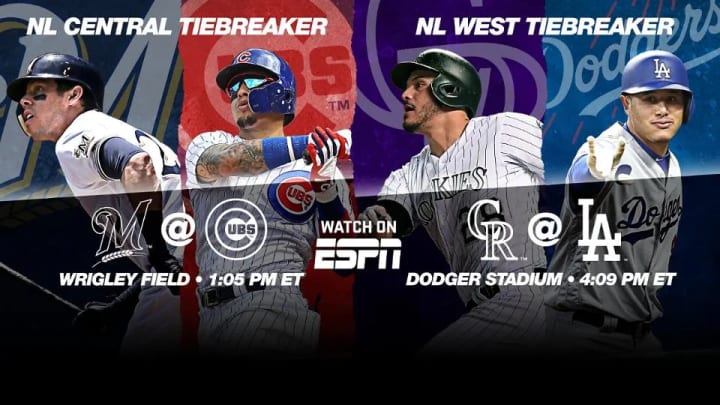
And then there's the 2018 season. It was wild. I remember the Yankees being a 100-win Wild Card who defeated the A's in that game. But what really stood out was the National League. The Braves won the NL East for the first time since 2005, but that was the only certainty. After 162 games, the Brewers and Cubs finished tied for first in the NL Central at 95-67, while the Dodgers and Rockies were even at 91-71. So for the first and only time, two tiebreaker games took place. Even crazier, all of the teams I mentioned qualified for the postseason, so the defeated teams would face each other in the one-and-done Wild Card Game.
The games took place on October 1, 2018, and they both aired on ESPN back-to-back. First was the NL Central Championship in Wrigley. The Cubs (two years removed from their dream championship season) had the home field, but it would be the Brewers who won it, 3-1. Next up was the NL West Championship, with the game emanating from Dodger Stadium. The Dodgers defeated the Rockies, 5-2, winning the NL West, while the Rockies came the closest to winning a division title for the first time in franchise history. As a result, the Cubs and Rockies ended up clashing in the NL Wild Card Game, which was won by the Rockies in extras in Wrigley. The Brewers ousted the Rockies in the NLDS, while the Dodgers defated the Braves in their series. The NLCS saw the two Game 163 winners clash, with the Dodgers winning in seven, only to lose the World Series to the Red Sox.
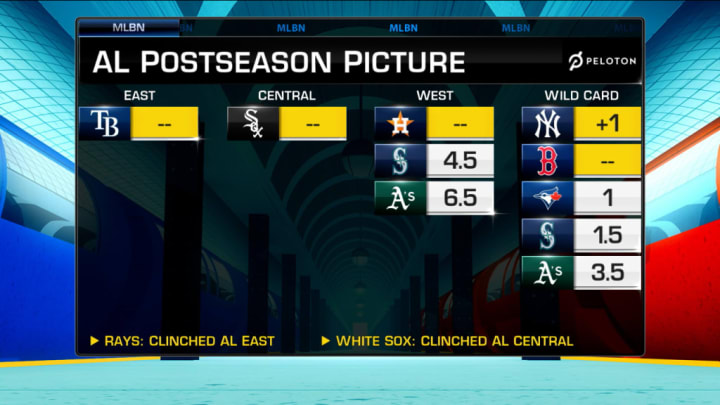
I have to mention 2021, which I remember not only as a Yankees fan, but also as an overall fan of chaos in sports. Tiebreaker rules did allow adjustments if three or even four teams were knotted up for at least one spot. I do recall a close call in 2017, but 2021 was immensely chaotic. The final week saw the Yankees, Red Sox, Blue Jays, and Mariners all in a close battle, and even the final day threatened the possibility of at least three teams tied for both Wild Card spots.
The rules in these scenarios were as follows. A three way tie for one Wild Card spot would result in the three teams requested to choose between designations A, B, or C. Team A would host Team B in one game, and whoever wins would host Team C for the one spot. If the three way tie is for both Wild Card spots, then that changes a bit. Team A hosts Team B for one spot. Winner gets it, losing team hits the road to face Team C for the other spot. A four way tie for both spots would see Team A host Team B, and Team C host Team D. The two winners get the spots. We would not see a Game 163 or Game 164, because the Yankees and Red Sox both won on the final day to clinch Wild Card spots.
* * *
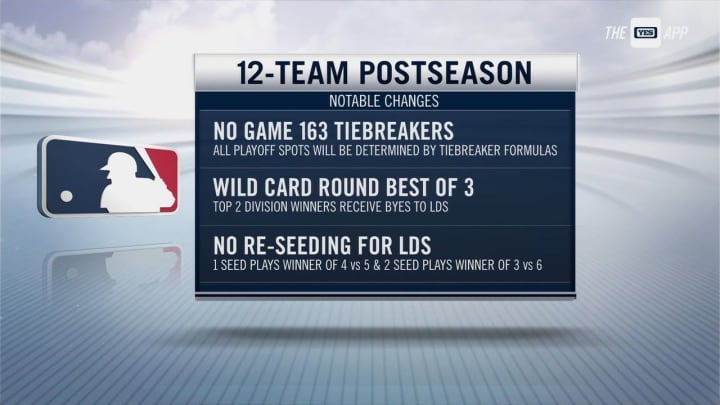
During a very brief lockout prior to the start of the 2022 season, a number of changes were announced. MLB changed their playoff format to the current version that allows three Wild Cards in each league. As part of the new format, MLB eliminated Game 163. No more tiebreakers settled on the field. It sucks, it does, but I'll be honest, as much as I loved the rare extra games, this was a necessary sacrifice. We currently have a 12-team bracket kicked off with a best-of-three Wild Card Series, a needed extension of the original single game Wild Card opening round. More teams have a chance. The Wild Card round has margin for error. I'll be honest, I can see the Wild Card extended again to best-of-five in due time. But yes, the result is a much wilder and more open postseason.
Even though I have no complaints over Game 163 being no more, I do still miss it. I've seen some crazy tiebreakers over the years. 1995 was very memorable. The Rockies winning in 2007 was absolutely epic. The AL Central game in 2009 marked the end of an era in Minnesota, and seeing two such games in 2018 was legendary! Game 163 may have been rare and hardly needed, but when it was needed, when it was necessary, it was truly fantastic.
About the Creator
Clyde E. Dawkins
I'm a big sports fan, especially hockey, and I've been a fan of villainesses since I was eight! My favorite shows are The Simpsons and Family Guy, etc.
Keep reading
More stories from Clyde E. Dawkins and writers in Unbalanced and other communities.
CFL Week 14 Recap: Getting Down to Business
The week after Labour Day Weekend in the CFL is always interesting. For one, that week sees some of the rivalry matches from that previous week take place again, this time with the home field switching. Secondly, and more importantly, it marks the conclusion of the heart of the schedule, the middle seven weeks of the season, meaning that there's just seven weeks remaining after that aftermath week.
By Clyde E. Dawkins4 months ago in Unbalanced
China Asks Companies to Stop Using US and Israeli Cybersecurity Software
China has told many of its companies to stop using cybersecurity software made by firms from the United States and Israel, according to people familiar with the matter. This move shows how serious China is about protecting its data and reducing its reliance on foreign technology. It also highlights the growing technology and political tensions between China and Western countries.
By sehzeen fatima3 days ago in Unbalanced
A Grand Night for James
It can be said that the 2025-26 season has been a bit magical for Northland senior point guard Diante James. Not only is he hitting buzzer beaters and game-winning shots on a seemingly weekly basis, he added a new accomplishment to his basketball resume.
By Winners Only3 days ago in Unbalanced



Comments
There are no comments for this story
Be the first to respond and start the conversation.