
Dodgeball
Beyond the Court: The Cultural Impact of Dodgeball

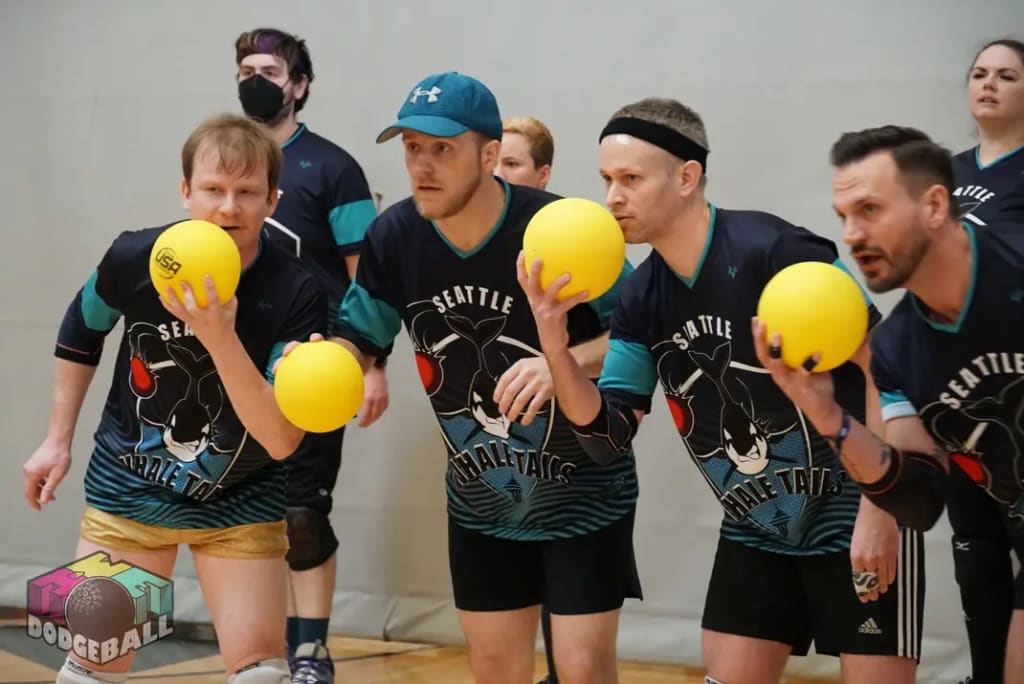
Dodgeball will continue to become the next up and coming sport. The athleticism, pace of game, team element and unpredictable nature makes it a potential hotspot for mass viewership, both at a national level and international level. Dodgeball is evolving from the depths of niche sports, to the focus of crafting itself into a mainstream sport. The World Dodgeball Federation (WDBF) has experienced significant growth since its establishment in 2011. Originally formed by representatives from countries including Canada, Malaysia, New Zealand, Romania, Singapore, Sweden, the United States, and the United Kingdom, the WDBF has seen a steady increase in member nations and global participation.
Dodgeball origins come from Africa, where tribes would use rocks and to brutally injure opponents in a test of war. It would test a tribe's endurance and strength and also make those on the same tribe communicate and work together. From there it transformed into a game used with a ball. The ball was leather and players would only be out when they were finally knocked to the ground with the ball. It was a man named Phillip Ferguson who is credited to the birth of modern day dodgeball.
In recent history, the World Dodgeball Federation (WDBF) has emerged as the largest governing body for dodgeball. By 2017, the WDBF had expanded to include ten new member nations, bringing its total to 17. This growth accelerated significantly in the following years, with membership more than doubling to 34 in 2018 and reaching 63 member countries by 2019. The addition of the European Dodgeball Federation further fueled this rapid expansion.
The WDBF has also elevated the scale and prominence of its World Championships. The 2022 World Championships in Edmonton, Canada, marked the largest event to date, featuring 67 teams from 15 countries. Expectations are high for the 2024 World Championships in Graz, Austria, anticipated to break records with participation from over 100 teams representing more than 30 countries.
This growth is a testament to dodgeball’s rising popularity and organizational success on a global scale. Yet, one key element of the sport is often overlooked. While increased popularity is valuable, it is not the key to unlocking dodgeball’s full potential.
What will truly propel dodgeball to new heights is its impact on society. This influence has the power to elevate dodgeball nationally and globally. Sports have always been a reflection of society and culture, offering a lens through which we view societal challenges, unity, and healing. Sports give a platform to those whose voices might otherwise go unheard, creating and maintaining spaces where communities come together, and issues can be addressed.
Sports have always been more than just games; they are a reflection of society's values, struggles, and triumphs. Athletes, often seen as role models, use their platforms to address societal issues, break down barriers, and inspire change.
Consider the iconic figure of Muhammad Ali, who refused to be drafted into the Vietnam War. His stance, rooted in his beliefs and principles, sparked a global conversation about civil rights and the Vietnam War itself. Or take the case of the U.S. women's soccer team, who fought for equal pay, highlighting the persistent gender pay gap in sports. These are just a few examples of how sports can be a catalyst for social change.
The recent inclusion of breakdancing in the Olympics is another testament to the evolving nature of sports. This move reflects the growing recognition that culture and the power of dance can inspire and unite people. It also challenges traditional notions of what constitutes an Olympic sport, opening doors for other non-traditional disciplines.
In conclusion, sports are not merely a form of entertainment; they are a powerful tool for social commentary and change. By examining the intersection of sports and society, we can gain a deeper understanding of the issues that shape our world. As sports continue to evolve, they will undoubtedly play an increasingly important role in shaping the future of our society.
Dodgeball is no exception. A sport often overlooked, possesses a unique blend of accessibility, inclusivity, amateurism and strategic depth. This combination has the potential to revolutionize the sports world and elevate dodgeball to a mainstream platform.
The sport's inclusive nature is a defining characteristic. It welcomes players of all ages, genders, and physical abilities. Dodgeball's emphasis on skill and strategy, rather than sheer physical dominance, levels the playing field, allowing individuals of diverse backgrounds to excel.
The LGBTQ+ community has been instrumental in shaping dodgeball's inclusive culture. By creating safe and welcoming spaces, they have created a sense of belonging for many. Leagues like WeHo Dodgeball, founded by Jake Mason, exemplify this commitment to inclusivity. Mason's vision has not only transformed the sport but also inspired countless others to participate.
Mason has played a pivotal role in shaping the sport's inclusive culture. His creation of WeHo, a league renowned for its diversity and inclusivity, has set a new standard for the sport. Weho’s annual Sin City tournament, one of the largest in the United States, attracts participants from around the world, highlighting the global appeal of dodgeball.
Mason's passion for the sport ignited after a failed audition on a dodgeball game show. Hooked on the thrill of the game, he joined a local league in Southern California. Quickly becoming a dedicated player and later a league manager, Mason has been instrumental in shaping the landscape of dodgeball in the United States. His dedication to creating a welcoming community where everyone feels accepted has left a lasting impact on the sport.
Jake’s call to leadership was in response to being told that "gays don't play sports," within the World Dodgeball Society (WDS). Mason was inspired to challenge this stereotype. California's Proposition 8, a law that banned same-sex marriage in 2008, fueled Mason to create WeHo, now one of the largest local dodgeball social league in the United States.
WeHo serves as a safe and inclusive space for LGBTQ+ individuals and their allies. This league has become a model for diversity and inclusion within the sport, demonstrating that anyone, regardless of their sexual orientation or gender identity, can participate and excel in dodgeball.
In 2018, Mason founded USA Dodgeball and created the Premier tour league. A national league that focused on prioritizing gender equality. This changed the number of required women on the court from two to three, and also changed rules that were viewed as misogynistic.
Jake's journey to transform dodgeball has not been without its challenges. He faced significant burnout and toxicity within the community, particularly after the covid pandemic. Unrealistic expectations and constant demands, often directed at him as a volunteer, took a toll on his mental and emotional well-being.
The impact of dodgeball extended beyond the court, affecting his personal life. He met his fiancé, Brenden, through the sport, but their relationship was strained by the demands of dodgeball. Years were spent prioritizing the sport over their personal lives, leading to significant sacrifices, including delaying major life milestones like marriage proposals.
Jake Mason's impact on the dodgeball community is undeniable. He has created a space where countless individuals can come together, have fun, and build lasting friendships. His ability to bring people together and create a sense of community is a testament to his leadership and passion for the sport.
Mason's film production background adds a unique dimension to his approach to dodgeball. He understands the importance of entertainment and has infused the sport with energy and excitement. From organizing elaborate tournaments to choreographing team performances, like the iconic "Thriller" routine, Mason has elevated the experience of playing and watching dodgeball. Including producing events like the USA Dodgeball All-Star showcase on ESPN.
However, this leadership role has come with significant personal sacrifices. Mason has shouldered the burden of the community's expectations, often putting his own needs aside. As he himself has said, "Leadership isn't about being liked, it's about having the fortitude to say no and doing what's right for the collective." His unwavering dedication to the sport has been a driving force behind its growth and evolution.
Jake's leadership has paved the way for players of all levels to participate in the sport. Whether you're a beginner or a seasoned competitor, there are opportunities to play at various levels, from local leagues to international tournaments.
While focusing on the growth of the sport, Mason also addressed the political divisions within the dodgeball community, particularly regarding ball types. He emphasized that USA Dodgeball was not intended to fixate on a national team but rather a platform to unite the community and excel the sport's growth.
While most of the world primarily uses foam balls for dodgeball, the United States has its own unique approach to the sport. American dodgeball culture is characterized by the use of rubber balls, specifically the 8.5-inch pinch ball and the no-sting ball. And you can personally thank Jake for No-sting.
The no-sting ball, originally known as the "stay-puff" ball, is a distinctive feature of American dodgeball. Unlike the foam balls used internationally, no-sting balls offer a different playing experience, emphasizing teamwork and strategy due to their unpredictable bounce. It is also more accessible and could be argued as a ball better suited for entry level adults. This unique characteristic has led to a passionate debate within the dodgeball community about the ideal ball type.
Foam balls have become the international standard, but no-sting ball offers different advantages. Its accessibility, durability, and cost-effectiveness make it a more practical choice for many players. The ability to ship a larger quantity of no-sting balls in a smaller space is particularly beneficial for organizers and players. Additionally, the variability in the bounce and feel of no-sting balls can add an element of unpredictability to the game.
While foam balls offer a more standardized playing experience, the no-sting ball's unique qualities and accessibility make it a strong contender for a more prominent role in the international dodgeball community. As the sport continues to evolve, it is essential to consider the needs and preferences of players from diverse backgrounds. By embracing the diversity of ball types and playing styles, dodgeball can continue to grow and thrive on a national and global scale.
Jake Mason is pioneer in the United States dodgeball community and has been instrumental in shaping the sport's inclusive culture, particularly through his role in popularizing the no-sting ball and founding WeHo Dodgeball. However, the toxic elements within the community threaten to undermine the progress made. As the sport evolves, it's crucial to address the ego-driven behavior and infighting that can hinder its growth
We need to cut the bullcrap and support each other, regardless of the type of ball we throw. Let's stop stroking our egos and focus on growing the sport. We need to be ambassadors for dodgeball, challenging the status quo and pushing the boundaries of what's possible. If we don't, this sport will die.
Yarasheva Dilnoza's article, "Sports, Culture and Society," published in the American Journal of Social Sciences and Humanity Research, delves into the multifaceted relationship between sports and society.
The article explores how sports can shape character, promote ethical behavior, and contribute to social development. It highlights the importance of fair play, respect, and integrity in sports, emphasizing that athletes and other stakeholders should strive to be positive role models. Additionally, the article discusses the impact of sports on cultural identity and social cohesion. Ultimately, the article argues that sports can be a powerful force for good, promoting positive values and contributing to a better society.
Dodgeball emphasis on both individual skill and teamwork cultivates a sense of camaraderie and cooperation. Players must learn to balance their own goals with the needs of the team, promoting a sense of unity and shared purpose.
Moreover, dodgeball's raw, unfiltered nature requires a high degree of integrity. Every player, every throw, every dodge is exposed to the scrutiny of their peers. This transparency can encourage players to be honest with themselves and others. (Looking at you dodgeball cheats)
In a world often clouded by complexity and artifice, dodgeball offers a refreshing simplicity. Its core mechanics demand honesty, strategy, and a willingness to both give and receive. In this way, dodgeball can be seen as a microcosm of life itself, offering valuable lessons in resilience, adaptability, and the pursuit of excellence.
Though we embrace and cheer for those who have put in the work off the court, physically, we must also cheer for those who do the internal work to grow in ways of character. Recognizing and appreciating the efforts of individuals who prioritize mental health and moral character. We can no longer accept toxic behaviors.
However, the social element of dodgeball is on the hinge. If it wasn't for the LGBTQ+ community, dodgeball would likely be a sport dominated by athletes who peaked in high school, ego-stroking, and full of folks who can't recognize the need to grow as a person. Not only do LGBTQ+ leagues help grow the sport, but they also give the sport the platform it was envisioned for: inclusive and diverse, of all cultural backgrounds and all lifestyles. Dodgeball allows the participation of battle and at its core is about honor, and respect for your teammates and opponents. And through this recognition, I predict and argue that dodgeball is the sport of the future. Its parallel evolution to events in society makes this the hidden gym society always looks to discover to revise itself.
Jake Mason's call to leadership was faced with significant challenges during his time as president of USA Dodgeball. The toxic environment within the community took a toll on his mental health, leading him to prioritize his well-being and choose not to run for re-election in 2022. Mason and his partner, Brenden and former executive director of USAD, have sought therapy to cope with the stress and negativity. By setting boundaries and building a strong support system, Mason continues to contribute to the growth of dodgeball within his local community and offer guidance to those who wish to expand the sport nationally.
However, the current state of leadership within USA Dodgeball is concerning. The recent turnover in leadership positions reflects the growing toxicity within the community. It seems that many are unwilling to shoulder the burden of leadership, perhaps due to the demanding nature of the role and the negative experiences of those who have come before.
Or more importantly, understanding that we are adults, ultimately playing a game. At best, dodgeball is an amateur sport, and we as players are begging society to recognize this sport as legitimate. We as a community have to ask ourselves, why are we deserving of a spot in the Olympics or a professional level, where livelihoods can be made? And I will tell you it won't be because someone can throw hard, or dodge amazingly, or catch like crazy. It will be because we as a community display the very traits we wish society to be: inclusive, diverse, and respectful.
Events like WeHo's Sin City tournament embody the spirit of dodgeball. It's more than just a game; it's a celebration of individuality, community, and the joy of competition. Dodgeball, with its raw intensity and unpredictable nature, taps into something deeply human: the desire for fun, connection, and the thrill of victory. As Nietzsche once said, play is an expression of the human spirit, a way to explore freedom, creativity, and vitality. In this sense, dodgeball isn't just a game; it's a reflection of our innate drive to engage, create, and experience life in a playful, dynamic way.
I played my first Sin City in 2018 with Lisa Fox, a Team USA player whose career has flourished since that tournament. When asked about Sin City, Lisa shared, "Jake created a well-run LGBTQ+ focused tournament that brought people together from all over the United States. He created a sense of community and opportunity for newcomers to enjoy the sport in a safe space. Sin City was one of the first places I truly felt accepted, included, and seen as a person and as an athlete. It will always hold a special place in my heart and in my dodgeball career."
Sin City embodies the spirit of inclusivity and acceptance that many in the dodgeball community yearn for. It's a testament to the power of sport to bring people together and create a sense of belonging.
Dodgeball is a sport that is overlooked because it’s perceived as a mere child's game. However, dodgeball is heading towards the direction of legit recognition. It's raw, simple nature taps into something primal within us, a primal urge to compete, to conquer and to connect. It's more than a game because the sports potential extends far beyond the court. It's a platform for personal growth, community building and social change. Dodgeball challenges us to push our limits, embrace our individuality and create a sense of belonging. It's a sport that transcends age, gender and background, uniting people from all walks of life. As we navigate the complexities of the modern world, dodgeball offers a simple yet profound solution. A celebration of human spirit and a commitment to fair play. It's a sport that can inspire, motivate and transform. Dodgeball is not just the future of sports, it's the sport that will transcend culture, shaping the very fabric of society.
Work Cited
“History of Dodgeball.” GO Mammoth, www.gomammoth.co.uk/dodgeball/history-of-dodgeball/.
“About Us | World Dodgeball Federation.” Worlddodgeballfederation.com, 2014, worlddodgeballfederation.com/about-us/. Accessed 9 Dec. 2024.
Pilar, Puertas-Molero, et al. “Impact of Sports Mass Media on the Behavior and Health of Society. A Systematic Review.” International Journal of Environmental Research and Public Health, vol. 16, no. 3, 8 Feb. 2019, p. 486, www.ncbi.nlm.nih.gov/pmc/articles/PMC6388264/, https://doi.org/10.3390/ijerph16030486.
About the Creator
Carina Simms
Hi all. I'm just an artist who loves storytelling. Trying to find my place within the community to continue my growth as a writer.
Keep reading
More stories from Carina Simms and writers in Unbalanced and other communities.
On the Dodgeball Frontier: Inside the NDA
One of the most enduring debates within the community of dodgeball, creating even more beef than the Drake versus Kendrick rap feud, revolves around the superiority of different ball types. While the choice of ball often dictates distinct styles of play, it's indisputable that a fervent community persists in playing with the larger, 'kickball' style ball. Enter the National Dodgeball Association (NDA), a league renowned for its emphasis on the pinch style dodgeball. Yet, not all enthusiasts are enamored with the larger rubber sphere. Many players of this variant discover their passion through the National Collegiate Dodgeball Association (NCDA).
By Carina Simms2 years ago in Unbalanced
Wild Card Weekend Recap: What Happens Now?
I think I figured out why I love Wild Card Weekend so much. It's because it's the first playoff anything of the calendar year. The NFL season starts in the fall, and once upon a time, the champion was crowned either on or slightly before New Year's. The evolution of the NFL schedule has resulted in the playoffs starting just into the New Year, and currently, the final week of the season falls on the first weekend of the New Year, with Wild Card Weekend coming a week after that. So yes, chronologically, the NFL's Wild Card Weekend serves as the first playoff anything of the calendar year.
By Clyde E. Dawkins8 days ago in Unbalanced
China Asks Companies to Stop Using US and Israeli Cybersecurity Software
China has told many of its companies to stop using cybersecurity software made by firms from the United States and Israel, according to people familiar with the matter. This move shows how serious China is about protecting its data and reducing its reliance on foreign technology. It also highlights the growing technology and political tensions between China and Western countries.
By sehzeen fatima7 days ago in Unbalanced




Comments
There are no comments for this story
Be the first to respond and start the conversation.