
Basketball and Body Types: What’s Ideal for Success on the Court?
From Lean to Muscular: How Your Body Type Shapes On-Court Success

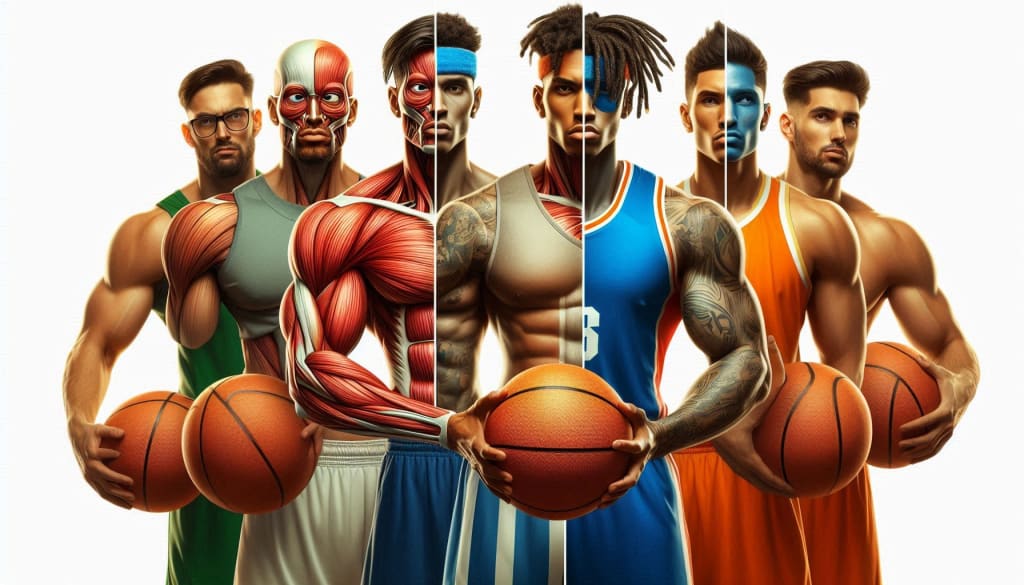
Reflecting on my basketball experiences, I often ponder what body type is best for success. The right body type can greatly influence a player's performance and success. It's vital for coaches, players, and trainers to grasp the significance of body types in basketball.
This knowledge helps in crafting effective strategies and training programs. l will dive into the importance of body type in basketball and its impact on different positions and playing styles.
Introduction to Basketball and Body Types
Recognizing the diversity in basketball body types is essential. Each type has its own set of strengths and weaknesses, shaping a player's performance. By understanding these differences, players and coaches can tailor training programs to meet individual needs. This approach enhances performance and success in the game.
Key Takeaways
Understanding basketball body types is vital for success on the court
Different body types have unique characteristics, strengths, and weaknesses
The ideal body type for basketball varies by position and playing style
Basketball body types significantly impact a player's performance and success
Coaches and players must collaborate to create effective training programs
Identifying individual strengths and weaknesses is critical for improvement
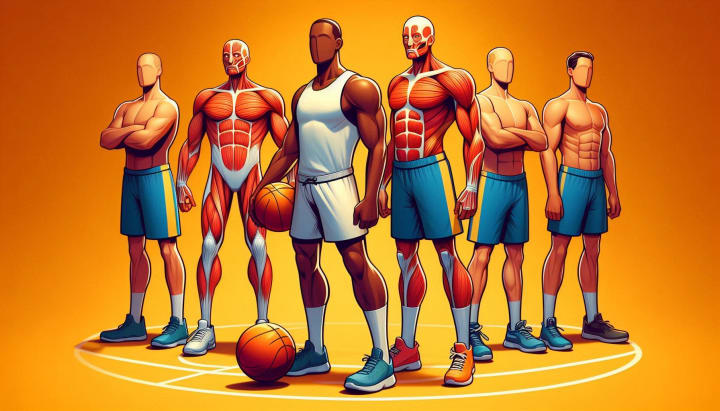
Understanding Body Types in Basketball
In basketball, the right body type can greatly enhance performance. The ideal physique combines strength, speed, and agility. Knowing your body type and its impact on your game is key to success.
Research indicates that body types influence playing style. For example, players with a lean, muscular build excel in positions needing quick movements. Those with a taller, more athletic build often dominate in the paint, leveraging their height and strength.
Height: A minimum height of 5'9" for guards and 6'7" for forwards and centers
Weight: A lean and muscular build, with a body fat percentage between 6-12%
Strength: Strong legs, core, and upper body to support explosive movements and endurance
Agility: Quick reflexes and rapid changes of direction to outmaneuver opponents
Understanding the role of body type in basketball is vital. Identifying the best physique helps players tailor their training and nutrition. This approach can unlock their full court performance.
The Ideal Body Type for Different Positions
In basketball, the right body type for your position is key. A physique tailored to your role can boost your performance. For instance, an athletic build for basketball can enhance a player's speed and agility, making them more effective on the court.
Basketball players are generally categorized into guards, forwards, and centers. Each role demands specific physical attributes and skills. To excel, players need a body type that matches their position. This includes height, weight, muscle composition, and athletic ability.
Guards: Speed and Agility
Guards are the smallest and quickest on the team. They need a body that's agile and fast, with a low center of gravity. This enables them to quickly change direction and speed up the court. Key traits for a guard's body type include:
Short to medium height (5'9"-6'2")
Low to medium weight (160-190 lbs)
High level of speed and agility
Good hand-eye coordination and reaction time
Forwards: Versatility and Strength
Forwards are the most versatile, needing a body that's strong, agile, and can score from anywhere. They must have speed, strength, and endurance to outmaneuver opponents. Forward body types are characterized by:
Medium to tall height (6'2"-6'8")
Medium to high weight (190-220 lbs)
High level of strength and power
Good jumping ability and endurance
Centers: Height and Power
Centers are the tallest, needing a body that's strong, powerful, and can dominate in the paint. They require height, strength, and athleticism to outmuscle opponents. Center body types are marked by:
Tall height (6'8"-7'2")
High weight (220-250 lbs)
High level of strength and power
Good jumping ability and endurance
Understanding the ideal body type for each position helps players focus on developing necessary physical attributes and skills. This includes strength training, conditioning, and practice to improve their athletic ability and physique.
Key Physical Traits for Basketball Players
In basketball, the right physical traits are key to success. As a player, I've learned that body composition for basketball is vital. A balanced and athletic build is essential for top performance.
To achieve this, players must work on height and reach, as well as weight and muscle composition. Here are some key factors to consider:
Height and reach: Being tall is beneficial, mainly for centers and power forwards.
Weight and muscle composition: A lean and muscular build aids in quick movement and strength for rebounding and defense.
A player with more muscle mass can jump higher and run faster than one with more body fat. This is why body composition for basketball is so critical. It significantly impacts a player's performance. By focusing on these traits and maintaining a healthy body composition for basketball, players can enhance their game. This increases their chances of success on the court.
The Role of Endurance in Basketball Success
Endurance is a critical factor in determining the best body type for basketball. The game demands a well-rounded physical presence. The constant running, jumping, and quick changes of direction highlight the need for endurance.
Cardiovascular fitness is essential for maintaining intensity during games. This is vital for players with leaner builds, which are often better suited for endurance. Activities like running, cycling, or swimming can enhance cardiovascular fitness.
Cardiovascular Fitness
Alongside cardiovascular fitness, mental toughness is key for success in basketball. Players must push through fatigue and stay focused, even when faced with challenges. Certain body types may be more susceptible to fatigue or injury, making mental resilience critical.
Mental Toughness
Improving mental toughness involves several strategies:
Practicing mindfulness and meditation
Setting goals and tracking progress
Developing a pre-game routine to get focused and ready to play
Combining cardiovascular fitness with mental toughness is essential for basketball success. Whether aiming to boost overall fitness or enhance basketball performance, understanding endurance's role is vital.
Basketball PositionEndurance RequirementsGuardHigh level of cardiovascular fitness and mental toughnessForwardBalance of endurance and strengthCenterEmphasis on strength and power, with some endurance required
How to Train According to Your Body Type
To succeed in basketball, understanding the ideal body type is key. The best physique varies by position, but certain traits benefit all players. A well-structured training program is vital for developing necessary skills and physical attributes.
Training must consider your body type. For instance, lean players should focus on strength and endurance. Muscular players should aim for agility and speed. A balanced diet, rich in protein, complex carbs, and healthy fats, supports your training and helps achieve the best physique.
Focus on building strength and endurance if you have a lean body type
Improve your agility and speed if you have a more muscular build
Incorporate plyometric exercises to enhance your power and explosiveness
Make sure to include plenty of stretching and foam rolling to improve your flexibility and reduce your risk of injury
By following these tips and tailoring your training to your needs, you can develop the ideal body for basketball. This will help you achieve success in the game.
Body TypeTraining FocusNutrition ConsiderationsLeanBuilding strength and enduranceHigh-protein diet with complex carbohydratesMuscularImproving agility and speedBalanced diet with plenty of healthy fats
The Impact of Body Type on Skills
For a basketball player, having an athletic body is key to top performance. The physique of a basketball player greatly influences their skills, such as shooting and defense. A balanced physical build is essential for excelling in the game.
Body type affects shooting mechanics and accuracy. Taller, leaner players often have an edge in long-range shooting, shooting over defenders with ease. In contrast, stronger, more athletic players tend to excel at driving to the basket and scoring in the paint.
Shooting Mechanics
Defensively, a player's body type also matters. Quick, agile players are better at guarding fast opponents. Stronger, more physical players are more effective against larger, more powerful opponents.
Defensive Strategies
Key factors to consider include:
Height and reach: Taller players have an advantage in shooting and rebounding.
Weight and muscle composition: Stronger, more athletic players excel at driving and scoring in the paint.
Speed and agility: Quicker, more agile players are better at guarding fast opponents.
In conclusion, the physique and athleticism of a basketball player are critical to their skills and performance. Understanding how body type influences skills helps players and coaches optimize performance and gain an edge.
Famous Basketball Players and Their Body Types
Examining famous basketball players' body compositions reveals what makes a standout athlete. From the NBA to college, various body types have contributed to success. This insight helps us understand the physical traits necessary for excellence on the court.
LeBron James and Kevin Durant, for example, have combined height, strength, and agility to dominate. Their body types enable them to play multiple positions, making them invaluable to their teams. In contrast, Stephen Curry and Klay Thompson have excelled with their quickness and shooting skills, proving leaner bodies can also be advantageous.
A dynamic illustration of diverse basketball players in action, showcasing various body types and compositions on the court, emphasizing athleticism and agility. Include a tall player with long limbs executing a jump shot, a muscular player driving to the basket, and a shorter, stocky player displaying dribbling skills. The background features a vibrant basketball arena with cheering fans and bright lights, highlighting the energy and intensity of the game.
In college basketball, Zion Williamson and Ja Morant have showcased impressive athleticism and body composition. Their examples highlight the need for a balanced, athletic build. Such a physique enhances performance and reduces injury risks.
Lessons from the NBA
Emphasize overall fitness and athleticism
Focus on building strength and endurance
Develop a well-rounded skillset to adapt to different positions
Inspiration from College Basketball
College basketball players can learn from professional athletes. They should focus on improving their body composition through training, nutrition, and dedication. This approach can enhance performance, increase success chances, and inspire them to emulate their NBA idols.
PlayerHeightWeightBody TypeLeBron James6'8"250 lbsAthletic and strongStephen Curry6'3"190 lbsLean and agileZion Williamson6'7"285 lbsPowerful and athletic
The Importance of Flexibility and Agility
In basketball, flexibility and agility are key. They are essential for moving swiftly around the court. As a player, I've seen firsthand how vital these traits are for success.
Flexibility helps prevent injuries and allows for quick changes in direction. Agility drills, like shuttle runs and cone drills, boost speed and agility. A consistent stretching routine also enhances flexibility and lowers injury risk.
Stretching Routines
Hamstring stretches
Quad stretches
Calf stretches
Agility Drills
Agility drills include:
Shuttle runs: running back and forth between two points
Cone drills: weaving in and out of cones
Ladder drills: running through a ladder on the ground
By adding stretching and agility drills to training, players can enhance their court performance. Whether aiming to improve your game or curious about the best body type for basketball, remember flexibility and agility are critical.
Adapting to Limitations Based on Body Type
As a basketball player, I've learned the value of having the right body for the sport. The ideal physique combines strength, agility, and endurance. Yet, each player faces unique challenges based on their body type. It's vital to identify and utilize your strengths to overcome these hurdles.
For example, players who are shorter can focus on increasing their speed and agility. This allows them to outmaneuver opponents. Taller players, on the other hand, can enhance their jumping ability and reach. Understanding your body type helps you tailor a training plan that meets your specific needs.
When adapting to your body type, consider several key factors:
Flexibility and mobility: Focus on exercises that improve your range of motion and reduce injury risk.
Strength training: Develop a workout routine that targets your core, legs, and upper body to enhance performance.
Cardiovascular endurance: Engage in activities like running or swimming to improve stamina and endurance.
By acknowledging and working with your body type, you can optimize your performance and achieve your basketball goals. Remember, the ideal body for basketball is not a one-size-fits-all concept. It's about understanding your unique strengths and weaknesses and leveraging them to your advantage.
Adapting to your body type is essential for success in basketball. By focusing on your strengths and working on your weaknesses, you can develop the best physique for basketball. This will help you reach your full playing capacity.
Body TypeStrengthsWeaknessesSmall statureSpeed, agilityReach, strengthTallHeight, jumping abilitySpeed, agilityAthletic buildStrength, enduranceFlexibility, mobility
Myths About Body Types and Basketball
In basketball, many believe a specific basketball player physique is essential for success. Yet, this is a misconception. An athletic body for basketball encompasses more than physical appearance. It's about a player's diverse skills and abilities.
Myths suggest only tall players can excel, or that certain body types are better for specific positions. But, the success of players like Muggsy Bogues, who stands at 5'3", shows these are false. His story highlights that height is not the sole determinant of success.
It's vital to understand each player's unique strengths and debunk stereotypes in basketball. Recognizing individual talents allows coaches and trainers to tailor training effectively. This approach helps unlock each player's full capability, regardless of their body type.
Debunking Stereotypes
Not all tall players are automatically good at basketball
Players with a smaller stature can be successful with the right skills and training
Having an athletic body for basketball is not just about physical appearance, but about having a well-rounded set of skills and abilities
Understanding Individual Potential
By embracing each player's unique qualities, coaches and trainers can build a more diverse and dynamic team. This approach fosters a positive and inclusive team culture. Players feel valued and supported, regardless of their body type.
The Psychological Aspect of Body Type in Sports
Exploring the psychological side of body type in sports, I see how body composition for basketball affects an athlete's confidence and self-perception. A balanced, athletic physique not only enhances physical prowess but also boosts mental and emotional health.
In the realm of body composition for basketball, a lean, muscular physique is often seen as the gold standard. It allows athletes to move swiftly and powerfully on the court, while also providing the stamina needed to endure the game's physical rigors. Yet, it's vital to acknowledge that each person is distinct, and what suits one may not fit another.
Several factors are critical when discussing body composition for basketball:
Lean muscle mass: Crucial for generating power and speed on the court.
Low body fat percentage: Essential for boosting agility and endurance.
Strong core: Provides stability and balance, enabling athletes to move quickly and change direction easily.
Confidence and Self-Image
Athletes who are confident in their bodies tend to perform at their peak. This confidence allows them to focus on the game, unencumbered by body image concerns. Achieving a healthy, balanced body composition for basketball can significantly enhance an athlete's self-image and confidence, both on and off the court.
Team Dynamics
In team sports like basketball, body composition for basketball influences team dynamics. When all players are physically fit and have a balanced body composition, they can work together more harmoniously. This unity enables effective communication and synchronized movement, helping them achieve their goals.
Future Trends in Basketball Body Types
The game of basketball is constantly evolving, leading to new expectations for the ideal body type. Gone are the days of a single physical mold being the norm. Today, the sport celebrates a more diverse and inclusive approach. I foresee a future where basketball values the unique strengths of players from all body types.
Advances in training and sports science are unlocking new possibilities for athletes. They can now reach their full capacity, regardless of their natural physique. Coaches and teams now understand that versatility, athleticism, and basketball smarts are just as important as physical attributes. This shift is creating a more dynamic and thrilling game, where players of all sizes can excel and help their teams win.
The push for inclusivity and diversity in basketball is also a positive trend. Athletes from various backgrounds and body types are being celebrated for their talents. This inclusivity not only makes the sport richer but also inspires aspiring athletes. They see themselves in the success stories of a diverse range of basketball legends.
FAQ; Frequently Asked Questions
What body type is good for basketball?
There's no single "perfect" body type for basketball. Different positions and playing styles need various physical traits. Height, strength, speed, agility, and endurance are key for success.
What are the ideal body types for different basketball positions?
Guards need a slender, quick, and agile build. Forwards require versatility, combining size, strength, and athleticism. Centers, being the tallest, need height and power to dominate the paint.
How does body composition impact basketball performance?
Body composition, including muscle mass, body fat percentage, and weight distribution, affects speed, strength, and endurance. A balanced and athletic build is essential for top performance.
What physical traits are most important for basketball success?
Key traits include height and reach, weight and muscle composition, cardiovascular fitness, and athleticism. These enable players to excel in shooting, defense, rebounding, and endurance.
How can players train according to their body type?
Tailoring workouts and nutrition to individual body types maximizes strengths and minimizes weaknesses. Focus on areas like speed, strength, or agility based on physical attributes.
How do famous basketball players' body types inspire others?
Studying successful players' body types offers insights and inspiration. Each player is unique, but understanding diverse body types helps aspiring athletes develop personalized training plans.
How important is flexibility and agility in basketball?
Flexibility and agility are vital for better movement, coordination, and injury prevention. Incorporating stretching and agility drills into training enhances performance and versatility.
How can players adapt to limitations based on their body type?
Players can adapt and leverage their strengths despite challenges. Developing specialized skills, focusing on specific roles, and working with coaches optimizes performance.
What are some common myths about body types and basketball?
One myth is that only tall players can succeed. In reality, basketball values diversity in body types and skillsets, allowing players of all sizes to excel.
How does body type influence the psychological aspects of basketball?
Body type affects confidence, self-image, and team dynamics. Mental training and a positive team culture help players of all body types thrive.
What future trends in basketball body types should players be aware of?
The sport may see more diversity and inclusivity in body types. Advances in training methods and equipment will cater to a wider range of physical characteristics. Staying informed about these trends is key to success.
About the Creator
Hooper Fiko
With my professional advice on basketball workouts and online training, you can reach your greatest potential. Get expert advice, customized workouts, and inspiring material to improve your performance. Come along and change your abilities!
Keep reading
More stories from Hooper Fiko and writers in Unbalanced and other communities.
Stop Shin Splints from Basketball: Prevention and Treatment Guide
As a basketball enthusiast, I've faced the frustration of shin splints. The pain in the lower leg can severely hinder performance on the court. I'm dedicated to helping you prevent shin splints in basketball. This guide will cover the importance of prevention and offer practical tips to lower your injury risk.
By Hooper Fiko11 months ago in Unbalanced
Wild Card Weekend Recap: What Happens Now?
I think I figured out why I love Wild Card Weekend so much. It's because it's the first playoff anything of the calendar year. The NFL season starts in the fall, and once upon a time, the champion was crowned either on or slightly before New Year's. The evolution of the NFL schedule has resulted in the playoffs starting just into the New Year, and currently, the final week of the season falls on the first weekend of the New Year, with Wild Card Weekend coming a week after that. So yes, chronologically, the NFL's Wild Card Weekend serves as the first playoff anything of the calendar year.
By Clyde E. Dawkins7 days ago in Unbalanced
Best and Worst MLB City Connect Hats
As someone who has a small handful of Texas Rangers hats and an avid hathead, I'm eager for Opening Day to begin. In my previous stories, I've critiqued and rated the best and worst City Connect jerseys. I'll have links to both stories at the end of this story. In this story, however, I'll be critiquing one City Connect hat that I love and one that I'm not feeling at all. Please note that teams will have more than one hat design and not all hats will be featured on here.
By Mark Wesley Pritchard 2 days ago in Unbalanced



Comments
There are no comments for this story
Be the first to respond and start the conversation.